
Macao sentences former lawmaker Au Kam San to 12.5 years in first national security trial
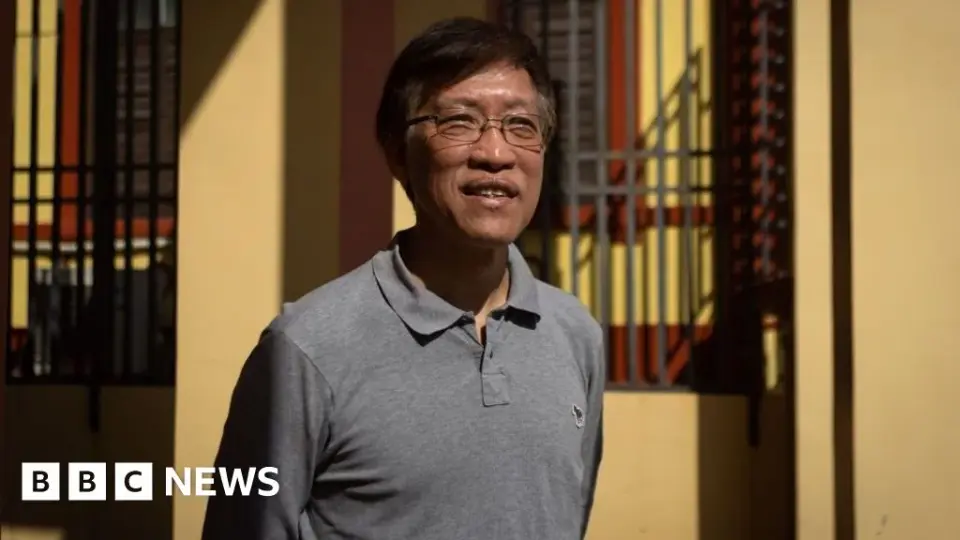
Macao has sentenced former pro-democracy legislator Au Kam San to 12 years and six months in prison, marking the territory's first conviction under its national security law. The 69-year-old was found guilty of subversion and breach of confidentiality following a closed-door trial. His wife and international legal counsel have condemned the verdict as a political persecution, while Chinese authorities defended the ruling as necessary for stability. This case follows closely on the heels of a similar sentencing in Hong Kong for activist Joshua Wong.
Key points
- Au Kam San, a 69-year-old former primary school teacher and legislator, was sentenced to 12.5 years in prison on Friday for subversion against the state.
- The trial was held behind closed doors in September 2025, with the judge citing national security interests as the reason for secrecy.
- Prosecutors alleged Au collaborated with 'hostile organizations' to disseminate subversive information and incite hatred against the central government.
- Au was found guilty of four out of seven charges, including subverting state power and breaching confidentiality regarding gaming license renewals.
- This is the first public prosecution under Macao's national security law, which was enacted in 2009 and revised in 2023 and 2025 to allow closed trials.
- Au's wife, Virginia Cheang, called the case 'groundless persecution' and expressed hope for regular family visits, while his daughter in London described the situation as 'unbearable'.
Background
Macao returned to Chinese sovereignty in 1999 after over 400 years of Portuguese administration. It operates as a special administrative region with its own legal system, distinct from Hong Kong but subject to similar national security frameworks. The territory's national security law was first enacted in 2009, criminalizing treason, secession, and subversion. It was broadened in 2023 to include non-violent acts of secession and revised in 2025 to permit closed-door trials. Au Kam San served in the Legislative Assembly from 2001 to 2021, one of few pro-democracy voices in a legislature dominated by pro-Beijing loyalists. He was known for organizing annual vigils commemorating the 1989 Tiananmen Square crackdown, which were tolerated in Macao until the broader crackdown on such activities in 2020. This case follows the sentencing of Hong Kong activist Joshua Wong to 10 years in prison on November 5, 2026, for a second national security conviction, highlighting a coordinated approach to suppressing dissent in both special administrative regions.
How outlets are covering it
BBC and AP News report the sentencing as a landmark case in Macao's first national security prosecution, emphasizing the closed-door nature of the trial and the family's condemnation. AP News highlights the court's statement that Au 'admitted to a considerable portion of the criminal facts,' which Portuguese lawyer Jorge Menezes disputes, arguing it is misleading as Au did not plead guilty. NBC News focuses on the broader context of Beijing's intolerance of dissent, noting that Macao's pro-democracy movement is less influential than Hong Kong's but still targeted. All sources agree on the sentence length and charges but differ in emphasis: BBC and AP focus on the procedural fairness and family impact, while NBC contextualizes it within the wider crackdown on dissent in China's special administrative regions. Chinese authorities, as reported by AP, defended the ruling as demonstrating 'firm resolve in safeguarding national security' and urged respect for the verdict.
Why it matters
This case signals a significant escalation in the enforcement of national security laws in Macao, a territory previously seen as more tolerant of dissent than Hong Kong. The use of closed-door trials and the severity of the sentence for a 69-year-old former legislator may deter other critics of the government. It also underscores Beijing's willingness to apply its security framework uniformly across its special administrative regions, potentially chilling political expression in Macao and sending a message to Hong Kong. The case raises concerns about the rule of law and the rights of citizens in these territories, with international legal counsel urging Portugal and the EU to intervene on behalf of Au, a Portuguese citizen.
What to watch
Au Kam San will begin serving his 12.5-year sentence, with his family hoping for regular visits and correspondence. International legal counsel, Michael Polak, is urging Portugal and the European Union to demand that Au, a Portuguese citizen, be allowed to leave Macao. The case may set a precedent for future prosecutions under Macao's national security law, potentially leading to more closed-door trials and harsher sentences for dissent. Chinese authorities have indicated they will continue to strictly enforce the security law, suggesting further crackdowns on pro-democracy activities in Macao and possibly Hong Kong. The family's ability to visit and correspond with Au will be a key indicator of the regime's willingness to allow any form of external scrutiny or support for political prisoners.
- Macau jails pro-democracy campaigner in city's first national security case BBC
- Former pro-democracy lawmaker sentenced to 12½ years in Macao’s first national security case AP News
- Ex-lawmaker jailed for 12½ years in Macau’s first national security trial South China Morning Post
- Macau: Ex-lawmaker sentenced to jail in Chinese territory's first national security trial DW.com
- Former pro-democracy lawmaker sentenced to 12 1/2 years in Macao’s first national security case NBC News
Want the full story? Read the original reporting
Read on BBC