
Merz and Zelensky reject US-Russia peace talks, demand European role in Ukraine's future
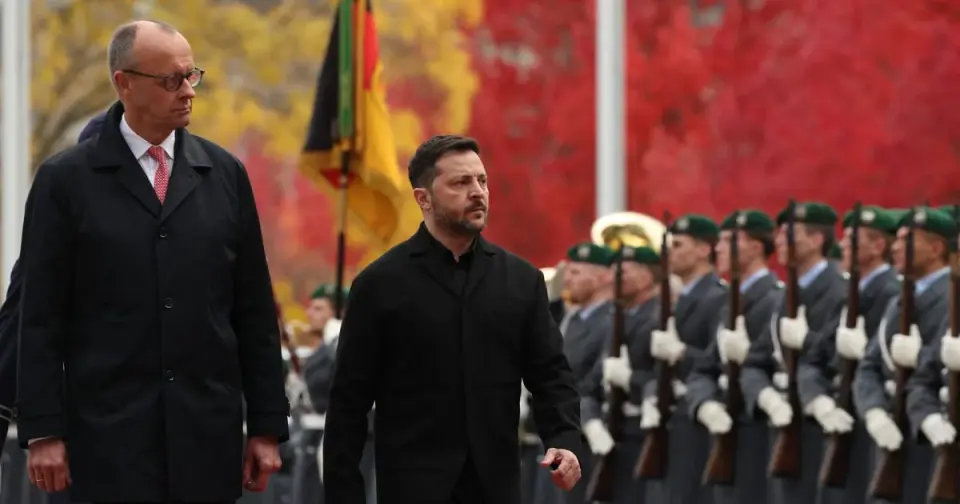
German Chancellor Friedrich Merz and Ukrainian President Volodymyr Zelensky met in Berlin on Nov. 3 to assert European influence over Ukraine's peace process and future security. Merz condemned the US decision to invite Russian President Vladimir Putin to the December G20 summit in Miami, stating that Ukraine's fate cannot be decided without Kyiv. Zelensky emphasized that EU membership and security guarantees require European consensus, not just US-Russia negotiations. The leaders discussed increased winter aid, air defense, and a Nov. 19 'Coalition of the Willing' meeting to secure military support. This follows US-brokered talks set for Abu Dhabi on Nov. 10-11, which exclude European nations.
Key points
- Merz and Zelensky held a joint press conference in Berlin on Nov. 3, stressing Europe's role in shaping any Ukraine peace deal.
- Merz called the US invitation of Putin to the December G20 summit in Miami 'completely unacceptable,' demanding Ukraine be included in discussions.
- Zelensky stated that US and Russia cannot decide Ukraine's EU membership or security architecture without European support.
- The leaders discussed additional winter aid, air defense shortages, and support for Ukraine's F-16 fleet.
- Germany invited allies to a Nov. 19 'Coalition of the Willing' meeting to agree on military support and security guarantees.
- US-brokered trilateral talks between the US, Ukraine, and Russia are scheduled for Nov. 10-11 in Abu Dhabi, excluding European nations.
Background
This meeting follows a series of diplomatic tensions in late 2026. In late October, the Kremlin explicitly rejected European participation in the Abu Dhabi peace talks, creating a rift with the EU. German intelligence chiefs had also warned in early October that Russia's 'shadow war' could draw Germany into direct conflict, citing drone attacks and infrastructure targeting. Additionally, Merz's government faced domestic pressure after his party lost regional elections to the pro-Kremlin AfD, which had gained significant ground in eastern Germany. The current Berlin meeting is an attempt to project unity and secure European backing for Ukraine amid US-led negotiations that sideline Europe.
How outlets are covering it
POLITICO and The Kyiv Independent both highlight the strong stance taken by Merz and Zelensky against US-Russia bilateralism, emphasizing the need for European involvement in peace terms and EU membership. However, POLITICO places greater emphasis on Merz's sharp criticism of the US decision to invite Putin to the G20, framing it as a diplomatic affront. The Kyiv Independent focuses more on the practical aspects of the meeting, such as air defense, energy support, and Zelensky's broader trip to Berlin, including meetings with German President Frank-Walter Steinmeier and parliament head Julia Klöckner. Yahoo/Reuters provides a more concise summary, focusing on Merz's promise of aid and his warning about Russia's Black Sea attacks causing a global food crisis, without delving into the G20 controversy or EU membership debates. All sources agree on the core message: Europe must be involved in Ukraine's future, but they differ in the emphasis placed on diplomatic disputes versus practical aid.
Why it matters
The Berlin meeting signals a growing European push to reclaim influence over Ukraine's peace process and security architecture, challenging US-led negotiations that exclude European nations. Merz's criticism of the US G20 invitation and Zelensky's insistence on European consensus for EU membership highlight a potential rift between Washington and European allies. The upcoming Abu Dhabi talks and the Nov. 19 'Coalition of the Willing' meeting will test whether Europe can secure a unified stance and meaningful support for Ukraine, or if US-Russia dynamics will dominate the peace process. The outcome could shape the post-war security architecture and Ukraine's long-term integration into European structures.
What to watch
The next major developments include the US-brokered trilateral talks in Abu Dhabi on Nov. 10-11, which will test whether the US and Russia can proceed without European input. The Nov. 19 'Coalition of the Willing' meeting in Berlin will aim to secure concrete military support and security guarantees for Ukraine. Additionally, the European Commission will host reconstruction talks in Brussels on Nov. 4, involving the US, Ukraine, and key allies. The outcome of these meetings will determine whether Europe can maintain a unified stance or if US-Russia dynamics will dominate the peace process.
- Germany’s Merz warns Europe needs seat at the table as Trump renews Ukraine talks POLITICO.eu
- Ukraine's Zelenskiy visits Germany for show of support ahead of peace talks Reuters
- Germany's Merz doubts Russia wants Ukraine ceasefire, says European leaders must help shape peace DW.com
- Zelensky arrives in Berlin for meeting with German Chancellor on air defense, energy sector The Kyiv Independent
- Merz promises more support for Ukraine, warns Russia over Black Sea attacks Yahoo
Want the full story? Read the original reporting
Read on POLITICO.eu