
Merz Defies Exit Calls as CDU Faces Historic Collapse in German States
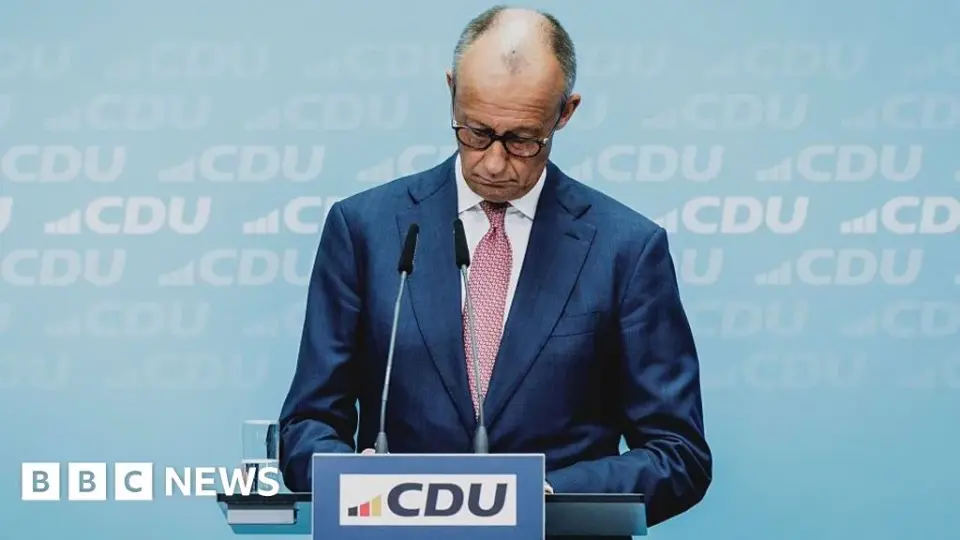
German Chancellor Friedrich Merz has vowed to remain in office despite a historic political crisis, following his Christian Democratic Union (CDU) party’s failure to enter the parliament of Mecklenburg-Vorpommern. The party’s collapse in regional elections has boosted the far-right Alternative for Germany (AfD) and the left-wing Die Linke, raising questions about the stability of Germany’s coalition government and its influence on European policy.
Key points
- Merz’s approval rating has dropped to 13%, the lowest for any German chancellor, as his CDU party failed to reach the 5% threshold in Mecklenburg-Vorpommern.
- The AfD secured 38% of the vote in Mecklenburg-Vorpommern, becoming the largest faction, while Die Linke is poised to lead the government in Berlin.
- Merz dismissed speculation about a leadership change, stating his government must continue reforms to protect Germany’s 'democratic future' despite economic struggles.
- The SPD, Merz’s coalition partner, has called for a 'reality check' on the government’s agenda, warning that ignoring voter sentiment is not viable.
- The Kremlin commented on the results, attributing the AfD’s success to Berlin’s refusal to purchase Russian gas, which has increased energy costs.
Background
This crisis follows a series of regional defeats for the CDU in September 2026, including a landslide loss in Saxony-Anhalt where the AfD won nearly 44% of the vote. Merz previously canceled a trip to the UN General Assembly due to domestic pressure, signaling the severity of the political turmoil. The current instability is part of a broader trend in Europe where traditional center-right and center-left parties are losing support to populist and nationalist movements.
How outlets are covering it
The BBC emphasizes the broader implications for European stability, noting that Germany’s political turmoil could affect EU budget negotiations and defense spending. The Guardian focuses on the internal dynamics of the CDU and the potential for a 'palace coup,' highlighting Merz’s fragile position despite support from regional leaders. Axios, while largely obscured by technical content, confirms the factual outcome of the CDU’s exclusion from the Mecklenburg-Vorpommern parliament. The Kremlin’s perspective, cited by the Guardian, frames the election results as a direct consequence of energy policy, a view rejected by German officials who blame economic mismanagement and immigration fears.
Why it matters
Germany is the largest economy in the eurozone and a key donor to Ukraine. A political crisis in Berlin could weaken EU cohesion, disrupt defense and migration policies, and embolden far-right movements across Europe. The instability also risks undermining Germany’s role as a stabilizing force in global affairs, particularly regarding relations with the US and China.
What to watch
Merz is expected to continue pushing for tax and welfare reforms, but his coalition with the SPD faces increasing strain. The AfD is targeting the next federal election in 2029, while Die Linke aims to consolidate its power in Berlin. The outcome of upcoming elections in France, Italy, Spain, and Poland will further test the resilience of traditional European parties against populist surges.
- Friedrich Merz's political crisis threatens Germany's obsession with stability BBC
- Far-right AfD wins again as Germany's Merz slides Axios
- Germany’s Merz Pledges to Stay On Despite ‘Disastrous’ Election Result WSJ
- Chancellor vows to stay on for Germany’s ‘democratic future’ after latest loss to far-right AfD theguardian.com
- Opinion | Germany Is in Danger. But There’s Still Time. The New York Times
Want the full story? Read the original reporting
Read on BBC