
Merz’s Ukraine Budget Ultimatum Sparks Veto Threats from Four EU Nations
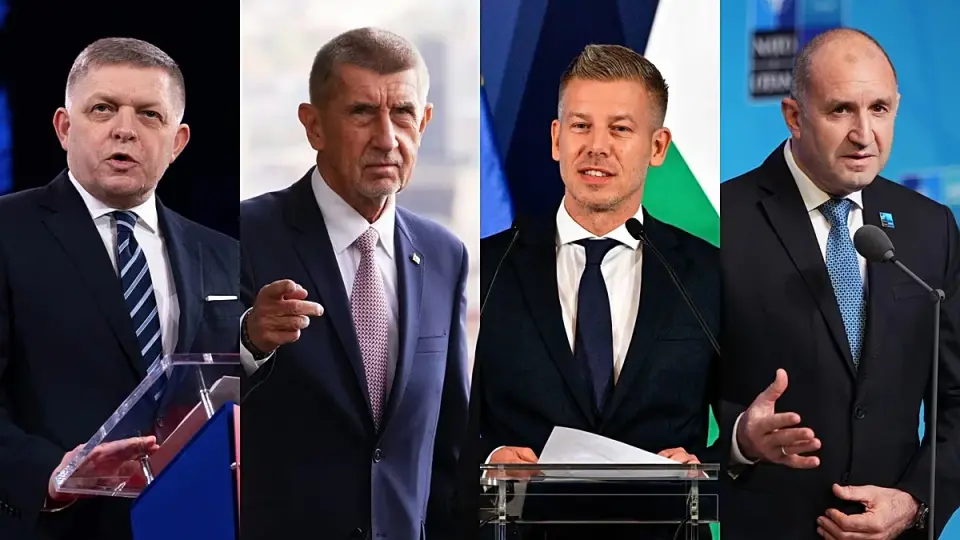
German Chancellor Friedrich Merz has linked approval of the EU’s 2028-2034 budget to unanimous member state support for Ukraine’s €70 billion financing gap. This ultimatum has triggered a sharp backlash from Slovakia, the Czech Republic, Hungary, and Bulgaria, who refuse to contribute to new joint debt. While Merz argues that security burden-sharing must be collective, the four nations cite high domestic deficits and sovereignty concerns. The dispute threatens to stall budget negotiations ahead of a summit in Dublin, with the European Commission exploring new joint debt instruments to cover the €45 billion EU share of the shortfall.
Key points
- Merz declared that fresh financial support for Ukraine is an 'essential prerequisite' for approving the next long-term EU budget.
- Slovak Prime Minister Robert Fico called the move 'textbook blackmail' and threatened to use his veto power in response.
- Hungary, the Czech Republic, and Slovakia previously secured exemptions from interest payments on the existing €90 billion Ukraine loan.
- The EU aims to cover two-thirds of Ukraine’s €70 billion gap, approximately €45 billion, potentially through new joint debt.
- Bulgarian Prime Minister Rumen Radev cited high deficit levels as a reason to exempt his country from future credit lines.
Background
This conflict follows a December 2025 agreement for a €90 billion loan to Ukraine, which allowed three Central European nations to opt out of interest payments. In October 2026, Merz visited Kyiv to pledge €1.3 billion in aid amid intensified Russian strikes. The current dispute arises as the EU seeks to embed long-term financing for Ukraine into the 2028-2034 budget to ensure stability beyond immediate political shifts.
How outlets are covering it
Euronews and Politico.eu highlight the sharp rhetorical clash, noting that Slovak PM Robert Fico labeled Merz’s demand 'blackmail,' while Hungarian PM Péter Magyar described the linkage as politically motivated but avoided the term. The Financial Times emphasizes the structural leverage Merz holds as the largest net contributor to the EU budget, contrasting this with the status of the four holdout nations as net beneficiaries. All sources agree that the core issue is the shift from consensus-based decisions to potential qualified majority voting for future Ukraine funding, a change Merz is pushing to prevent future vetoes.
Why it matters
The standoff threatens to block the EU’s next multi-year budget, which is critical for cohesion and agricultural funds. If the four holdout nations succeed in decoupling Ukraine aid from the budget, it could fragment European security policy and leave Kyiv without a guaranteed long-term financing mechanism. Conversely, if Merz forces a unified approach, it may strain relations with Central European members and set a precedent for linking unrelated budgetary issues.
What to watch
EU leaders are set to meet in Dublin on Thursday and Friday to discuss the Ukraine financing gap. The European Commission is currently developing options for new joint debt to fulfill the €45 billion pledge. Merz has indicated he will continue negotiations in Berlin, Dublin, and Brussels, while the four holdout nations have promised to find a solution for the EU budget despite their opposition to the current linkage.
- EU budget battle erupts as four countries defy Merz over Ukraine aid Euronews
- Slovak PM Fico accuses Merz of 'blackmail' for linking Ukraine funding to EU budget talks Reuters
- Germany issues ultimatum to secure Ukraine funding Financial Times
- Merz clashes with Fico over German bid to link EU budget and Ukraine loan POLITICO.eu
- Merz Demand on Ukraine Funds Sparks Blowback From Eastern Europe Bloomberg.com
Want the full story? Read the original reporting
Read on Euronews