
Miliband Defends Slavery Apology Strategy, Rejects Reparations Cost
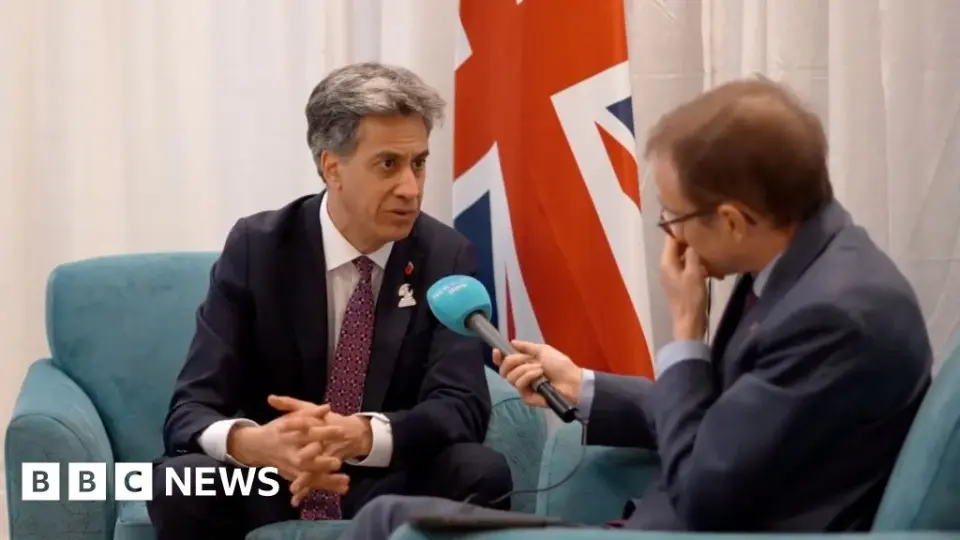
UK Foreign Secretary Ed Miliband has stated that the government’s move toward a formal apology for the transatlantic slave trade will not result in financial costs for British taxpayers. While Prime Minister Andy Burnham has rejected direct reparations, proposing instead debt restructuring and infrastructure investment, Miliband argues that confronting the historical issue is a sign of strength rather than weakness. The government is currently engaged in structured dialogues with affected nations, aiming to finalize an apology before the G20 Summit in Manchester in November 2027. Critics, including Caribbean leaders, argue that an apology without monetary compensation or debt cancellation is insufficient to address the legacy of slavery.
Key points
- Ed Miliband insists the formal apology process will not increase taxpayer costs, contrasting with previous 'sweep it under the carpet' attitudes by prior governments.
- The UK government is pursuing a 'structured dialogue' with affected countries, with the formal apology expected around the time of the 2027 G20 Summit in Manchester.
- Prime Minister Andy Burnham has proposed a debt reset and infrastructure investment for Commonwealth nations but has explicitly rejected financial reparations.
- King Charles III described the slave trade as a 'shameful chapter' during the Commonwealth Heads of Government Meeting but stopped short of issuing a formal state apology.
- Critics, including the CARICOM Reparations Commission, argue that an apology must be accompanied by monetary compensation and debt cancellation to address historical injustices.
Background
This development follows the Commonwealth Heads of Government Meeting in Antigua and Barbuda, where King Charles III expressed personal sorrow over the slave trade but did not issue a formal apology. Previous UK governments, including those led by Tony Blair and David Cameron, had expressed regret but rejected reparations. The current government is attempting to resolve a long-standing dispute within the Commonwealth that has persisted for approximately two decades, following a contentious meeting in Samoa in 2024.
How outlets are covering it
BBC reports that Ed Miliband views the apology as a necessary confrontation of the past, arguing that previous governments, particularly under Tony Blair, offered a 'sorry not sorry' response. Miliband emphasizes that the process will not burden taxpayers, while Burnham focuses on debt restructuring as an alternative to reparations. The New York Times highlights the mixed reception of King Charles’s Caribbean tour, noting that while some residents welcomed the monarch, protesters demanded reparations and chanted 'Not our king.' Al Jazeera, through the CARICOM Reparations Commission, argues that an apology without monetary compensation is inadequate, citing the 'black debt' of unpaid labor and demanding debt cancellation and financial redress. The outlets differ in their framing: BBC focuses on the political strategy and taxpayer concerns, NYT on the public reaction and royal presence, and Al Jazeera on the moral and economic necessity of reparations.
Why it matters
The UK’s shift toward a formal apology represents a significant diplomatic and historical acknowledgment, potentially reshaping relations with Commonwealth nations. However, the rejection of financial reparations may leave a gap in addressing the economic and social legacies of slavery, as critics argue that without monetary compensation, the apology lacks substantive impact. The outcome of the structured dialogues could influence future UK-Commonwealth relations and set a precedent for how historical injustices are addressed in international diplomacy.
What to watch
The UK government will continue its structured dialogues with affected countries, with the formal apology expected to be issued around the time of the G20 Summit in Manchester in November 2027. The outcome of these talks will determine whether the apology is accompanied by any financial or structural changes, such as debt restructuring or infrastructure investment. Critics and Caribbean leaders will likely continue to press for monetary reparations and debt cancellation, potentially leading to further diplomatic tensions if their demands are not met.
- Miliband says slavery apology will not bring costs for UK taxpayer BBC
- King calls slave trade a 'shameful chapter' during Commonwealth address BBC
- King Charles Meets Both Joy and Criticism on Caribbean Tour The New York Times
- As reparations debate grows, Caribbean campaigners point to one British family's example Reuters
- A response to Andy Burnham: We need an apology and reparations Al Jazeera
Want the full story? Read the original reporting
Read on BBC