
Morocco’s 2026 Election: Coalition Fractures and Social Policy Battles
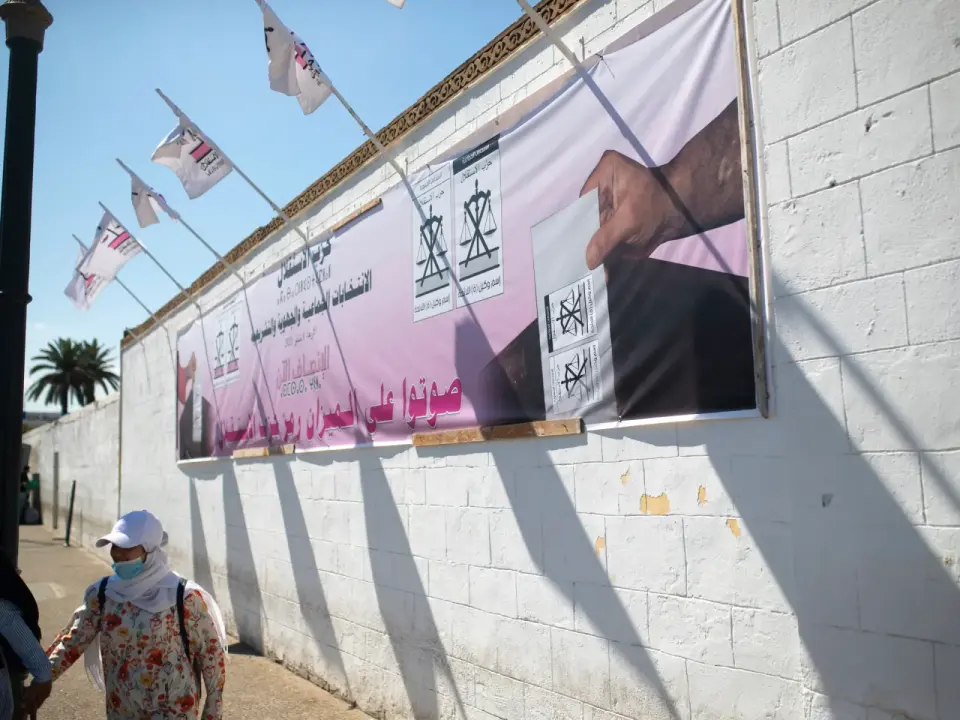
Morocco’s September 23 parliamentary election is defined by internal fractures within the ruling coalition and a sharp focus on social policy. A leaked audio recording exposed tensions between the National Rally of Independents (RNI) and the Authenticity and Modernity Party (PAM) over future government posts, specifically regarding budget minister Fouzi Lekjaa. While the RNI, PAM, and Istiqlal Party remain governing partners, they are competing for candidates and influence. The campaign centers on cost-of-living, employment, and healthcare, with the government defending its social protection reforms against opposition claims that economic gains have not reached ordinary households. The Justice and Development Party (PJD) seeks to rebuild its base after a 2021 collapse, while new legal reforms ban candidates with criminal convictions and restrict foreign digital influence.
Key points
- A leaked recording attributed to RNI figure Rachid Talbi Alami criticized budget minister Fouzi Lekjaa, exposing rifts between the RNI and PAM before the official campaign began on September 10.
- The ruling coalition (RNI, PAM, Istiqlal) faces internal competition for candidates and seats, despite governing together since 2021. The RNI holds 102 seats, PAM 87, and Istiqlal 81 from the previous election.
- Campaigns focus on social policy, including healthcare, education, and youth employment. The government cites 850,000 non-agricultural jobs created since 2021, while critics note net job creation was only 95,000 by 2025.
- New electoral laws bar candidates with criminal convictions and ban paid political ads on foreign platforms to prevent external influence. Voting booths are now open-sided to prevent ballot photography.
- The PJD, which fell from 125 to 13 seats in 2021, is attempting a comeback by criticizing the government on conflicts of interest and public service failures.
Background
This election follows the 2021 vote where the RNI emerged as the largest party. The current political landscape is shaped by the 2021-2026 government program, which pledged one million net jobs but faced criticism over unmet targets. The July 2026 Ceuta mass crossing, which resulted in 96 deaths, has also influenced the debate on migration and youth opportunities, though Spanish authorities attributed the influx to criminal networks and disinformation rather than state coordination.
How outlets are covering it
Al Jazeera and ua.news emphasize the internal dysfunction of the ruling coalition, highlighting the leaked recording and the pre-election negotiation of government posts as a sign of instability. HESPRESS focuses on the new legal framework, detailing stricter eligibility rules and bans on foreign digital influence to ensure electoral integrity. Middle East Online shifts the focus to policy convergence, noting that despite ideological differences, all major parties are prioritizing social justice, healthcare, and purchasing power, turning the election into a referendum on the effectiveness of the state’s social protection reforms.
Why it matters
The outcome will determine the balance of power for the next government, as the king appoints the head of government from the party that wins the most seats. The internal conflicts within the ruling coalition may weaken its ability to form a stable majority, while the opposition’s focus on social issues could capitalize on voter dissatisfaction with the cost of living. The new legal reforms also signal a shift toward stricter regulation of digital campaigning and candidate eligibility, potentially altering the dynamics of future political participation in Morocco.
What to watch
The official campaign period begins on September 10, leading up to the September 23 vote. Parties will finalize their strategies for coalition-building, as the winning party must secure parliamentary support to govern. Observers will monitor voter turnout, which was approximately 50% in 2021, and the impact of new anti-fraud measures on the integrity of the vote. The PJD’s performance will be a key indicator of whether opposition criticism can translate into electoral gains.
- Morocco’s ruling allies turn on each other before election campaign begins Al Jazeera
- Morocco government allies feud ahead of elections — Al Jazeera ua.news
- Convicted Candidates Over Electoral Offenses Barred From Running in Morocco's 2026 Vote HESPRESS English - Morocco News
- Mohammed VI faces a turnout test Africa Confidential
- Morocco parties put social issues at heart of election battle middle-east-online.com
Want the full story? Read the original reporting
Read on Al Jazeera