
Moscow Court Orders Pre-Trial Detention of Zhanna Nemtsova in Absentia
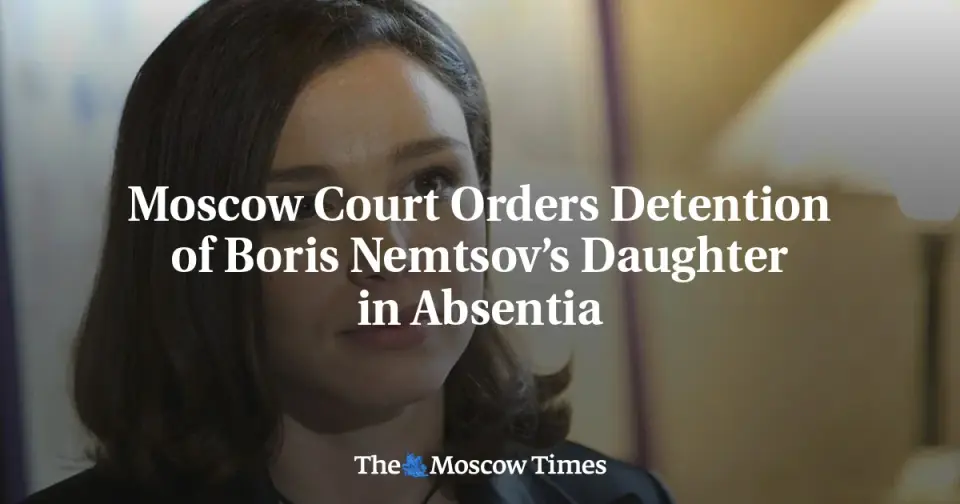
A Moscow court has ordered the pre-trial detention of Zhanna Nemtsova, daughter of the late Kremlin critic Boris Nemtsov, in her absence. She faces charges of organizing activities for an 'undesirable' organization, a crime carrying up to six years in prison. The ruling applies if she returns to Russia or is extradited, as she has lived in Europe for several years. Her foundation, based in Germany, was designated 'undesirable' by Russian authorities in 2024. This legal action follows the 2015 murder of her father, a prominent opponent of Vladimir Putin, whose killers were convicted but whose alleged masterminds remain unpunished according to his family.
Key points
- Zhanna Nemtsova faces charges of organizing activities for an 'undesirable' organization, punishable by up to six years in prison.
- Moscow’s Zamoskvoretsky District Court ordered her pre-trial detention for two months if she returns to Russia or is extradited.
- The Boris Nemtsov Foundation for Freedom, which she founded, was designated 'undesirable' by Russian authorities in 2024.
- Nemtsova has resided in Europe for several years, and the timing of the initial arrest warrant is unclear.
- Her father, Boris Nemtsov, was shot dead near the Kremlin in February 2015; five men were convicted, but his family claims the organizers remain unpunished.
Background
This development occurs within a broader pattern of Russian legal actions against opposition figures and their families. Previous archive entries regarding U.S. immigration detention and domestic disputes are unrelated to this specific Russian legal case, but they highlight the global context of legal proceedings involving political figures. The designation of The Moscow Times as an 'undesirable' organization by Russian authorities, as noted in the source, underscores the tightening environment for independent journalism and opposition in Russia.
Why it matters
The case of Zhanna Nemtsova illustrates the continued use of Russian legal mechanisms to target the families of political opponents. The 'undesirable organization' label, applied to her foundation in 2024, serves as a tool to criminalize activism and dissent. This ruling in absentia signals an intent to pursue legal consequences against opposition figures abroad, potentially deterring their return or international engagement. It also highlights the unresolved nature of the 2015 murder of Boris Nemtsov, a key figure in Russian opposition, and the ongoing struggle for accountability and justice for his family.
What to watch
Nemtsova may seek legal challenges to the detention order or pursue international avenues for protection. Russian authorities could attempt extradition if she travels to a country with a mutual legal assistance treaty. The case may also draw international attention and potential diplomatic responses from European nations where she resides. Monitoring for any changes in her legal status or further charges is essential.
Want the full story? Read the original reporting
Read on The Moscow Times