
Netanyahu and Eisenkot Meet to Discuss Unity Government Amid Election Deadlock
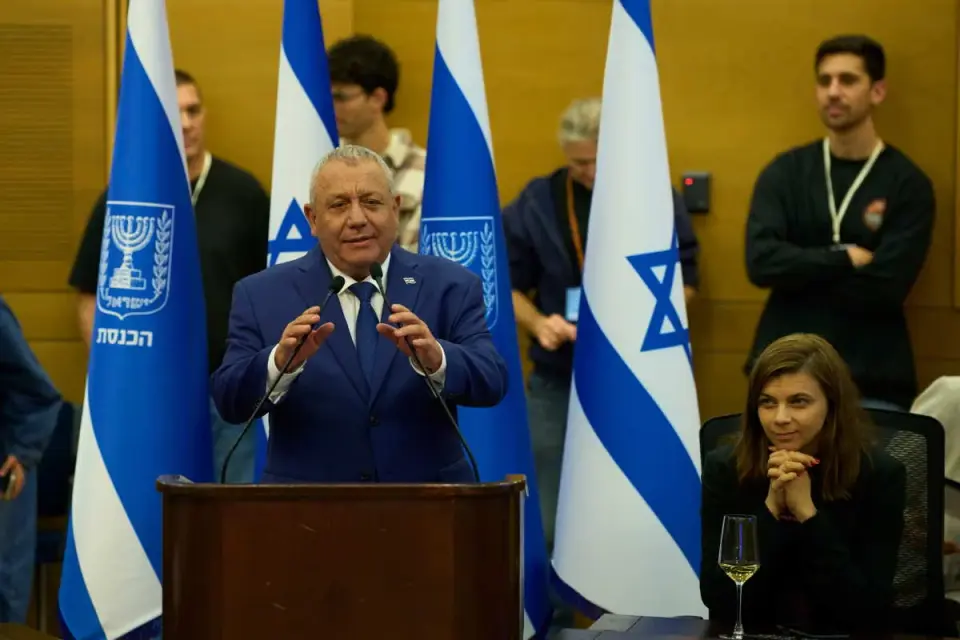
Israeli Prime Minister Benjamin Netanyahu and opposition leader Gadi Eisenkot met on Sunday to discuss forming a unity government after inconclusive elections left both blocs short of a majority. Netanyahu proposed a rotating premiership, offering to serve as alternate prime minister initially, while Eisenkot faces a December 6 deadline to form a government.
Key points
- Netanyahu and Eisenkot met on Sunday morning at the Israeli defense ministry in Tel Aviv to discuss a potential unity government, three weeks after President Isaac Herzog tasked Eisenkot with forming a government.
- Netanyahu announced on Saturday that he was willing to let Eisenkot serve as prime minister first in a rotation arrangement, citing 'existential danger' and the need to set aside the principle of the largest party leading.
- Eisenkot responded by inviting Netanyahu to 'genuine and accelerated negotiations' and pledged to announce the formation of the next government by a December 6 deadline without using a 14-day extension.
- The October 27 elections resulted in Netanyahu’s bloc winning 53 seats and Eisenkot’s bloc winning 48 seats in the 120-seat Knesset, leaving both short of a majority.
- Arab-led parties won a record 19 seats, giving them potential decisive influence, but most Jewish parties have pledged not to form a government with them, complicating coalition efforts.
Background
The October 27, 2026, elections were inconclusive, with neither the pro-Netanyahu nor anti-Netanyahu blocs securing a majority in the 120-seat Knesset. President Isaac Herzog tasked Eisenkot, leader of the centrist Yashar party, with forming a government within 28 days, extendable by 14. Eisenkot has faced internal opposition divisions over whether to include Arab-led or ultra-Orthodox parties in a coalition. The country is also reeling from more than three years of wars in Gaza, Lebanon, and against Iran, which began in February 2026.
How outlets are covering it
AP and NPR emphasize the urgency of the talks following Netanyahu’s Saturday night announcement of a rotating premiership. BBC highlights the deadlock, noting Netanyahu’s bloc won 53 seats and Eisenkot’s 48, and details Eisenkot’s December 6 deadline. Al Jazeera focuses on Eisenkot’s willingness to assess Netanyahu’s seriousness over 24 hours and notes opposition from some parties to a unity deal. All sources agree on the meeting’s occurrence and the proposal for a rotating premiership but differ on the emphasis of the political stakes and internal coalition challenges.
Why it matters
The outcome of these talks could determine whether Israel forms a unity government or faces new elections, impacting stability amid ongoing regional conflicts and internal political divisions. The inclusion or exclusion of Arab-led and ultra-Orthodox parties will shape the government’s policy on military service, security investigations, and regional relations.
What to watch
Eisenkot has until December 6 to form a government, with a possible 14-day extension. Coalition talks are ongoing, with Yashar and B’Yachad discussions continuing, and ultra-Orthodox UTJ rabbis reportedly giving the go-ahead to official talks. Ra’am’s Mansour Abbas affirmed his party considers Hamas a terror group, potentially paving the way for inclusion in an Eisenkot-led government. Netanyahu’s trial hearings were paused for a week, and President Herzog invited Netanyahu and the prosecution for talks on a potential deal to end the trial.
- Israel’s Netanyahu and Eisenkot meet to discuss forming unity government AP News
- Netanyahu, Under Pressure, Offers Rival Lead in Unity Government The New York Times
- Israel's Netanyahu and Eisenkot meet to discuss forming unity government NPR
- Israeli leadership rivals begin talks to break election deadlock BBC
- Netanyahu, Eisenkot meet after rotating premiership proposal Al Jazeera
Want the full story? Read the original reporting
Read on AP News