
Spain Casts Ballots in Snap Election as Far-Right Vox Poised to Join Government
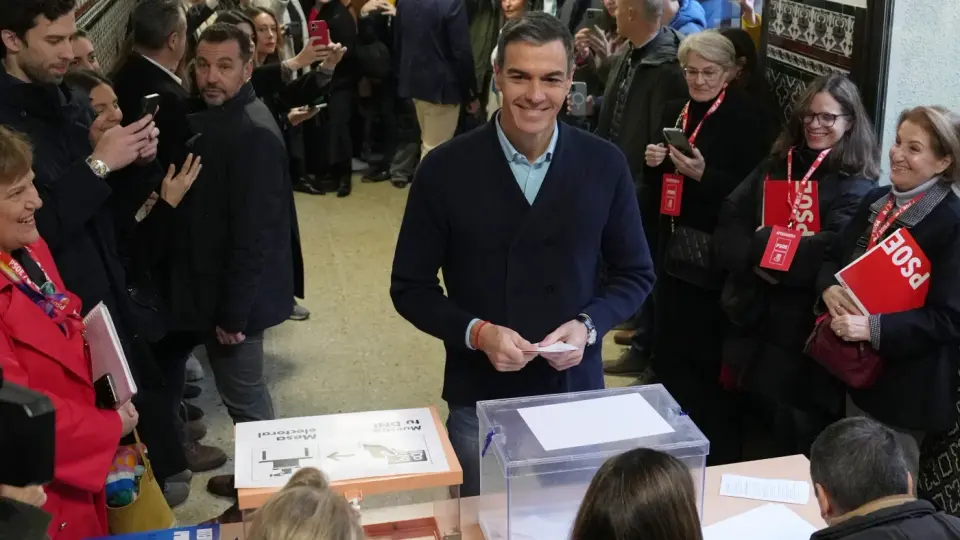
Spanish voters are casting ballots on Sunday, November 29, 2026, in a snap general election triggered by a housing crisis and the collapse of Prime Minister Pedro Sánchez’s coalition. Polls favor a right-wing coalition led by the People’s Party (PP) and far-right Vox, which could mark the first time a far-right party enters national government since 1975. Sánchez, facing domestic backlash over corruption scandals, train crashes, and cost-of-living issues, is fighting for re-election despite his strong international reputation for defying US President Donald Trump. Results are expected within hours of polls closing at 8 pm local time.
Key points
- Polls close at 8 pm local time on Sunday, November 29, 2026, with exit polls and final results expected within hours, according to NPR.
- The election was called by Prime Minister Pedro Sánchez after his government failed to pass emergency housing measures in Congress, following widespread protests triggered by the eviction of an 87-year-old woman in Madrid, per NPR and CNN.
- Most polls project that the center-right People’s Party (PP) will win the most seats but will need the support of far-right Vox to form a government, according to CNN and The Guardian.
- A PP-Vox coalition would be the first time a far-right party has been part of a national government since the end of the Franco dictatorship in 1975, per NPR and The Guardian.
- Sánchez’s government has faced criticism over two high-speed rail crashes that killed 115 people, a 16-hour national blackout in April 2025, and corruption scandals involving his inner circle, including the conviction of former transport minister José Luis Ábalos, per CNN.
- Sánchez’s international reputation for defying Trump on Iran and NATO defense spending has not translated into domestic support, as voters cite housing costs, stagnant wages, and public service failures, per CNN and The Guardian.
Background
Spain’s 2023 general election saw Sánchez’s PSOE win 121 seats, forming a left-wing coalition with Sumar. The PP won 137 seats, and Vox won 33 seats. Sánchez’s tenure has been marked by economic growth but also rising inequality, with rents up 44% since 2018 and the minimum wage rising 66% to €1,221. The 2026 snap election follows a series of crises, including train crashes, a migrant surge in Ceuta, and a housing affordability crisis that sparked nationwide protests in late 2026.
How outlets are covering it
NPR emphasizes the domestic polarization and the potential for Vox to become a kingmaker, noting that Sánchez is mobilizing his left-wing base. The Guardian frames the election as a global bellwether, highlighting Sánchez’s role as a progressive counterweight to the far-right and the implications for Europe’s welfare state. CNN focuses on Sánchez’s domestic failures, including corruption scandals, train crashes, and housing costs, contrasting them with his international reputation. The New York Times profiles PP leader Alberto Núñez Feijóo, who has campaigned on a platform of managerial competence and stability, positioning himself as a contrast to Sánchez’s polarizing style. All sources agree that the election is pivotal, but they differ on whether Sánchez’s international standing or domestic issues will determine the outcome.
Why it matters
The outcome of Spain’s election could reshape the political landscape in Europe, as a far-right coalition in Spain would be the first national government to include Vox since 1975. It could also signal a shift in the EU’s center-right consensus, with implications for foreign policy, migration, and the welfare state. Conversely, a Sánchez victory would reinforce the viability of progressive politics in Europe and challenge the narrative of inevitable far-right gains.
What to watch
Exit polls will be published at 8 pm local time on Sunday, November 29, 2026, with final results expected within hours, according to NPR. If the PP and Vox form a coalition, they will likely begin negotiations to form a government, potentially leading to policy changes on immigration, housing, and foreign policy. If Sánchez wins, he will likely seek to expand his mandate and address the housing crisis. The outcome will be closely watched by European leaders and global observers as a test of the far-right’s momentum in Europe.
- Spaniards vote in contentious election that could see far-right gains NPR
- Spain’s bellwether election will have big repercussions – for Europe and the world The Guardian
- Spain’s Sánchez stood up against Trump. His own voters may be about to bring him down CNN
- Who Is Alberto Núñez Feijóo, Spain’s Conservative Opposition Leader? The New York Times
- Polls open in Spanish general election BBC
Want the full story? Read the original reporting
Read on NPR