
Netanyahu offers to serve as alternate PM in rotating unity government with rival Eisenkot
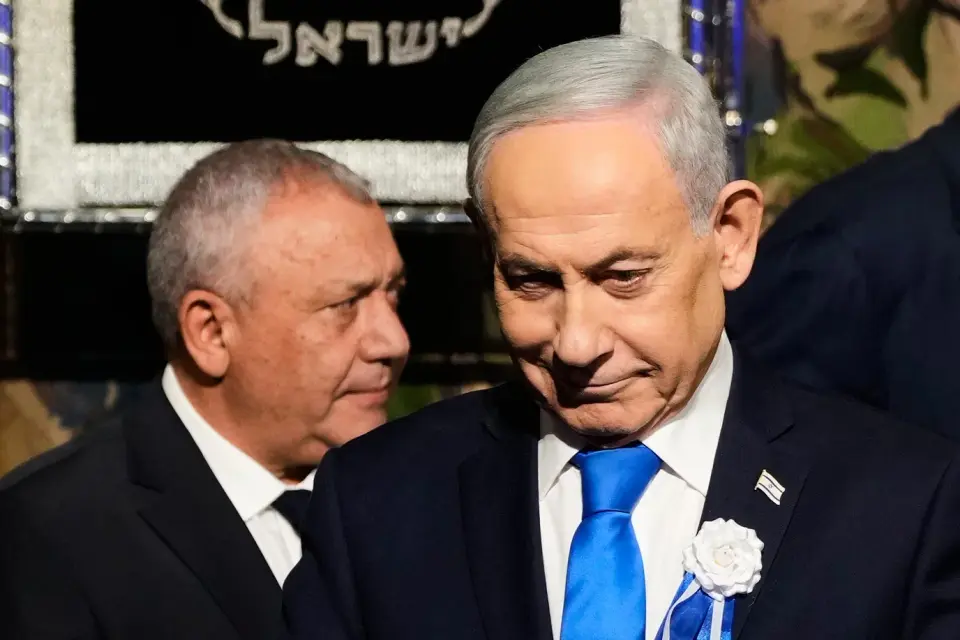
Israeli Prime Minister Benjamin Netanyahu offered to let his rival Gadi Eisenkot serve first as prime minister in a rotating unity government, a major concession aimed at preventing Eisenkot from forming a coalition that would oust Netanyahu. Eisenkot responded by inviting Netanyahu to 'genuine and accelerated negotiations' on Sunday, though he has not yet accepted the offer. The move comes as Eisenkot's coalition efforts gain momentum, with key allies like Ra'am and Yisrael Beiteinu moving closer to supporting his bloc, while other opposition figures remain deeply skeptical of Netanyahu's intentions.
Key points
- Netanyahu proposed on Saturday that Eisenkot serve first as prime minister in a rotating unity government, with Netanyahu serving as alternate prime minister at the start of the term, citing 'existential danger' as the reason for setting aside the principle of the largest party leading.
- Eisenkot, who has 28 days to form a government by December 6, responded by inviting Netanyahu to 'genuine and accelerated negotiations' on Sunday to assess the seriousness of the offer, but did not immediately accept it.
- Eisenkot's four-party bloc holds 48 of the Knesset's 120 seats, and he needs 61 for a majority. He has signed agreements with Yisrael Beiteinu and The Democrats, and Ra'am's leader Mansour Abbas recognized Hamas as a terrorist organization, a key requirement for partnership.
- Opposition figures including Yair Lapid and Avigdor Liberman dismissed the offer as a 'transparent scam' and a 'ploy,' while Bennett supported the idea of a unity government with Eisenkot leading first.
- Netanyahu's Likud bloc won 53 seats in the October 27 election, short of a majority, while Eisenkot's bloc won 48 seats, with Arab-led parties winning a record 19 seats.
Background
The October 27, 2026 Israeli election ended in a deadlock, with neither Netanyahu's Likud bloc (53 seats) nor Eisenkot's opposition bloc (48 seats) securing the 61-seat majority needed to form a government. Israeli President Isaac Herzog tasked Eisenkot with forming a government, bypassing Netanyahu, who remains caretaker prime minister. The anti-Netanyahu bloc holds 67 seats when including 19 from Arab parties Ra'am and the Joint List. Netanyahu and his allies have aggressively campaigned against the Arab parties, alleging the election was 'stolen' through bribery and fraud, though the Central Elections Committee dismissed these claims as baseless. If Eisenkot fails to form a government within the 28-day window (plus a possible 14-day extension), President Herzog can appoint a second candidate, but if that also fails, the Knesset is dissolved and new elections are held.
How outlets are covering it
The Washington Post emphasizes Netanyahu's concession as a major move to prevent Eisenkot from forming a coalition that would oust him, noting Eisenkot's coalition efforts are gaining momentum. BBC highlights the rotating premiership proposal and Eisenkot's swift response to invite Netanyahu to 'genuine and accelerated negotiations,' while also noting the distrust of Netanyahu across the opposition bloc. Al Jazeera focuses on the skepticism from opposition figures like Yair Lapid and Avigdor Liberman, who dismissed the offer as a 'transparent scam' and a 'ploy,' and the broader context of the October 27 election's deadlock. All three sources agree on the basic facts of Netanyahu's offer and Eisenkot's response, but differ in emphasis: The Post focuses on the strategic implications for Netanyahu, BBC on the procedural next steps, and Al Jazeera on the opposition's distrust and the broader political fractures.
Why it matters
This offer could determine whether Israel forms a unity government or faces new elections. If Eisenkot succeeds in forming a coalition, it could end Netanyahu's nearly 19-year tenure. If he fails, the mandate may pass to Netanyahu, or new elections could be called. The move also highlights the deep fractures in Israeli politics, with the anti-Netanyahu bloc divided over whether to ally with ultra-Orthodox parties, Arab-led lists, or Netanyahu himself.
What to watch
Eisenkot and Netanyahu are scheduled to meet on Sunday morning to assess the seriousness of Netanyahu's offer. Eisenkot has pledged to announce the formation of Israel's next government by the December 6 deadline, without using the option of a 14-day extension. If Eisenkot fails to form a government, President Herzog can appoint a second candidate, but if that also fails, the Knesset is dissolved and new elections are held.
- Israel’s Netanyahu offers to let Eisenkot lead first in power-sharing government The Washington Post
- Netanyahu, Under Pressure, Offers Rival Lead in Unity Government The New York Times
- Netanyahu proposes Israeli unity government where rival Eisenkot becomes PM first BBC
- Netanyahu offers to rotate Israeli premiership with Gadi Eisenkot Al Jazeera
- How Israel’s odd-couple politics could be close to toppling Netanyahu The Washington Post
Want the full story? Read the original reporting
Read on The Washington Post