
Netanyahu Vows Defamation Suit as Haaretz Report on UAE Warning Ignites Election Fight
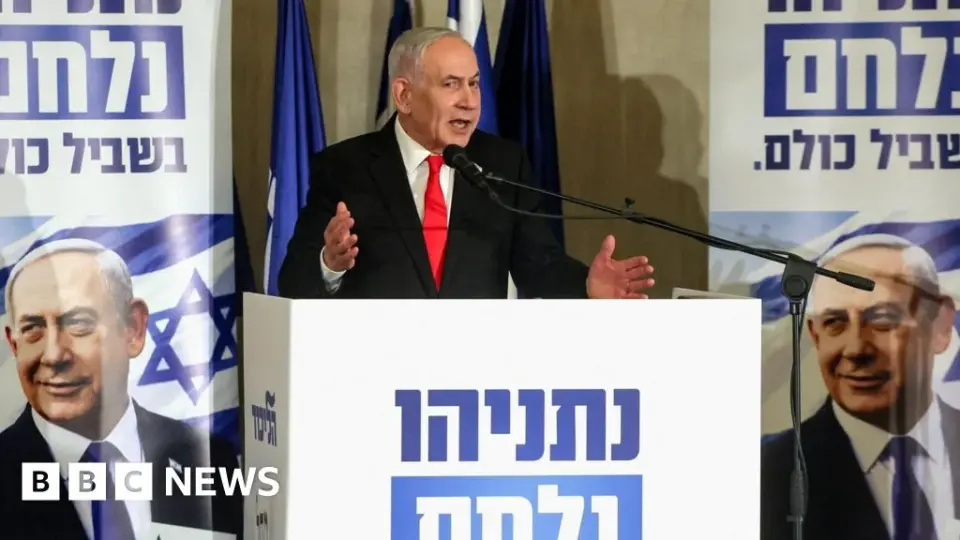
Israeli Prime Minister Benjamin Netanyahu has instructed lawyers to sue the newspaper Haaretz over a report alleging that UAE President Mohammed bin Zayed warned him of a planned Hamas attack days before the October 7, 2023, assault. Netanyahu’s office denies the call occurred, calling the story a 'sinister plot,' while Haaretz stands by its reporting, which cites a new book and multiple sources. The dispute has intensified ahead of Israel’s October 27 elections, with opposition leaders demanding an investigation into security failures and Netanyahu’s handling of intelligence.
Key points
- Netanyahu’s office has initiated defamation proceedings against Haaretz, labeling the report a 'sinister plot' and asserting no warning was received from the UAE before October 7, 2023.
- Haaretz reports that UAE President Mohammed bin Zayed warned Netanyahu in late September 2023 that Hamas leader Yahya Sinwar was planning a major operation, describing it as an 'earthquake' that would destabilize the region.
- The report, based on extracts from the book 'Hostages: 843 Days of Abandonment,' claims Netanyahu reacted with calm, stating Israel was prepared, and failed to brief key security officials, including the heads of Shin Bet and Mossad.
- The UAE has not denied the conversation, stating that intelligence has been shared between relevant entities since the normalization of relations, but has not confirmed the specific details of the warning.
- Four major Israeli opposition leaders have issued a joint statement calling Netanyahu and his government 'unfit' for office, demanding an investigation into the alleged failure to act on the warning.
- The controversy has emerged as Israel prepares for general elections on October 27, with Netanyahu’s Likud Party accusing Haaretz of 'blatant foreign interference' in the electoral process.
Background
This dispute follows earlier reports in September 2026 that raised questions about pre-attack intelligence sharing. The current legal action by Netanyahu marks a significant escalation in the conflict with Haaretz, a newspaper that has historically criticized the prime minister. The timing coincides with the start of the election campaign, where accountability for the October 7 attacks and the subsequent war in Gaza are central issues. The broader context includes ongoing debates about Netanyahu’s leadership style, with critics accusing him of using victimhood narratives to deflect blame for security failures, a strategy that has been analyzed by political psychologists as a key part of his populist appeal.
How outlets are covering it
The BBC and The New York Times present the core facts of the dispute, highlighting Netanyahu’s denial and Haaretz’s defense of its reporting. The New York Times notes that it could not independently confirm the report but emphasizes the political fallout, including opposition leaders calling Netanyahu 'unfit.' Al Jazeera provides a broader analysis, framing the legal action as part of Netanyahu’s long-standing strategy of portraying himself as a victim of a 'deep state' and using populist rhetoric to maintain support. Al Jazeera also notes the UAE’s non-denial of the communication, which contrasts with Netanyahu’s absolute denial of the warning. The outlets differ in their emphasis: BBC and NYT focus on the immediate legal and political consequences, while Al Jazeera contextualizes the event within Netanyahu’s broader political tactics and the ongoing debate about his leadership and accountability for the October 7 attacks.
Why it matters
The outcome of this defamation suit and the political fallout from the Haaretz report could significantly influence the upcoming Israeli elections, which are widely seen as a referendum on Netanyahu’s leadership. The allegations of a pre-attack warning that was ignored by the highest levels of government have the potential to reshape public opinion and the narrative around the October 7 attacks and the subsequent war in Gaza. The dispute also highlights the growing tension between the Israeli government and the media, with Netanyahu’s legal action potentially setting a precedent for how the government responds to critical reporting. The international dimension, involving the UAE and the potential for foreign interference, adds another layer of complexity to the domestic political debate.
What to watch
The next steps will likely involve the formal filing of the defamation lawsuit by Netanyahu’s lawyers and Haaretz’s legal response. The opposition leaders’ demand for an investigation may lead to further political pressure on Netanyahu to agree to an independent inquiry into the October 7 attacks. The UAE’s continued non-denial of the communication may lead to further diplomatic discussions or statements. The outcome of the election on October 27 will be a key indicator of how the Israeli public is responding to the controversy and the broader issues of accountability and security.
- Israel's Netanyahu to sue newspaper over claim UAE warned him of 7 October attack BBC
- Before Oct. 7 Attack, Netanyahu Was Warned, Report Says. He Denies It. The New York Times
- Benjamin Netanyahu has overseen a genocide: In his telling, he’s a victim Al Jazeera
- Arab warnings to Netanyahu ahead of Oct. 7 massacre shatter his core political defense The Times of Israel
- Following Oct. 7 Exposé • Haaretz response to Netanyahu threat: 'Won't hesitate to expose truth in court' Haaretz
Want the full story? Read the original reporting
Read on BBC