
Netanyahu’s unity plea rejected by Eisenkot as coalition talks stall
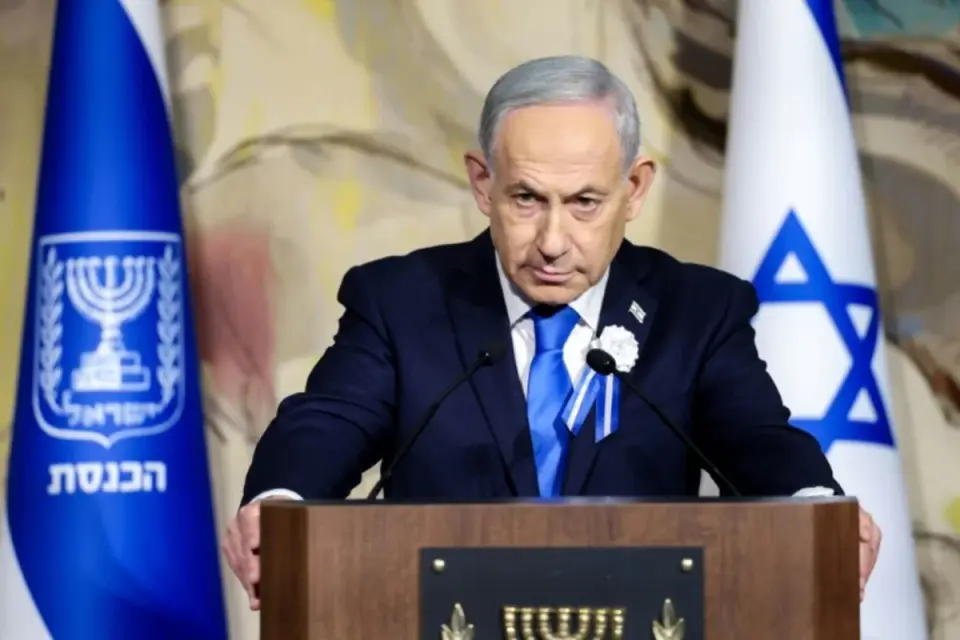
Caretaker PM Benjamin Netanyahu called for a national unity government on November 14, but rival Gadi Eisenkot dismissed the appeal as a tactic to delay his own coalition formation. Eisenkot, tasked with forming a government within 28 days, insists on excluding extremists and maintaining a minority government supported by Arab parties. Netanyahu’s proposal, which excludes Arab parties, faces rejection as Eisenkot’s Yashar party denies rotation deals with Likud. The deadlock highlights deep divisions over security, conscription, and political legitimacy, with no clear path to a stable government before potential new elections.
Key points
- Netanyahu urged a unity government with Jewish parties only, citing security against Iran, but Eisenkot called it a 'trick' to sow division.
- Eisenkot has 28 days to form a government, with a possible 14-day extension; failure could pass the mandate to Netanyahu or trigger new elections.
- Yashar party denies considering a rotation deal with Likud, insisting any partner must accept four principles, including mandatory service and recognition of Israel as a Jewish state.
- Netanyahu’s bloc holds 46 seats; Eisenkot’s bloc has 48 Jewish seats plus 19 Arab seats, but Jewish parties resist governing with Arab-led groups.
- Knesset speaker election is contested, with opposition pushing Matan Kahana to replace Netanyahu ally Amir Ohana.
Background
Following the October 27, 2026 election, Netanyahu lost his parliamentary majority, and President Isaac Herzog tasked Eisenkot with forming a government on November 8. Eisenkot’s bloc holds 67 endorsements, including 19 from Arab parties, but faces internal divisions over ultra-Orthodox conscription and Arab party inclusion. Netanyahu, who served nearly 19 years, remains caretaker PM and has campaigned against Arab-led parties, while Eisenkot seeks to break with far-right figures like Itamar Ben Gvir.
How outlets are covering it
Yahoo News emphasizes Netanyahu’s security-focused unity appeal and Eisenkot’s dismissal of it as a 'ruse.' The Times of Israel highlights Yashar’s denial of rotation talks and its four principles for coalition partners, including separation from extremists. CNN provides broader context on the deadlock, noting Eisenkot’s minority government plan and the risk of new elections if no coalition forms. CBS News, while focused on Iran, indirectly references Netanyahu’s security claims but does not detail the Israeli coalition dispute.
Why it matters
The failure to form a government could lead to new elections, prolonging political instability. Netanyahu’s unity appeal, if rejected, may weaken his bloc, while Eisenkot’s minority government faces challenges from internal opposition and ultra-Orthodox demands. The outcome affects Israel’s security posture, relations with Arab parties, and regional dynamics, including Iran tensions.
What to watch
Eisenkot must finalize coalition talks within 28 days, with a possible 14-day extension. If he fails, the mandate may pass to Netanyahu or trigger new elections. The Knesset speaker election on Tuesday will test opposition unity, and negotiations with ultra-Orthodox parties may determine if a broader coalition is possible.
- Netanyahu calls for Israeli unity government, Eisenkot dismisses 'tricks' Yahoo
- Live Updates: Bahrain says it intercepted Iranian attacks after Tehran claims it targeted U.S. assets CBS News
- Yashar denies considering rotation deal with Likud, reiterates party can join Eisenkot-led government The Times of Israel
- Netanyahu’s grip on power is weakening. What will it take to end the disarray in Israel? CNN
- Netanyahu says only a unity government can guarantee Israel’s security Al Jazeera
Want the full story? Read the original reporting
Read on Yahoo