
Odesa Council Weighs Ban on Russian Language in Public Arts
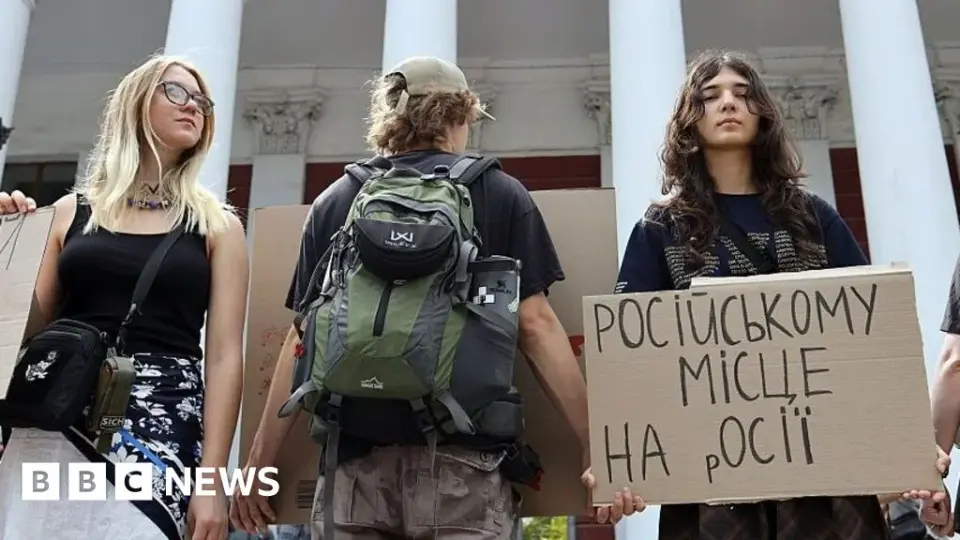
Odesa city councillors are set to vote this week on a proposal to ban the Russian language in public arts, literature, and entertainment venues. The measure would extend existing national restrictions, targeting music, books, and signage in public spaces, while leaving private usage largely unaffected. The city, which is predominantly Russian-speaking, is divided on the issue, with supporters viewing it as a necessary step to counter Russian cultural influence and critics arguing it infringes on personal liberty and heritage.
Key points
- Odesa, Ukraine's third-largest city, is considering a local ordinance to ban Russian-language content in public arts, literature, and entertainment venues.
- The proposal would prohibit Russian-language books in public library displays and restrict Russian music in public spaces, extending beyond current national laws.
- While the ban targets public spaces, it would also recommend compliance in private venues like cafes and shops, though it lacks direct sanctions for non-compliance.
- Supporters argue Russian is a tool of Russian state influence, while opponents claim it suppresses the heritage of millions of native Russian speakers in Ukraine.
- The vote faces opposition from a group of councillors linked to former mayor Hennadiy Trukhanov, and it is unclear how much broader support the measure has.
Background
Ukraine has been implementing a series of 'decolonization' measures since Russia's full-scale invasion in 2022, including renaming streets and removing monuments to Russian historical figures like Catherine the Great. A 2019 national law already mandates the use of Ukrainian in many public and professional contexts, such as education and customer service, though it allows a switch to Russian if the client prefers. The current debate in Odesa reflects a broader national tension between enforcing Ukrainian as the sole state language and preserving the linguistic heritage of a significant portion of the population that speaks Russian as its first language.
Why it matters
The outcome of the Odesa vote could set a precedent for other Russian-speaking regions in Ukraine, potentially accelerating the shift toward Ukrainian as the dominant language in public life. It highlights the ongoing cultural and political struggle over identity and sovereignty in the country, with implications for how the government balances national unity with the rights of linguistic minorities. The decision also touches on the broader narrative of the war, where language policy is framed as a defense against Russian cultural and political influence.
What to watch
The Odesa city council is expected to vote on the language ban proposal this week. If passed, the measure would likely increase pressure on private businesses to comply, even without direct legal sanctions, due to their interactions with local government for permits and advertising. The implementation could lead to further debates and potential legal challenges from those who view the ban as an infringement on personal and cultural rights.
Want the full story? Read the original reporting
Read on BBC