
Poland’s Constitutional Tribunal Crisis Escalates as Tusk Suspends Chief Justice
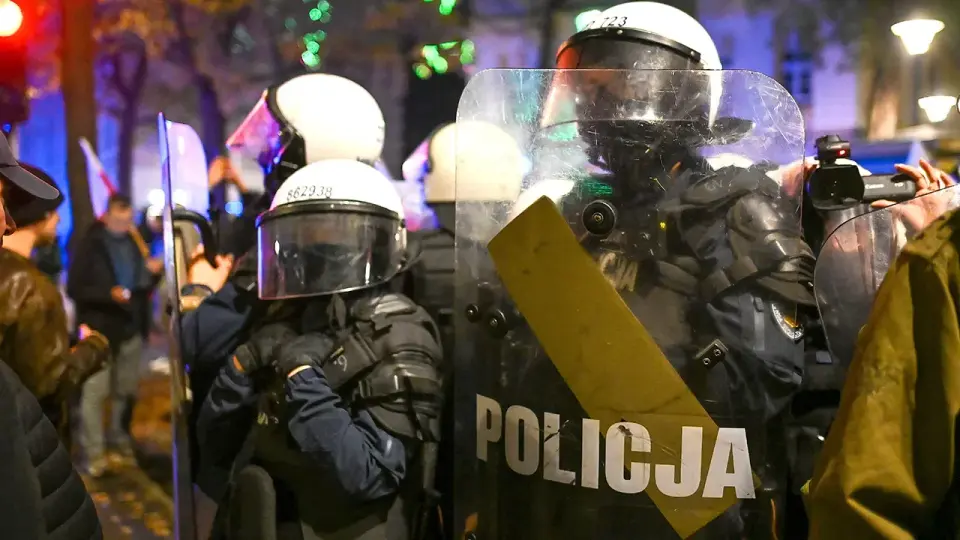
Poland faces a severe constitutional crisis after Prime Minister Donald Tusk’s government suspended Constitutional Tribunal President Bogdan Święczkowski and his deputy. The move, intended to restore judicial independence, triggered violent protests, riot police deployment, and a diplomatic rift. President Karol Nawrocki abandoned a trip to Senegal to return to Warsaw, condemning the action as a coup. While the European Commission supports the parliament’s right to appoint judges, critics argue the government’s methods are unlawful. The standoff has deepened ahead of next year’s elections, with three ambassadors resigning in protest and international observers divided on the legitimacy of the government’s actions.
Key points
- On Friday, Judge Anna Korwin-Piotrowska suspended Tribunal President Bogdan Święczkowski and Vice President Bartłomiej Sochański for one month, triggering immediate unrest.
- President Karol Nawrocki cut short a state visit to Senegal to return to Warsaw, where he physically confronted security forces outside the court building.
- Prime Minister Donald Tusk accused Nawrocki of choosing 'forceful confrontation' and insisted that the president must recognize judges elected by parliament to resolve the conflict.
- The crisis has led to the resignation of three Polish ambassadors, including the permanent representative to the U.N., Krzysztof Szczerski, as well as envoys to China and Romania.
- The European Commission affirmed that the Polish parliament has the constitutional power to appoint judges, while the Venice Commission ruled that new judges have the right to take their seats without presidential endorsement.
- Riot police were deployed outside the Tribunal after clashes between demonstrators and officers, with three people detained during the confrontation.
Background
This crisis is the latest chapter in a long-running dispute over the rule of law in Poland. Since the Law and Justice (PiS) party came to power in 2015, it appointed judges to the Constitutional Tribunal that are recognized neither by the current government nor the European Union. In 2021, the EU warned that PiS’ actions posed a 'systemic risk to the rule of law' and froze €137 billion in EU funding. Prime Minister Donald Tusk, elected in 2023, promised to restore the Tribunal’s independence, but faced a deadlock as President Karol Nawrocki, a PiS ally elected in 2025, refused to swear in judges nominated by parliament. The current escalation follows a decade of institutional standoff between the government, the presidency, and the tribunal.
How outlets are covering it
Fox News and The Guardian present sharply contrasting views. Fox News, citing Nile Gardner of the Heritage Foundation, described the government’s actions as a 'Soviet-style coup' and 'straight out of the Putin playbook,' arguing that Tusk is undermining the constitutional order. The Guardian, however, stated that the 'legal and moral facts of the case are on Mr Tusk’s side,' noting that the Venice Commission ruled the new judges had the constitutional right to take their positions. CNN highlighted the complexity, noting that while the aim is to restore a lawfully functioning court, the methods used raise questions about legality. Euronews focused on the diplomatic fallout, noting that the European Commission is closely monitoring the crisis and affirming the parliament’s right to appoint judges. All sources agree that the crisis has deepened ahead of next year’s parliamentary elections, with international observers divided on the legitimacy of the government’s procedural moves.
Why it matters
The crisis threatens to destabilize Poland ahead of next year’s parliamentary elections, with the potential to polarize the country and influence the balance of power in the European Union. The dispute has led to diplomatic fallout, including the resignation of three ambassadors, and has drawn sharp reactions from international leaders, with the U.S. ambassador urging restraint and French opposition leader Marine Le Pen accusing Brussels of applying a double standard. The outcome of this standoff will determine the direction of Poland’s judicial system and its relationship with the EU, with implications for the rule of law in the region.
What to watch
The standoff is expected to continue, with no breakthrough emerging from emergency talks between Tusk and Nawrocki. The European Commission is closely monitoring the situation, and the crisis may influence the outcome of next year’s parliamentary elections. International observers are watching to see if the government’s actions will be deemed lawful or if the crisis will escalate further, potentially leading to a deeper confrontation between Poland and the EU.
- Poland's constitutional crisis deepens as Prime Minister Tusk faces accusations of power grab Fox News
- Russia Senses Opportunity in Polish Political Turmoil The New York Times
- Bitter spat between Poland’s pro-Europe PM and pro-Trump president erupts CNN
- The Guardian view on Poland’s political turmoil: an ominous portent of bigger battles to come | Editorial The Guardian
- Polish PM urges president to confirm judges amid constitutional crisis Euronews.com
Want the full story? Read the original reporting
Read on Fox News