
Polish President Storms Constitutional Tribunal in Midnight Clash
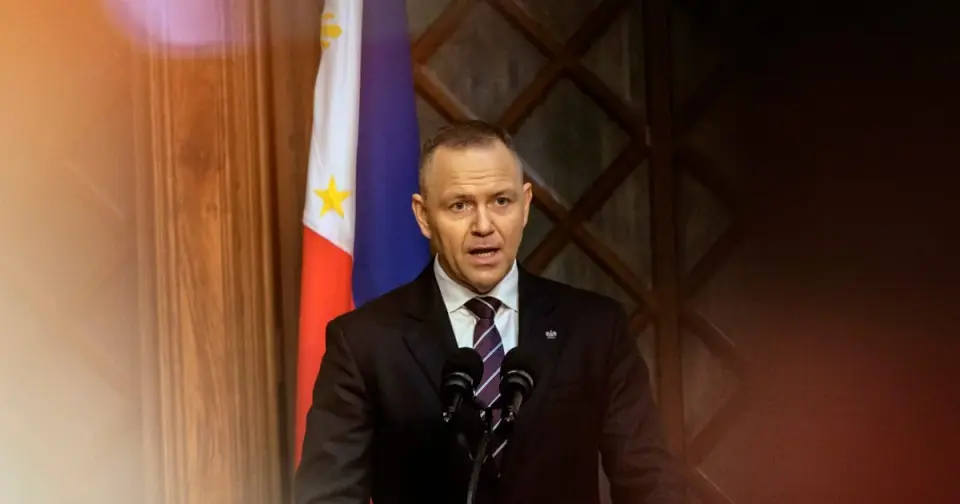
Polish President Karol Nawrocki physically forced his way into the Constitutional Tribunal in Warsaw shortly after midnight on Saturday, escalating a severe constitutional crisis. The confrontation followed the government’s suspension of Tribunal President Bogdan Święczkowski and his deputy, Bartłomiej Sochański, by judge Anna Korwin-Piotrowska. Nawrocki, an ally of the opposition Law and Justice (PiS) party, accused the government of seizing a constitutional institution, while Prime Minister Donald Tusk defended the actions as necessary to restore judicial independence. Riot police were deployed to the site, and three protesters were detained during the overnight standoff.
Key points
- Nawrocki aborted a state visit to Senegal to return to Warsaw and entered the tribunal through a crowd of protesters and judges.
- Justice Minister Waldemar Żurek requested the removal of immunity for Święczkowski and Sochański to enable criminal charges.
- Judge Korwin-Piotrowska suspended the court’s leadership, claiming authority based on her overall judicial service tenure.
- The tribunal’s website declared the government’s actions a 'coup d'état,' while Tusk called the process 'painful but necessary.'
- Police detained three individuals after some demonstrators attempted to breach the security perimeter around the court.
Background
This crisis stems from a long-standing dispute over the legitimacy of judges appointed during the PiS government’s tenure (2015–2023). European courts previously ruled that PiS-era appointments were improper, leading to a deadlock where Nawrocki refused to swear in five judges elected by the current parliamentary majority. Tusk’s government has since refused to recognize the tribunal’s rulings, citing EU court decisions that the body is not an independent tribunal.
How outlets are covering it
Outlets frame the event differently: Politico and CNN emphasize the physical confrontation and Nawrocki’s dramatic return, describing him as 'forcing his way' through protesters. BBC and Al Jazeera focus on the legal and political implications, noting that while Tusk views the move as restoring rule of law, critics like lawyer Marcin Matczak argue it sets a dangerous precedent for using police to resolve legal disputes. PiS leaders, including former Justice Minister Zbigniew Ziobro, condemned the suspension as a 'criminal attack' on the constitutional order, whereas Tusk’s camp insists the action is required to undo years of judicial politicization.
Why it matters
The standoff highlights the fragility of Poland’s rule of law and the deep polarization between the pro-European government and the nationalist opposition. It raises questions about the legitimacy of judicial appointments and the potential for future governments to use coercive measures to resolve institutional disputes, potentially damaging the country’s democratic institutions ahead of next year’s parliamentary elections.
What to watch
Nawrocki has summoned emergency consultations with parliamentary party leaders to address what he calls a threat to internal security. A judges’ meeting is scheduled for November 3, which could further escalate tensions if the composition of the court is challenged. The government may proceed with criminal charges against Święczkowski and Sochański if immunity is successfully stripped.
- Polish president Nawrocki pushes his way into top court amid rule-of-law tussle POLITICO.eu
- Police deployed during stand-off over control of top Poland court BBC
- Protests outside Poland’s constitutional court: What’s the crisis about? Al Jazeera
- Polish president turns plane around to return home as court chief’s suspension sparks protest CNN
- Polish president turns back from Senegal trip after top court chief suspended Reuters
Want the full story? Read the original reporting
Read on POLITICO.eu