
Yabloko Banned from Russian Vote as Deputy Leader Sentenced to 11 Years
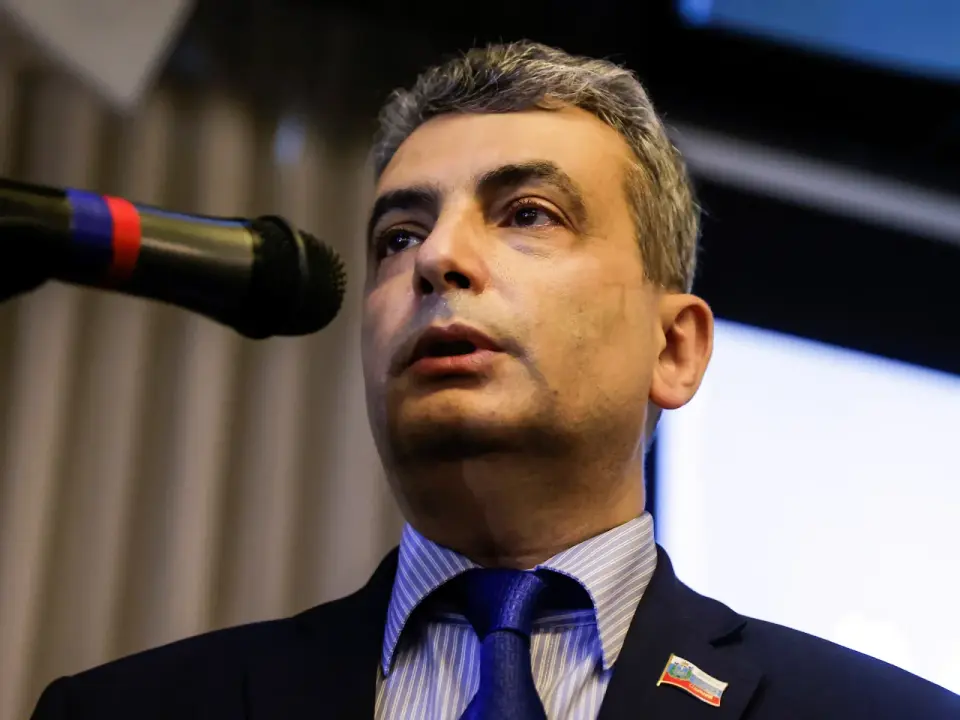
Russia’s Supreme Court has upheld the ban on the Yabloko party, removing the only registered anti-war opposition from the September State Duma elections. Simultaneously, the party’s deputy leader, Lev Shlosberg, was sentenced to 11 years in prison for opposing the war. The move silences the final legal avenue for public dissent against the conflict in Ukraine, prompting international criticism and domestic protests.
Key points
- The Supreme Court rejected Yabloko’s appeal, finalizing its exclusion from the September parliamentary vote.
- Deputy leader Lev Shlosberg was sentenced to 11 years and one month in a penal colony for 'discrediting' the military.
- The ban was initiated by the pro-Kremlin Rodina party, which accused Yabloko of foreign backing and extremism.
- Yabloko chairman Nikolai Rybakov called the proceedings a sham and vowed to seek review by the Constitutional Court.
- Police detained dozens of supporters and journalists outside the court, which Rybakov described as intimidation.
Background
This development follows a series of recent crackdowns on dissent in Russia. In early August, the Supreme Court initially disqualified Yabloko from the elections, citing alleged copyright violations and illegal foreign funding. Shortly after, Shlosberg was sentenced to prison for similar anti-war statements. These actions occur against a backdrop of tightened controls on media and opposition, where independent outlets like The Moscow Times have been labeled 'undesirable' organizations. The September elections are expected to be dominated by the ruling United Russia party, with Yabloko previously polling around 3% in prior cycles.
How outlets are covering it
Al Jazeera and The Moscow Times focus on the procedural aspects, noting that the Supreme Court’s appeal hearing lasted only one day and that Rybakov criticized the court for failing to engage with the case’s substance. The Washington Post offers a broader analytical perspective, arguing that the ban reveals the Kremlin’s fear of losing control over public opinion. According to The Washington Post, Yabloko had recently surged in popularity on social media, overtaking pro-Kremlin parties in subscriber counts and polling near double-digit support in some areas, which prompted the emergency legal action by the Rodina party. While Al Jazeera highlights the immediate legal and physical repression, The Washington Post frames the event as a failure of the regime’s propaganda strategy to mask widespread anti-war sentiment.
Why it matters
The removal of Yabloko eliminates the only registered political party in Russia that openly opposes the war in Ukraine, effectively closing the last legal channel for public dissent within the electoral system. The simultaneous imprisonment of its deputy leader signals a hardening of the Kremlin’s stance against any criticism of the military, using wartime legislation to impose severe penalties. This consolidation of power ahead of the September elections underscores the erosion of democratic norms in Russia and the regime’s determination to present a facade of unanimous national support for the conflict, despite growing internal opposition.
What to watch
Yabloko plans to file appeals with the Supreme Court’s advisory body and the Constitutional Court to challenge the ban. The party has also indicated it is developing a 'plan B' for supporters who can no longer vote for its candidates in the party-list races. Meanwhile, the September parliamentary elections will proceed with only pro-war parties on the ballot, and the Kremlin is expected to claim overwhelming public support for the war, a narrative that critics argue is increasingly untenable given the visible scale of opposition.
- Russia maintains election ban on opposition Yabloko, jails deputy head Al Jazeera
- Barred From Ballot, a Party Becomes a Vessel for Russians’ Discontent The New York Times
- Opinion | Putin just showed the world how afraid he is of his own people The Washington Post
- Russian Supreme Court Rejects Yabloko’s Appeal Over Candidate List Ban The Moscow Times
- Putin Is Afraid Of An Election He Can’t Lose Forbes
Want the full story? Read the original reporting
Read on Al Jazeera