
Shenzhen Summit Ends With No Ukraine Peace, Only ICC Criticism
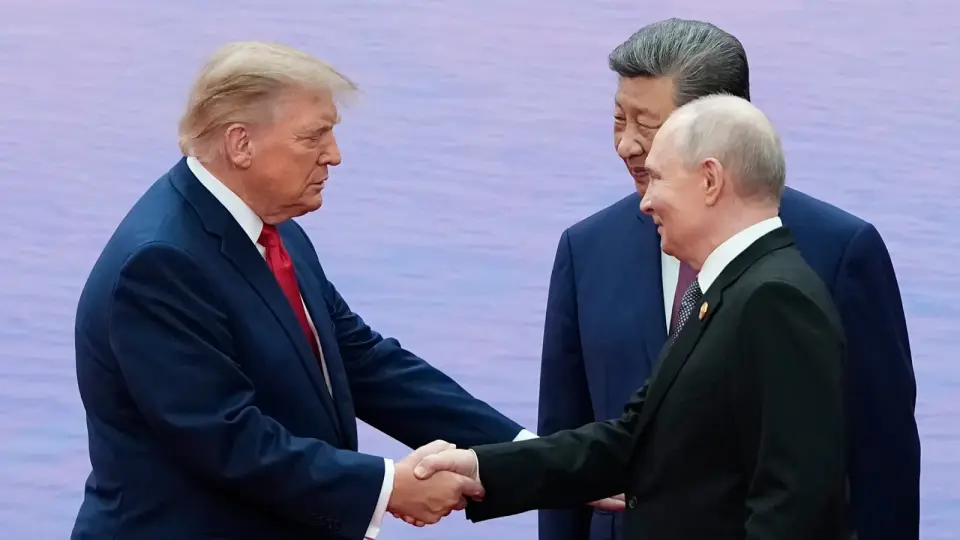
President Donald Trump met with Vladimir Putin and Xi Jinping in Shenzhen for the first-ever trilateral summit, but the gathering produced no substantive agreements on major conflicts. The leaders signed a vague declaration focusing on nuclear risks and criticizing the International Criminal Court, while ignoring the wars in Ukraine and Iran. Critics argue the meeting legitimized authoritarian leaders without yielding diplomatic concessions for the United States.
Key points
- The summit took place in Shenzhen, China, on November 19, 2026, during the Asia-Pacific Economic Cooperation (APEC) summit.
- The leaders signed a four-point 'Declaration Toward Peace' that called for UN reform, stable energy markets, and limiting ICC jurisdiction.
- The joint statement omitted any mention of the ongoing wars in Ukraine and Iran, as well as specific trade or AI frameworks.
- Trump praised the meeting as 'highly consequential,' while critics described it as a photo op that failed to address core geopolitical tensions.
- Putin and Xi gained diplomatic legitimacy, while Trump left without securing commitments on tariffs, Taiwan, or peace deals.
Background
This summit occurred after Trump’s midterm election defeat, which limited his domestic political capital. Previous archive coverage noted that the meeting drew mockery from late-night hosts and sparked rumors of a North Korea detour due to phone seizures on Air Force One. The gathering followed a period of strained US-China relations, including a trade war that saw tariffs exceed 100% in 2025, and ongoing tensions over AI chip exports.
How outlets are covering it
Rolling Stone characterized the summit as a failure for Trump, arguing he traded diplomatic leverage for personal validation and legitimized rivals without gaining substantive concessions. The Guardian emphasized the optics of the meeting, describing it as a 'new low' for American moral authority and highlighting the humiliation of Trump’s recent domestic defeat. CBS News provided a more neutral account, noting the leaders’ brief opening statements and the absence of joint press conferences, while detailing specific topics like nuclear denuclearization and AI regulation that were discussed but not resolved. All sources agreed that the meeting lacked concrete outcomes on major conflicts, but differed in their assessment of its strategic impact on US alliances and global standing.
Why it matters
The summit highlighted the limits of personal diplomacy in resolving complex geopolitical issues. By failing to address the wars in Ukraine and Iran or secure trade agreements, the meeting underscored the challenges Trump faces in his final months in office. The criticism of the ICC in the joint declaration may provide temporary relief for Putin, who faces an active arrest warrant, but it also signals a potential erosion of international legal norms. For the United States, the lack of substantive outcomes raises questions about its ability to influence global affairs through bilateral or trilateral engagements without broader allied support.
What to watch
The US-China tariff truce is set to expire on January 10, 2027, making future trade negotiations critical. European leaders and NATO officials have convened in Berlin to reinforce support for Ukraine, potentially countering any diplomatic shifts from the Shenzhen summit. The US and China may continue discussions on AI safety and chip export controls, but no formal framework was established. Trump’s administration will likely face continued pressure to deliver tangible results before his term ends, while Putin and Xi may leverage the summit’s optics to bolster their international standing.
- Trump Got Played by Putin and Xi Rolling Stone
- Trump's personalized diplomacy hits its limits with 3-way summit Reuters
- Friend zone: humiliated by US voters, Trump finds himself in the company of autocrats The Guardian
- Trump, Xi and Putin sit down for a rare 3-way meeting in China, but appear to achieve little CBS News
- Cartoon: The meeting of Donald Trump, Xi Jinping and Vladimir Putin The Economist
Want the full story? Read the original reporting
Read on Rolling Stone