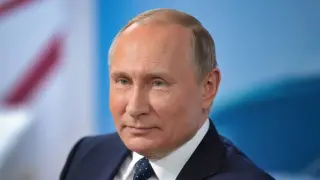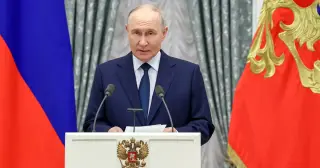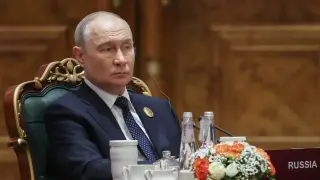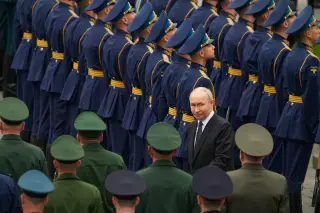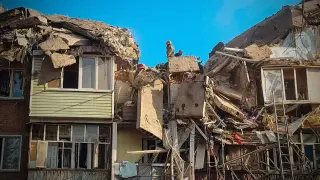
Russian President Vladimir Putin announced a ceasefire in Ukraine for Orthodox Easter, signaling a pause in fighting as the conflict continues on the ground, with frontline activity reported near areas like Zaporizhzhia.
Russian President Vladimir Putin announced a 32-hour ceasefire with Ukraine for Orthodox Easter, from 4 p.m. Saturday to end of Sunday, with Russian forces ordered to halt combat on all fronts but ready to repel provocations. Zelensky had urged a pause in hostilities, and the United States is mediating talks, though past Easter truces have been violated. Moscow’s broader demands—territorial concessions—remain a sticking point as fighting continues across multiple fronts.
Putin issued a decree for a 32-hour ceasefire from 4pm Saturday to the end of Sunday for Russian forces in Ukraine, instructing troops to halt hostilities while remaining prepared to counter provocations; Zelenskyy had proposed a reciprocal pause on energy infrastructure, but Kyiv offered no immediate reaction. The move follows several failed ceasefires and ongoing fighting along the roughly 800-mile front, with US-mediated talks stalled.
UK Prime Minister Keir Starmer says households’ energy bills swing up and down due to the actions of Trump and Putin as oil prices fluctuate amid the Israel–Iran conflict and a fragile ceasefire. He also criticizes Israel’s strikes on Lebanon during the ceasefire, while the White House defends Trump’s Iran policy and praises a potential peace agreement.
Kremlin spokesman Dmitry Peskov denied reports that President Vladimir Putin urged Russian oligarchs to fund the Ukraine war, saying any call for a large sum was a participant’s personal decision. The Financial Times cited unnamed sources; the piece notes Russia’s budget deficit and rising military spending. Reports highlighted Suleyman Kerimov as naming a 100 billion rubles contribution, with Bell noting others supported the idea and that the initiative may have originated with Putin. Peskov said the businessman justified it by ties to the state. Putin also warned oligarchs against wasting windfall oil profits.
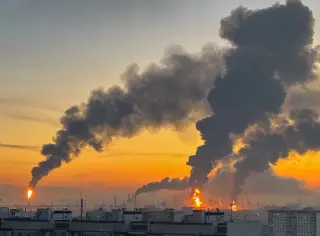
ISW reports Putin privately pressed Russia’s top businessmen to fund the state to stabilize finances for continuing the war, with hints of asset nationalization; Kremlin officials deny a direct fundraising request and say it was a personal decision, while attendees felt a sense of duty. Separately, Ukraine and Saudi Arabia signed a defense cooperation pact; Ukrainian strikes hit Russian oil infrastructure near the Baltic Sea; Latvia warned of Russian cognitive warfare against the Baltic states. On the battlefield, no confirmed ground advances were reported on March 27, as Russia and Ukraine continued long-range strikes and Russia conducted a large drone campaign (about 102 drones launched, roughly 93 downed).
The Kremlin on Friday denied reports that President Vladimir Putin asked leading businessmen to donate money to stabilise Russia’s finances for the war in Ukraine, saying no such request was made and that a named donor wasn’t identified. The Bell had reported at a closed-door meeting that a participant pledged a “very large” sum, with The Bell naming billionaire Suleiman Kerimov’s pledge of 100 billion roubles; Kremlin spokesman Dmitry Peskov said the initiative came from the donors themselves and wasn’t a Kremlin directive, and that the money wasn’t necessarily for the war. The article notes Russia’s budget deficit and slower growth, but hints at potential oil-price windfalls and possible spending cuts this year.
President Vladimir Putin reportedly asked Russia’s oligarchs to donate to the defence budget to sustain the Ukraine invasion, with at least two businessmen indicating willingness to contribute; Moscow’s defence spending has risen and authorities are weighing windfall taxes as sanctions bite, while Zelenskyy says US security guarantees hinge on Kyiv ceding Donbas.
North Korea’s Kim Jong Un welcomed Belarusian President Alexander Lukashenko to Pyongyang with a 21-gun salute, a public reception by citizens and soldiers, and a wreath-laying at the Kumsusan mausoleum, where Lukashenko laid a bouquet sent by Putin; KCNA said there were no reported talks, underscoring ongoing ties between the two allies of Russia.
Putin asked Russia’s oil and gas majors to use their Iran-war windfall to pay off domestic bank debts, arguing a mature decision as Brent crude tops $100 a barrel amid Middle East disruption; the price surge could mean up to $150 million in additional daily revenue for Russia’s budget, aided by a U.S. sanctions waiver allowing certain Russian oil shipments.
Two Russian tankers carrying LNG and crude are sailing toward Cuba in a direct challenge to the U.S. embargo, with one vessel rerouted to Venezuela and the other still en route. Analysts say the shipments would provide only a short-term boost to Cuba’s energy-starved grid, which recently suffered a nationwide blackout, while the White House signals it will target countries continuing fuel deliveries.
A Russian state-owned tanker carrying about 750,000 barrels of crude sails toward Cuba, potentially delivering weeks of fuel as U.S. sanctions bite Havana and blackouts worsen. The voyage, along with a second Russian fuel shipment, is framed as Moscow testing its willingness to aid Havana without triggering a direct clash with Washington, highlighting Moscow’s strategic effort to defend remaining Western Hemisphere allies amid cooling ties with Venezuela and Iran. Kremlin officials say relief options are being explored, while analysts note the move signals Moscow’s intent to back Cuba but stop short of a confrontation with the United States.
President Trump told Fox News that Vladimir Putin may be helping Iran 'a bit' as the conflict with the US and Israel persists, amid reports Russia has shared targeting coordinates with Tehran. Moscow denies providing intelligence to Iran, while Washington continues to back Ukraine and has temporarily lifted some Russian oil sanctions.
U.S. Special Envoy Steve Witkoff says Russian officials told Trump they have not shared intelligence with Iran during the war, a denial echoed by Putin adviser Ushakov; a separate MS Now report alleging Russia provides intelligence to Iran has circulated, but Witkoff said there’s no evidence supporting that claim.
Rising oil prices amid the Iran crisis could boost Russia's revenue and military spending, as Western attention shifts away from Ukraine; the ultimate benefit depends on how long the conflict lasts and how sanctions and markets respond.