
South Africa's ANC faces historic local election test amid service delivery crisis
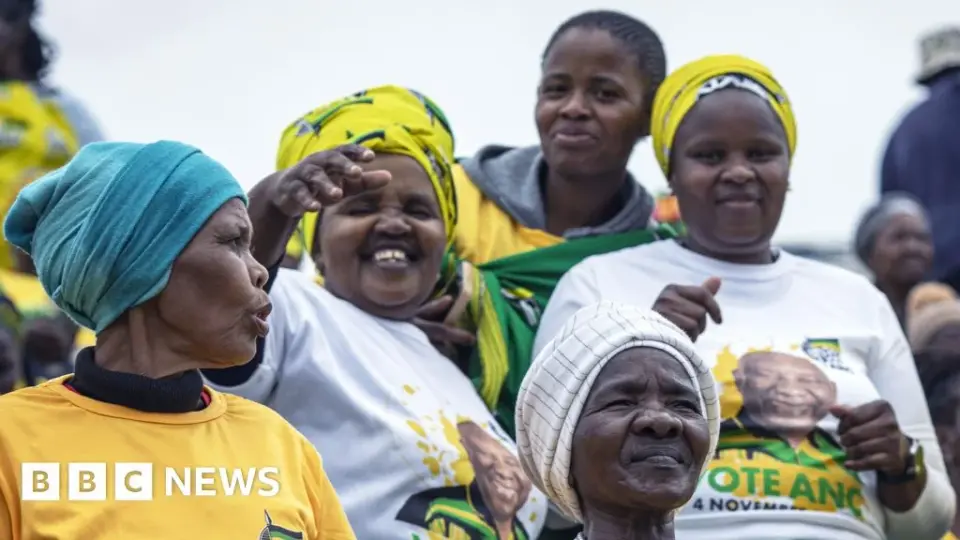
South African voters are set to cast ballots on November 4 in local elections that will determine control of the country's major municipalities. The African National Congress (ANC) is expected to suffer its worst performance ever, with polls showing support dropping to approximately 30%, down from 46% in 2021. The elections are driven by widespread voter anger over poor service delivery, including water shortages, power outages, and uncollected refuse. While the ANC remains the largest party, it risks losing control of key metropolitan areas to the Democratic Alliance (DA) and other coalitions. President Cyril Ramaphosa has denied the party is in decline, but analysts predict a fragmented result that will force new, potentially unstable coalition governments in major cities like Johannesburg and Durban.
Key points
- The ANC's support has fallen to roughly 30% in recent polls, down from 46% in 2021 and 70% at its 2004 peak, reflecting anger over corruption, unemployment, and crime.
- Johannesburg, a city of nearly 5 million, has had nine mayors in ten years due to coalition instability, contributing to financial mismanagement and infrastructure decay.
- The Democratic Alliance (DA) is polling at 25% in Johannesburg, led by Helen Zille, who has campaigned using viral stunts like snorkeling in potholes, though she faces skepticism from some black voters.
- In eThekwini (Durban), Jacob Zuma's uMkhonto weSizwe (MK) party is polling above 40%, potentially taking votes from the ANC, which is down to 10% in that area.
- Voter turnout is declining, particularly among youth, with many citing a lack of change and poor local governance as reasons for apathy.
- The ANC and DA are exploring a local coalition in Gauteng, mirroring their national unity government, but local ANC leaders reportedly oppose this arrangement.
Background
This election follows the ANC's loss of its parliamentary majority in the 2024 national elections, where it secured 40% of the vote. The party has been in a steady decline since its 2004 peak of 70%. The current local elections are the first major test of the ANC's viability since the formation of the government of national unity with the DA and smaller parties. Previous local elections in 2021 saw the ANC lose control of several major cities, and the current cycle is expected to accelerate this trend due to persistent service delivery failures and rising voter apathy.
How outlets are covering it
The BBC and AP News emphasize the ANC's electoral decline and the impact of poor service delivery, such as water and electricity issues, on voter sentiment. The Guardian highlights the fragmentation of the vote and the potential for unstable coalitions, noting that the ANC may still lead some city governments despite losing overall support. The Washington Post frames the election as a test of centrism against extremism, suggesting voters may choose competence over radical left or right platforms. All sources agree that the ANC is facing a significant challenge, but they differ on the likelihood of the ANC-DA coalition in Gauteng, with the Guardian noting local ANC opposition to such a tie-up, while the BBC suggests it may be unavoidable.
Why it matters
The outcome of these local elections will determine the stability and governance of South Africa's major economic hubs, including Johannesburg, which is central to the country's economy. Poor service delivery and political instability in these areas have led to financial mismanagement and infrastructure decay, affecting millions of residents. The results will also signal the ANC's ability to recover from its decline and may influence the political landscape ahead of the 2029 national elections. Additionally, the elections highlight the growing importance of coalition politics in South Africa, where no single party can govern alone, leading to potential instability and policy inconsistencies.
What to watch
The South African electoral commission will have seven days to announce the results, after which parties will have 14 days to form governing structures and elect mayors. The ANC and DA are expected to negotiate coalition agreements in key metropolitan areas, particularly in Gauteng, where the ANC currently governs through a fragile coalition. The outcome of these negotiations will determine the stability of local governments and the ability to address service delivery issues. In the long term, the results will influence the ANC's strategy for the 2029 national elections and may lead to further political realignments in South Africa.
- South Africa local elections: ANC under pressure to reverse decline BBC
- South Africa votes in local polls expected to further weaken ANC grip Reuters
- ANC faces anger over poor services as South Africans vote in local elections The Guardian
- Opinion | South Africa’s ANC faces its own midterm reckoning The Washington Post
- South Africans to vote in key local elections seen as a tough test for ruling ANC AP News
Want the full story? Read the original reporting
Read on BBC