
South Africa’s local vote signals ANC’s historic decline as coalitions loom
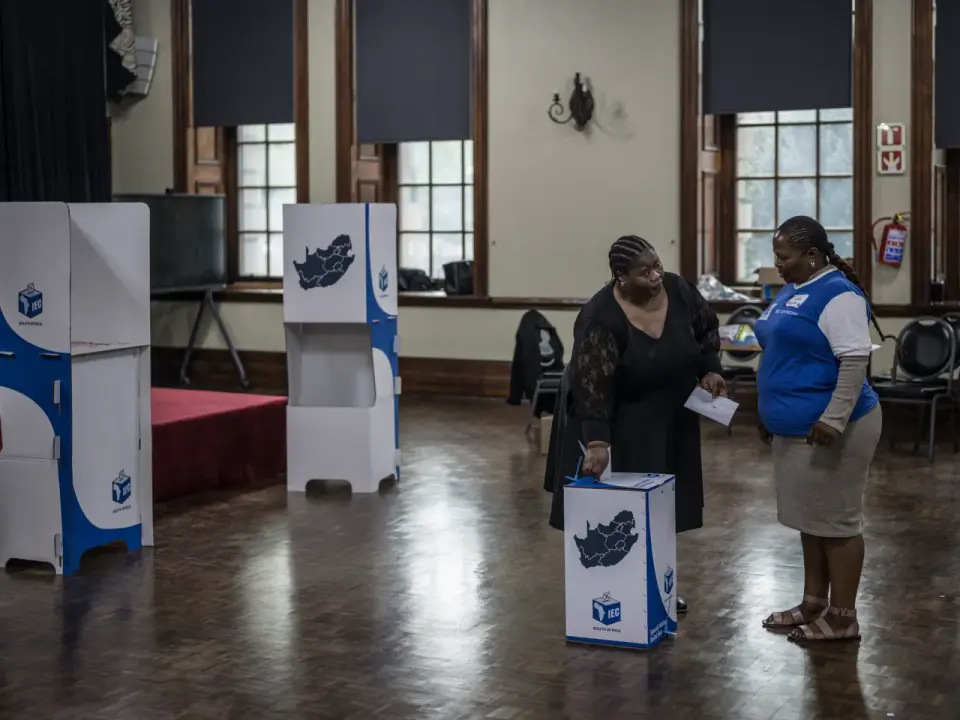
South Africans voted on November 4 in local elections that mark a critical test for the African National Congress (ANC). Preliminary data indicates the ANC is facing its worst performance ever, with support dropping significantly in key Gauteng municipalities. The Democratic Alliance (DA) and ActionSA are gaining ground, while the MK Party makes its local debut. The results are expected to force widespread coalition governments, reflecting deep voter dissatisfaction with service delivery failures like water shortages and uncollected refuse.
Key points
- The ANC’s support is projected to fall below 30% in some areas, down from 46% in 2021, marking its lowest local vote share since 1994.
- The Democratic Alliance (DA) is leading early counts in the Eastern Cape and gaining traction in Johannesburg, where Helen Zille is a key candidate.
- ActionSA is emerging as a major force in Tshwane and Ekurhuleni, while the MK Party, led by former President Jacob Zuma, is challenging for control in Durban.
- Voter turnout is higher than in 2021 but remains low overall, with a significant gap between suburban and township participation.
- Coalition governments are expected to dominate, as no single party is likely to secure outright majorities in most metropolitan areas.
Background
The ANC lost its parliamentary majority in the 2024 national elections, forcing a coalition with the DA. This local vote follows a decade of declining support, with the party falling below 50% in municipal polls for the first time in 2021. The current elections are seen as a verdict on the ANC’s ability to govern effectively amid persistent service delivery crises.
How outlets are covering it
Al Jazeera and ABC News emphasize the ANC’s decline and the significance of the vote as a test of its governing capacity. BBC highlights the contrast between affluent areas and townships, noting voter apathy in some regions. Daily Maverick provides early data showing the ANC’s sharp drop in support in Gauteng and the rise of the DA and ActionSA. All sources agree that coalition governments will likely be necessary, but they differ on the extent of the ANC’s loss, with some predicting a 'free fall' and others noting a slight recovery in KwaZulu-Natal.
Why it matters
The outcome of these elections will shape the political landscape in South Africa, potentially leading to unstable coalition governments in major cities. It also signals a shift in voter priorities, with service delivery becoming a central issue. The results may influence the ANC’s leadership succession and the broader trajectory of South African politics.
What to watch
Final results are expected by Sunday, with parties having 14 days to form governing structures. The outcome will likely determine the ANC’s leadership race in December 2027 and the stability of coalition governments in key municipalities.
- South Africans vote in local elections seen as test for embattled ANC Al Jazeera
- ANC narrowly leads DA in early South Africa municipal election results Reuters
- ANC under pressure to reverse South Africa decline BBC
- South Africans vote in local elections that could continue the decline of the once-mighty ANC ABC News - Breaking News, Latest News and Videos
- CATCH UP | With voting stations officially closed, focus shifts to counting, verifying results Daily Maverick
Want the full story? Read the original reporting
Read on Al Jazeera