
Spain's Housing Crisis Escalates as Parliament Rejects Decrees and Mass Protests Erupt
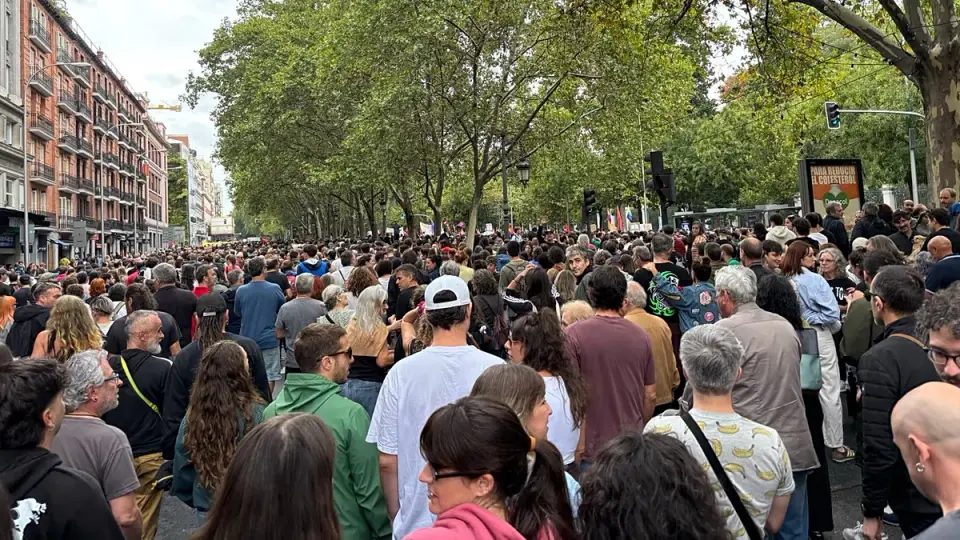
Mass protests erupted across Spain on October 3, 2026, following the parliamentary rejection of two government housing decrees. Organizers claim 500,000 people marched in Madrid, though authorities estimate 70,000. The demonstrations, sparked by the eviction of 87-year-old Maricarmen Abascal, demand a general strike and stricter tenant protections. Prime Minister Pedro Sánchez is now weighing early elections as his minority government faces a political crisis.
Key points
- Spanish parliament rejected two housing decrees on October 2, with the first failing by 178 votes to 172 and the second by 184 to 166.
- Protests occurred in approximately 50 cities, including Madrid, Valencia, and Barcelona, with clashes reported in Valencia near a real estate summit.
- The Tenants' Union demands a 50% rent cut, open-ended contracts, and the expropriation of homes from investment funds, while calling for a potential general strike.
- The crisis was triggered by the eviction of Maricarmen Abascal, an 87-year-old woman whose rent was raised by 275% by investment firm Urbagestión; she has since agreed to return to her home at a lower rent.
- Prime Minister Pedro Sánchez is considering early elections, as his coalition lacks a majority and faces opposition from the PP, Vox, and Junts.
Background
The current unrest follows the September 2026 eviction of Maricarmen Abascal, an 87-year-old resident of Madrid who lived in her apartment for over 70 years. Her removal, which involved police force and public outcry, highlighted Spain's severe housing shortage, estimated at 700,000 units. Madrid rents have risen by over 100% in the past decade, with average costs reaching 900 euros in some areas. The Bank of Spain notes a significant gap between demand and new construction, while over 50% of young adults now live with their parents due to affordability issues.
How outlets are covering it
Euronews and BBC report on the scale of the protests, noting a significant discrepancy between organizer estimates (500,000 in Madrid) and official figures (70,000). Both outlets highlight the peaceful nature of the Madrid march versus the violent clashes in Valencia, where police used rubber bullets and tear gas. The Financial Times offers a critical analysis, arguing that the government's focus on banning 'vulture funds' and rent controls addresses symptoms rather than the root cause of insufficient housing supply. The FT suggests that Spain's low construction rates and population growth are the primary drivers of rising rents, contrasting this with the immediate political demands of the protesters. While Euronews and BBC focus on the political fallout and street actions, the FT emphasizes the structural economic failures behind the crisis.
Why it matters
The rejection of the housing decrees signals a potential collapse of Pedro Sánchez's minority government, potentially leading to early elections. The unrest highlights deep social divisions over housing affordability, with risks of further escalation if a general strike is called. The situation also underscores the tension between tenant protection measures and the broader economic need for increased housing construction, a debate likely to shape Spanish policy for years to come.
What to watch
Prime Minister Pedro Sánchez is in a period of reflection regarding whether to call early elections. The Tenants' Union is negotiating the timing of a potential general strike, aiming for a 'historic' event. Opposition parties, including the PP and Vox, are calling for elections, while some PSOE leaders are now considering the move. The camp in Puerta del Sol, Madrid, remains active with approximately 2,000 people, and further demonstrations are scheduled in cities like Teruel and San Sebastian.
- Nearly 500,000 people protest in Madrid over Spain's housing crisis euronews.com
- 'Anger in the streets': Tens of thousands protest in Spain over housing crisis BBC
- Tens of thousands protest across Spain over housing crisis Reuters
- Spain: Massive protests after housing bills voted down DW.com
- The right and wrong lessons to learn from Spain’s housing crisis Financial Times
Want the full story? Read the original reporting
Read on euronews.com