
State Department's 'Censorship' Document Dump Fails to Prove Conspiracy, Exposes Pentagon Ties
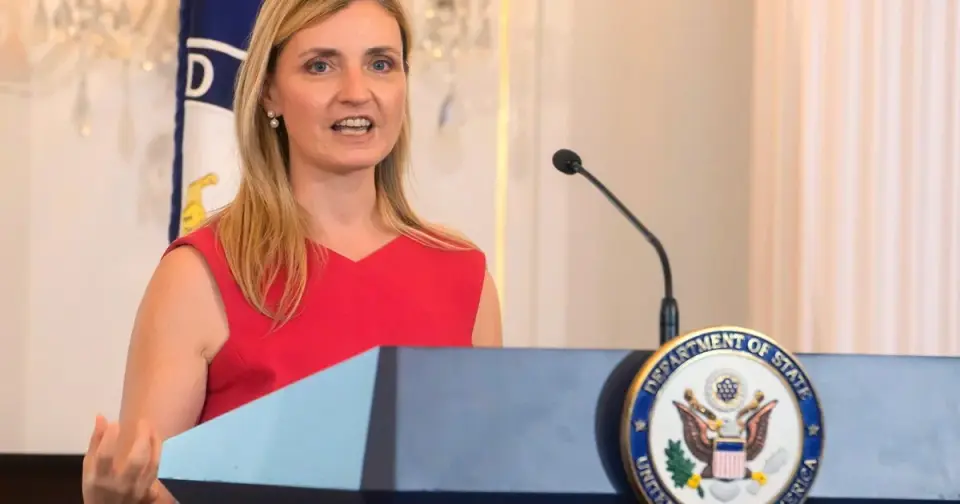
The State Department’s long-promised release of documents to prove a 'censorship-industrial complex' conspiracy failed to provide evidence, instead revealing an undisclosed relationship between officials and a Pentagon contractor. Under Secretary Sarah Rogers released files that critics called 'nothingburgers,' while the leak exposed that analyst Jennica Pounds was a special government employee for the Department of Defense.
Key points
- Under Secretary for Public Diplomacy Sarah Rogers released documents in August 2026 to prove the 'censorship-industrial complex' theory, which claims the State Department censored conservatives.
- The document dump, modeled after the 'Twitter Files,' failed to prove the conspiracy and was dismissed by critics as decontextualized snippets.
- The release inadvertently revealed that analyst Jennica Pounds, who received the documents, was a special government employee for the Department of Defense since July 2026.
- The 'censorship-industrial complex' theory has been used to justify dismantling the Global Engagement Center and firing experienced officials, despite lacking evidence in courts and congressional investigations.
- Former State Department officials and experts, including Renée DiResta, described the document release as a hoax and a failure to substantiate the claims that justified the agency's restructuring.
Background
The 'censorship-industrial complex' narrative has been a central theme in the Trump administration's second term, used to justify the dismantling of the Global Engagement Center (formerly the Counter Foreign Information Manipulation and Interference Hub) and the firing of experienced officials. Acting Under Secretary Darren Beattie, a former far-right academic, led the initial push to dismantle these offices, claiming they were part of a secret conspiracy to silence conservatives. This followed a broader pattern of the administration using unproven conspiracy theories to justify structural changes in federal agencies, similar to the 'Twitter Files' release in 2022, which also failed to prove its claims. The current document release by Sarah Rogers, Beattie's replacement, was the culmination of a 17-month promise to provide evidence for these claims.
Why it matters
The failure of the State Department to provide evidence for the 'censorship-industrial complex' conspiracy undermines the justification for the dismantling of the Global Engagement Center and the firing of experienced officials. It highlights the administration's reliance on unproven narratives to justify structural changes in federal agencies, potentially eroding public trust in government institutions and the integrity of foreign policy efforts to counter disinformation. The exposure of an undisclosed relationship between a State Department official and a Pentagon contractor also raises concerns about transparency and potential conflicts of interest in government operations.
What to watch
The State Department and Jennica Pounds have not responded to requests for comment regarding the document release or Pounds' employment with the Department of Defense. The administration may face further scrutiny over the lack of evidence for the 'censorship-industrial complex' theory and the undisclosed relationship between Rogers and Pounds. Former State Department officials may continue to criticize the administration's actions, and the failure to provide evidence could impact the administration's credibility in future policy justifications.
Want the full story? Read the original reporting
Read on MS NOW