
Sweden Election Remains Too Close to Call as Far-Right Role Looms
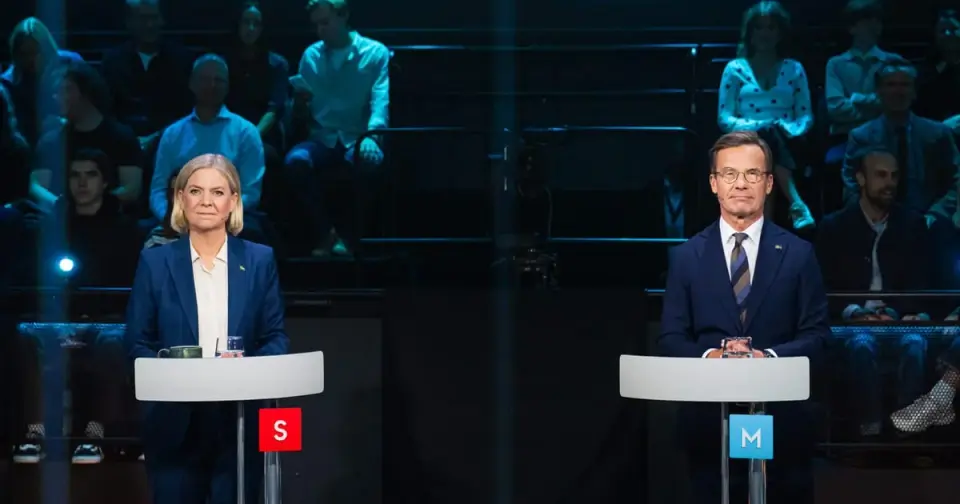
Sweden’s general election remains undecided, with the left-wing bloc holding a marginal lead over the right-wing alliance. Preliminary counts show a near-even split in the 349-seat parliament, keeping the fate of Prime Minister Ulf Kristersson and the potential entry of the far-right Sweden Democrats into government uncertain. Final results are expected later in the week after late and overseas ballots are counted.
Key points
- The left-wing bloc led by Magdalena Andersson holds a slight advantage, with 176 seats projected versus 173 for the right-wing alliance led by Ulf Kristersson, according to BBC and NYT reports.
- SVT and TV4 exit polls initially favored the left, but later analyses indicated a much closer race, with SVT projecting 175 seats for the left and 174 for the right.
- Kristersson has promised cabinet positions for the Sweden Democrats if he remains in power, a historic first for a party long shunned in Swedish politics.
- The Social Democrats are on track for their worst result in over a century, while the Sweden Democrats are losing support for the first time since 2010.
- Final results will not be declared until later in the week, as counting continues for late and overseas ballots, with coalition negotiations expected to be complex.
Background
Sweden’s 2026 election follows a period of heightened political tension, with the Sweden Democrats gaining significant influence since 2022 through the Tidö agreement. Previous coverage highlighted the razor-thin nature of the race, the 4% threshold for parliamentary entry, and the potential for minority governments. The current election is seen as a watershed moment for far-right influence in Europe, with close attention from other nations where nationalist parties are rising.
How outlets are covering it
POLITICO emphasizes the late surge for the right and Kristersson’s promise to include the Sweden Democrats in government, framing it as a potential shift in Swedish politics. The Guardian focuses on the complexity of the electoral system and the likelihood of a minority government, noting the role of smaller parties in coalition formation. BBC highlights the left’s slim lead and the historical significance of the Sweden Democrats’ potential entry into government, while also noting their declining support. The New York Times underscores the extreme closeness of the race, with the left holding a 49.5% to 49.1% edge, and stresses that the final outcome may not be clear until later in the week. All outlets agree on the uncertainty and the high stakes of the election, but differ in their emphasis on the far-right’s role and the likelihood of a left-wing victory.
Why it matters
The outcome of Sweden’s election could set a precedent for far-right parties in Europe, with the Sweden Democrats potentially entering government for the first time. The close race also highlights the fragility of coalition politics in Sweden and the impact of smaller parties on government formation. The election’s result will influence policies on immigration, crime, and welfare, and may have broader implications for European politics as nationalist movements gain traction.
What to watch
Final results will be determined later in the week after late and overseas ballots are counted. Coalition negotiations will likely be complex, with the left-wing bloc facing internal disagreements and the right-wing alliance relying on the Sweden Democrats. Kristersson and Andersson will need to secure enough support to form a government, with the outcome potentially hinging on the ability to form a stable coalition or minority government.
- Sweden election forecast says vote too close to call politico.eu
- Sweden election live: results too close to call, with projections narrowing as more votes are counted The Guardian
- Left-wing bloc leads Swedish vote after far-right lose support, exit polls say BBC
- Sweden’s left on course to retake power Financial Times
- In the Home of Volvo and Spotify, an Election Shows Shifting Priorities The New York Times
Want the full story? Read the original reporting
Read on politico.eu