
Sweden’s Left Bloc Holds Narrow Lead as Far-Right Sweden Democrats Suffer Historic Decline
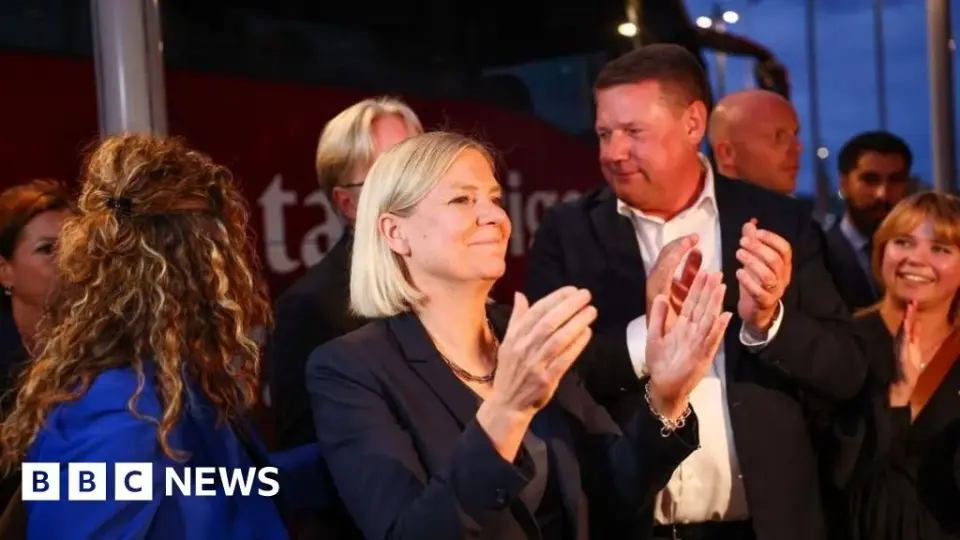
Swedish general election results remain too close to call, with the left-wing bloc holding a marginal three-seat lead over the right-wing coalition. The Social Democrats, led by Magdalena Andersson, are projected to win 176 seats compared to 173 for the right-wing bloc led by Prime Minister Ulf Kristersson. The far-right Sweden Democrats (SD) experienced their first vote share decline since 2010, losing support despite promises of cabinet roles if the right wins. Final results are pending as counting continues for late and overseas ballots.
Key points
- The left-wing bloc leads by approximately 20,000 votes, with 176 mandates versus 173 for the right-wing bloc in the 349-seat Riksdag.
- The Sweden Democrats (SD) lost an estimated 11 seats, marking the first decline in their vote share since entering parliament in 2010.
- The Social Democrats are on track for their worst result in over a century, securing approximately 28% of the vote.
- Turnout dropped to roughly 80%, a four-point decrease from the 2022 election.
- Counting will resume on Wednesday to include late early votes and ballots from abroad, as no major media outlet has declared a winner.
Background
This election follows the 2022 result where the right-wing coalition, supported by the Sweden Democrats, took power after breaking a longstanding taboo against governing with the far-right. Previous coverage noted that exit polls initially favored the center-left in 2022, but the final count shifted the outcome to the right. The current race is characterized by a fragmented left-wing bloc versus a united right-wing coalition that sought to bring the SD into formal government.
How outlets are covering it
BBC and CNN report that the left-wing bloc holds a narrow lead, with CNN emphasizing that the far-right SD’s decline is likely due to tactical voting rather than a peak in far-right support. The Guardian highlights the polarized campaign, noting personal attacks and controversial SD advertising, while also pointing out that the SD has attempted to moderate its rhetoric. All sources agree that the outcome is too close to call, with Kristersson refusing to concede and Andersson urging supporters to wait for final results. Analysts cited by CNN suggest that even a center-left victory will not reverse Sweden’s restrictive immigration policies, which have been tightened under the current government.
Why it matters
The outcome will determine whether Sweden continues its rightward shift under Kristersson or pivots toward a center-left government under Andersson. The decline of the Sweden Democrats, despite their previous dominance, signals potential voter fatigue with far-right rhetoric, though analysts caution that this may not indicate a broader rejection of far-right policies. The election also tests the stability of coalition governance in Sweden, where minority governments are common, and could influence immigration and welfare policies across Europe.
What to watch
Counting will resume on Wednesday to include late early votes and overseas ballots. Coalition talks are expected to take weeks or months, with Andersson facing challenges in uniting a divided left-wing bloc, particularly between the Greens/Left Party and the Center Party. Kristersson has promised cabinet positions for the SD if the right wins, but the party’s decline may complicate this arrangement.
- Swedish opposition have slim lead in 'too close to call' election BBC
- Swedish election: centre-left parties lead by just a single seat with most votes counted The Guardian
- Sweden’s center-left bloc leads close election against right-wing government The Times of Israel
- Election in Sweden Is Too Close to Call The New York Times
- Swedish polls close in election deciding fate of far-right cnn.com
Want the full story? Read the original reporting
Read on BBC