
Sweden Election: Center-Left Holds Sliver Lead as Far-Right Seeks Historic Cabinet Role
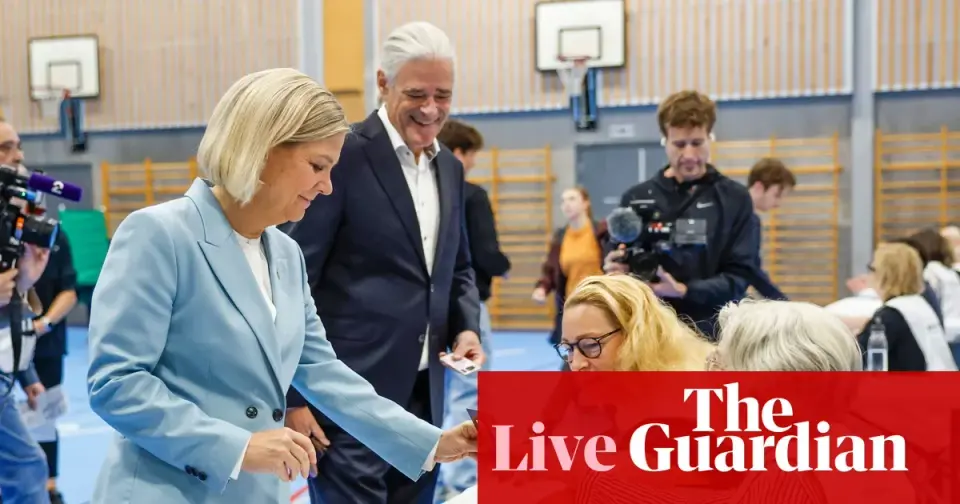
Swedish voters cast ballots in a razor-thin parliamentary election, with early results showing a negligible lead for the center-left bloc. The outcome determines whether the far-right Sweden Democrats will enter government for the first time or if the center-left will reclaim power. The race is defined by domestic welfare concerns, despite significant underlying fiscal pressures from rising defense costs.
Key points
- With approximately 95% of votes counted, the center-left coalition holds a marginal lead of 49.5% to 49.1% over the center-right, according to The New York Times.
- Prime Minister Ulf Kristersson seeks a second term, promising cabinet posts for the far-right Sweden Democrats if the right-wing bloc secures a majority.
- Opposition leader Magdalena Andersson campaigned on expanding the welfare state and resisting a government dominated by the Sweden Democrats.
- Economic analysts warn that the next government faces a difficult fiscal equation, balancing high defense spending with welfare commitments.
- The election features a complex seven-step voting process and a proportional representation system with a 4% threshold, potentially resulting in eight parties in parliament.
Background
This election follows the 2022 vote where Kristersson formed a minority government with outside support from the Sweden Democrats, breaking a long-standing political taboo. Sweden joined NATO in 2024, ending centuries of military non-alignment, which has increased defense budgets. Previous coverage highlighted the narrow gap between the blocs and the potential normalization of the far-right party in government.
How outlets are covering it
The Guardian and Al Jazeera emphasize the historic significance of the Sweden Democrats potentially entering the cabinet, framing the election as a choice between a far-right-dominated government and a center-left coalition. The New York Times focuses on the extreme closeness of the race, noting that the center-left holds only a 0.4 percentage point lead with most votes counted. CNBC shifts the focus to economic realities, arguing that while voters prioritize domestic welfare and household finances, the next government will face constrained fiscal room due to structural defense spending increases and uncertainty regarding U.S. security commitments. While The Guardian notes the complexity of the voting process, CNBC highlights the tension between election promises and post-election economic constraints.
Why it matters
The outcome will determine the political direction of Sweden, a key EU and NATO member. If the far-right enters government, it could signal a broader shift in European politics toward right-wing populism. Conversely, a center-left victory may reinforce traditional welfare-state models. The election also tests Sweden's ability to balance high defense spending with social welfare, a challenge facing many European nations amid geopolitical instability.
What to watch
Final results are expected later in the week as overseas and late ballots are counted. Coalition negotiations will likely take weeks, given the fragmented parliament and the potential need for minority government arrangements. The new government will face immediate pressure to address fiscal constraints while delivering on campaign promises regarding welfare and defense.
- Sweden general election: close race as far right eyes role in government – Europe live The Guardian
- Swedes vote in election that could usher far right into government or banish them Reuters
- Voting under way in Sweden election that could see far right in government aljazeera.com
- Russia, Trump and a battle over welfare loom over Sweden’s election cnbc.com
- In the Home of Volvo and Spotify, an Election Shows Shifting Priorities The New York Times
Want the full story? Read the original reporting
Read on The Guardian