
Tunisia’s civic space collapses as state crackdown targets NGOs and activists
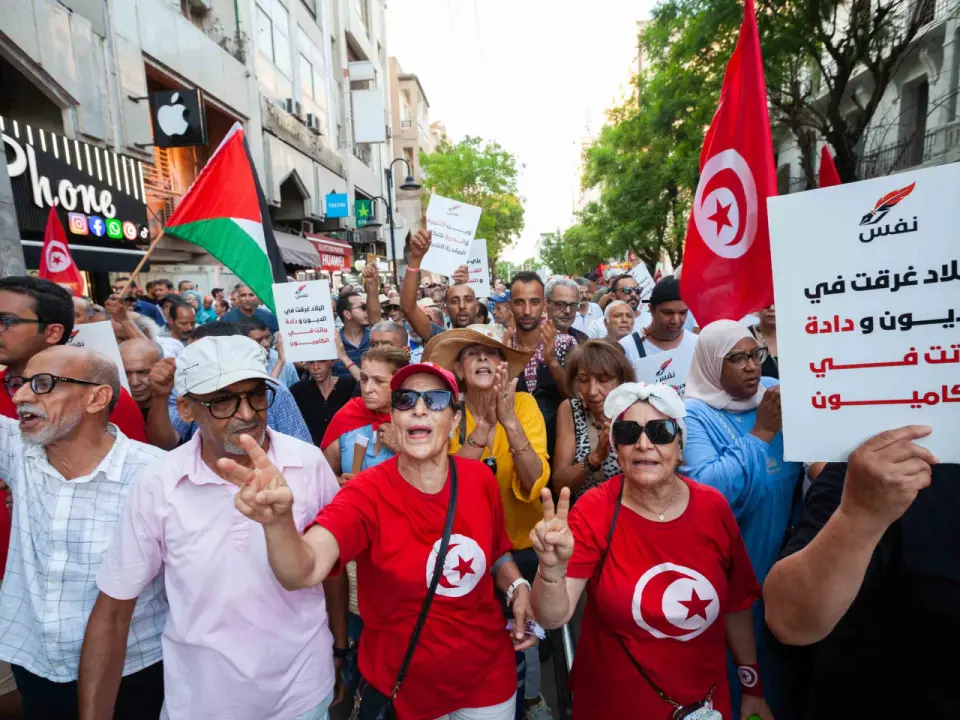
Human Rights Watch reports that Tunisian authorities have severely restricted civil society through mass arrests, financial investigations, and the suspension of dozens of associations. Since 2021, President Kais Saied has consolidated power, leading to the prosecution of at least 47 NGO workers and the imprisonment of prominent human rights defenders. The crackdown, which targets migration and anti-racism groups, has created a climate of fear that stifles public discourse and journalism.
Key points
- Human Rights Watch documented the prosecution of at least 47 individuals linked to non-governmental organizations, with 14 receiving prison sentences between 2025 and 2026.
- Prominent human rights defender Saadia Mosbah was sentenced to eight years in prison on financial crime charges in March 2026.
- Authorities have suspended at least 20 civil society associations, often bypassing required legal warnings and ignoring appeals, leading to potential dissolution.
- Financial pressure includes tax evasion investigations and bank account freezes for groups like Amnesty International and I Watch, alongside restrictions on foreign funding.
- Journalists face increased surveillance and equipment confiscation, with the number of photojournalists estimated to have fallen by half due to the hostile environment.
Background
This escalation follows President Kais Saied’s 2021 suspension of parliament and subsequent rule by decree, which undermined judicial independence. The current crackdown marks a sharp reversal of the civic expansion that occurred after the 2011 revolution, where independent organizations played a key role in holding authorities accountable. While Saied frames these measures as necessary to combat corruption and protect national sovereignty, critics argue they are used to silence dissent and eliminate checks on executive power.
Why it matters
The systematic dismantling of Tunisia’s civil society infrastructure threatens the country’s democratic foundations and human rights protections. By criminalizing legitimate advocacy and freezing the assets of independent groups, the state is eliminating the mechanisms that allow citizens to challenge abuses. This creates a precedent for using legal and financial tools to suppress dissent, potentially inspiring similar tactics in other regions and isolating Tunisia from international human rights norms.
What to watch
Human Rights Watch is urging Tunisian authorities to end abusive investigations and release arbitrarily detained activists. The organization is also calling on the European Union and its member states to pressure Tunisia to halt the crackdown. Meanwhile, two draft laws aimed at giving the government greater control over association funding and operations remain a threat, potentially further restricting the legal space for independent organizations.
Want the full story? Read the original reporting
Read on Al Jazeera