
U.K. AI Leadership Stumbles as U.S. Blocks Model Access and Disinformation Unit Faces Backlash
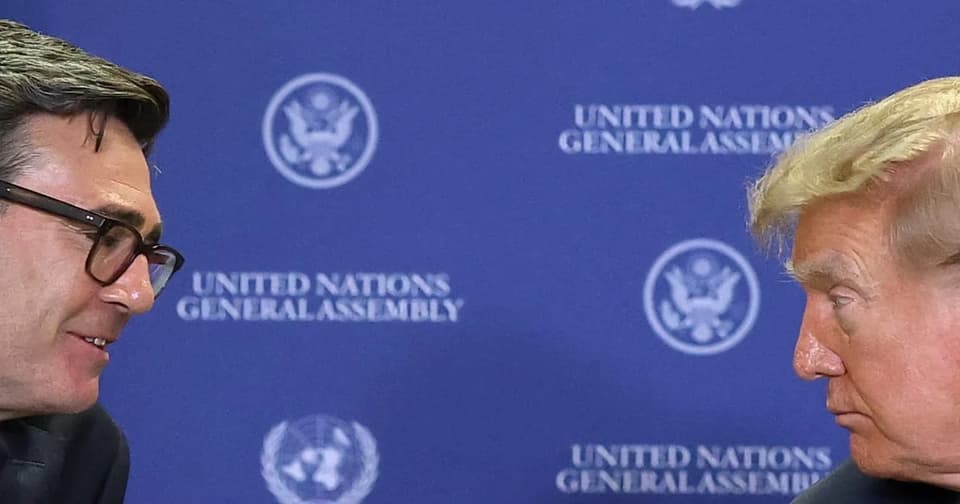
U.K. Prime Minister Andy Burnham’s strategy to position Britain as a global leader in AI safety and information defense has faced immediate setbacks. The U.S. administration has restricted access to new AI models for the U.K.’s AI Security Institute, while domestic political opposition challenges the newly proposed National Centre for Information Defence. These developments complicate London’s efforts to broker international AI standards during its upcoming G20 presidency.
Key points
- The White House has instructed OpenAI and Anthropic to delay sharing new AI models with the U.K. AI Security Institute until U.S. testing is complete, undermining London’s claim to be a global hub for AI safety.
- Burnham announced the creation of the National Centre for Information Defence to combat Russian disinformation, a move welcomed by most MPs but condemned by Reform UK leader Nigel Farage as a threat to free speech.
- The U.K. declined to sign a 22-country declaration on frontier AI safety at the UN General Assembly, aligning with the U.S. refusal to join such pacts, despite Burnham’s goal of acting as an 'honest broker' in AI governance.
- Experts warn that without U.S. cooperation, the U.K. risks being sidelined by other nations like France and Canada, or may need to pivot toward China, which is more open to international AI agreements.
- The U.S. administration has rejected calls for global AI oversight, with President Trump dismissing AI risks as a 'hoax' and prioritizing domestic innovation over international regulatory frameworks.
Background
This follows a series of U.S. moves in September 2026 where President Trump rejected global AI oversight bodies, established an 'AI Force,' and appointed an AI Czar to accelerate domestic development. These actions contrast with the U.K.’s long-standing role in convening AI safety summits, such as the 2023 Bletchley Park Summit, and highlight a growing divergence in transatlantic approaches to AI governance.
How outlets are covering it
POLITICO emphasizes the strategic damage to Burnham’s AI agenda, noting that U.S. restrictions on model access and refusal to join international pacts force the U.K. to choose between alienating Washington or pressing ahead without its closest ally. The BBC focuses on the operational reality of Russian disinformation campaigns, detailing how AI-generated fake videos and cloned voices target ordinary citizens, while acknowledging that the effectiveness of such campaigns is difficult to measure. HuffPost UK highlights the domestic political rift, with Nigel Farage opposing the new information defense unit as a tool for suppressing free speech, contrasting with cross-party support from Labour, Conservative, and Liberal Democrat MPs. The Guardian frames the issue as a systemic 'poisonous tide' of disinformation, arguing that Burnham’s new agency is a necessary step to address the infrastructure of misinformation rather than isolated incidents, while noting that the problem extends beyond Russia to include far-right influencers and AI 'poisoning' of chatbots.
Why it matters
The U.K.’s ability to lead on AI safety and information defense is central to its foreign policy and global influence. U.S. restrictions on model access and refusal to join international AI agreements weaken the U.K.’s credibility as a neutral broker, potentially ceding influence to China or other powers. Domestically, the backlash against the National Centre for Information Defence signals deep political divisions over the balance between security and free speech, which could limit the government’s ability to implement robust counter-disinformation measures. These challenges test the resilience of the U.K.-U.S. 'special relationship' and the viability of multilateral approaches to AI governance in a fragmented global landscape.
What to watch
Burnham’s government must decide whether to press the U.S. for cooperation on AI safety or proceed with international initiatives without Washington. The effectiveness of the National Centre for Information Defence will depend on its ability to navigate free speech concerns and address the root causes of disinformation, not just isolated incidents. The U.K. may also explore closer ties with China on AI standards if the U.S. remains uncooperative, though this risks complicating its relationship with Washington. In the coming weeks, the G20 presidency will be a key test of whether the U.K. can broker a unified global approach to AI governance despite transatlantic tensions.
- Burnham’s AI agenda is already in disarray thanks to Trump politico.eu
- Is Burnham right to blame Russia for spreading online disinformation? bbc.com
- Kremlin says UK Burnham's decision to stir up anti-Russian sentiment in UN speech was short-sighted Reuters
- Nigel Farage Has Attacked The Government's Plans For A New Russia Misinformation Unit HuffPost UK
- How the ‘poisonous tide’ of disinformation spreads division and despair theguardian.com
Want the full story? Read the original reporting
Read on politico.eu