
UK and EU finalize post-Brexit reset on trade and mobility, with tuition fees unresolved
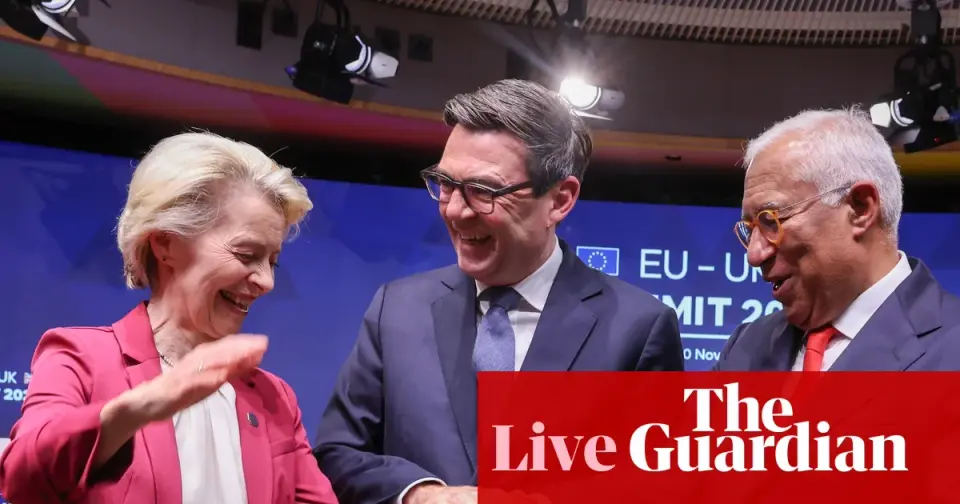
UK Prime Minister Andy Burnham and EU leaders agreed a 'reset' deal in Brussels to reduce trade barriers and launch a youth mobility scheme, with implementation set for 2028. The agreement includes removing checks on food exports and linking emissions trading systems, but a dispute over tuition fees for EU students remains unresolved. Burnham claims the deal will add £17bn annually to the UK economy, while critics argue it betrays the 2016 referendum.
Key points
- The deal includes a 'Sanitary and Phytosanitary' agreement to remove certificates for food and plant exports, estimated to add £5.1bn to the UK economy.
- A Youth Experience Scheme will allow 100,000 young people from each side to work or study for up to three years, operational by 2028-2030.
- The UK and EU will link their emissions trading systems to exempt goods like steel from border carbon levies.
- Tuition fees for EU students in the UK remain unresolved, with the EU seeking full fee parity and the UK offering only 'significantly reduced' rates.
- Foreign Secretary Ed Miliband confirmed the core deals will enter into force regardless of the tuition fee dispute.
Background
This summit followed months of diplomatic work initiated under previous PM Keir Starmer, who resigned in July. The agreement marks a significant shift from the 2016 Brexit vote, with Burnham stating Brexit 'has not worked.' The deal is part of a broader 'reset' aimed at addressing economic losses and geopolitical shifts, including US tariffs and Russian aggression.
How outlets are covering it
The Guardian and BBC report the deal as a 'win-win' that will boost the economy by £17bn annually, with Burnham calling it the 'single biggest growth measure' for this parliament. The New York Times notes the deal falls short of reversing Brexit but is driven by economic pain and geopolitical shifts, including US tariffs and Russian threats. Critics, including Nigel Farage of Reform UK and Kemi Badenoch of the Conservatives, condemn the deal as a 'betrayal' of the 2016 vote, with Farage calling it 'incremental steps to rejoin the EU.' The BBC highlights that Miliband insists the core deals will proceed regardless of the tuition fee dispute, while the EU previously suggested the entire package could be jeopardized. Business leaders, including the British Retail Consortium, welcome the deal but warn they need 'at least 18 months' to transition and do not expect immediate price drops.
Why it matters
The deal signals a major shift in UK-EU relations, potentially reducing trade frictions and boosting economic growth. It also sets the stage for future negotiations on closer ties, including possible reintegration into the single market or customs union, which Burnham says will be discussed after the next election. The unresolved tuition fee dispute could delay implementation or lead to further negotiations, while the deal's impact on prices and jobs remains debated.
What to watch
The UK and EU will negotiate a 'supplementing agreement' on tuition fees within six months. The core deals are expected to enter into force by 2028, with the Youth Experience Scheme operational by 2030. Burnham plans to discuss broader options for closer ties with the EU in about a year, ahead of the next national election due by mid-2029. The UK government will present the deal to parliament next week, with business leaders calling for 'clear and early' guidance on implementation.
- EU wants ‘closest possible relationship’ with UK after agreeing Brexit reset deal – live The Guardian
- Britain Announces Brexit Reset Deal at E.U. Summit: What to Know The New York Times
- Facing economic pain and Russia threats, U.K.’s Burnham looks to rewrite Brexit with new deal NBC News
- Ed Miliband: EU deal not dependent on tuition fees agreement BBC
- Burnham seals trade and youth mobility deals in biggest step towards EU since Brexit The Guardian
Want the full story? Read the original reporting
Read on The Guardian