
UK and EU Sign Trade and Mobility Deal, Setting Stage for Broader 'Reset'
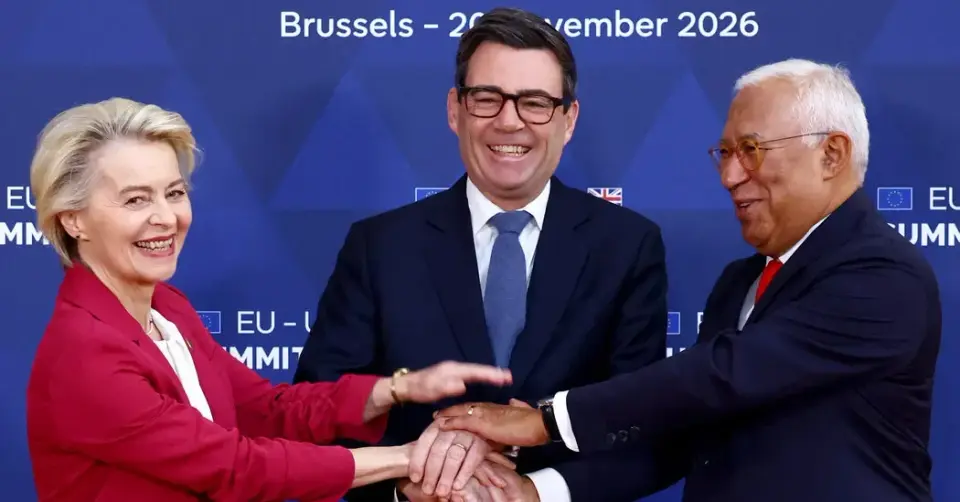
UK Prime Minister Andy Burnham and EU leaders agreed a deal to reduce food export checks, link emissions trading systems, and launch a youth mobility scheme. The agreement, expected to boost the UK economy by £17bn annually, marks a significant shift in post-Brexit relations. While Burnham calls it a 'reset' and hints at deeper future ties, critics from the Conservative and Reform parties condemn it as a betrayal of the 2016 vote. Tuition fee negotiations remain unresolved, and Burnham has committed to a 10-year plan for reindustrialization and closer European integration, though he maintains that the UK will not return to the single market or customs union.
Key points
- UK and EU agreed to scrap most checks on British food exports from 2028, with the UK adopting some EU regulations in return.
- A new youth experience scheme will allow up to 100,000 young people (18-31) from the EU and UK to travel, work, and study in each other's territories for up to three years, starting by January 2030.
- The UK and EU concluded talks on linking their emissions trading systems, with the agreement set to apply from 2028.
- The UK Treasury estimates the deal could add up to 0.5% to UK GDP, equating to a £17bn annual boost, a figure disputed by Conservative leader Kemi Badenoch.
- Burnham stated that the UK will not return to the single market, customs union, or freedom of movement, but will pursue an 'informal brainstorming process' for a long-term relationship.
- Tuition fee negotiations for EU and UK students remain unresolved, with a six-month extension granted to reach an agreement.
Background
This development follows Burnham's earlier confirmation that Russia interfered in the 2016 Brexit referendum, a statement that sparked political backlash. In October, Burnham had also dismissed calls for EU rejoining from the City of London, emphasizing the need for an independent regulatory framework. The current deal builds on a 'reset' of relations that began under former Prime Minister Keir Starmer, who had been cautious about closer EU ties due to concerns about the Reform Party's influence.
How outlets are covering it
The New York Times frames the deal as a 'Brexit rollback' driven by external pressures from Trump's policies, Russian aggression, and China's economic dominance, suggesting that geopolitical shifts are forcing Europe and Britain back together. The BBC presents the deal as a pragmatic 'reset' that delivers economic benefits and addresses public demand for closer ties, while highlighting the political rifts between Burnham's government and opposition parties. The Guardian, in a more editorial tone, portrays the deal as a 'joyful' reunion between Burnham and EU leaders, contrasting it with the 'bitter' reactions from Nigel Farage and the Conservatives, who view the agreement as a betrayal of the 2016 vote. The three outlets differ in their emphasis: The Times focuses on geopolitical drivers, the BBC on economic and political implications, and the Guardian on the personal and symbolic dimensions of the deal.
Why it matters
The deal signals a significant shift in UK-EU relations, moving from post-Brexit friction to closer cooperation. It could impact trade, immigration, and environmental policy in both the UK and EU. The unresolved tuition fee issue and the potential for deeper future ties suggest that the UK-EU relationship is in a state of flux, with implications for British sovereignty, economic growth, and European integration. The political backlash from opposition parties highlights the ongoing domestic debate over Brexit and the UK's future relationship with Europe.
What to watch
The UK government will introduce legislation to implement the deal in Parliament next week. Burnham will publish a 10-year plan for reindustrialization and growth, linking it to the UK's long-term relationship with the EU. The UK and EU will engage in an 'informal brainstorming process' to explore options for a closer relationship, with the next UK-EU summit expected to take place before the next UK election in August 2029. Tuition fee negotiations will continue, with a six-month extension to reach an agreement.
- Britain and Brussels Have Begun a Brexit Rollback. How Far Will It Go? The New York Times
- Andy Burnham: UK to explore even closer ties with EU after agreeing deal BBC
- Andy, António and Ursula: the joyful EU throuple break Nigel’s bitter heart | John Crace The Guardian
- Britain and EU agree deals on food trade, youth mobility, joint statement says Reuters
- 10 years on, Britain reopens the Brexit fight — this time embracing the E.U. The Washington Post
Want the full story? Read the original reporting
Read on The New York Times