
India’s ‘Cockroach’ Movement Escalates Voter Roll Protests Amid Heavy Police Crackdown
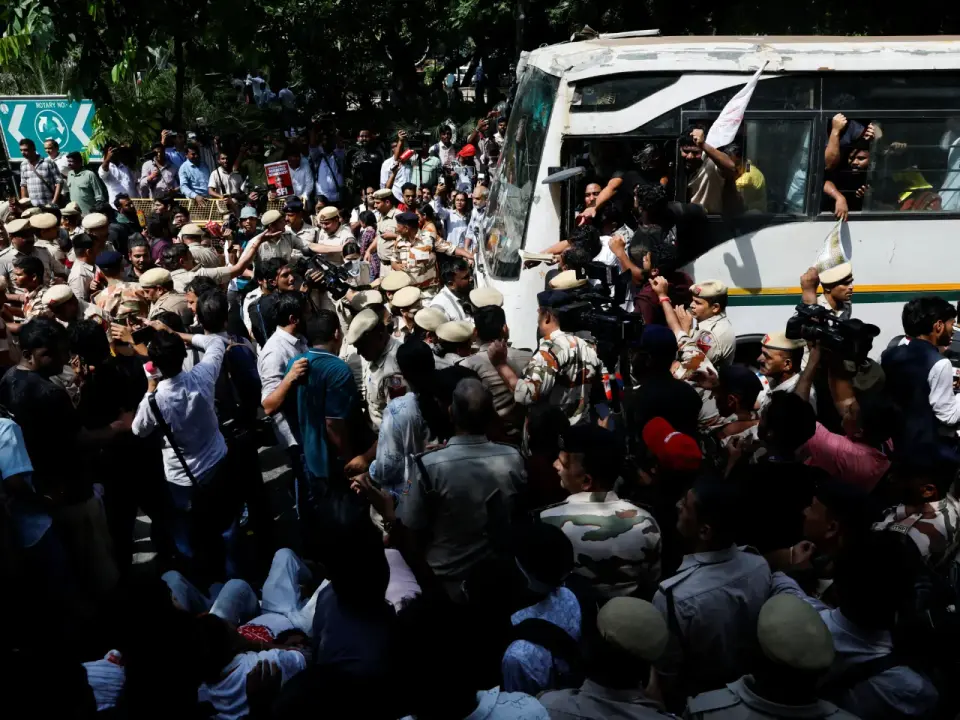
Indian authorities detained hundreds of demonstrators in New Delhi and Mumbai on October 2, 2026, as the Gen Z-led Cockroach Janta Party (CJP) and opposition groups protested against the Election Commission. The demonstrations, which demanded the resignation of Chief Election Commissioner Gyanesh Kumar, were triggered by a nationwide voter verification exercise that removed over 130 million names from electoral rolls. While the government maintains these changes eliminated duplicate or ineligible voters, critics accuse the process of 'vote theft' designed to favor Prime Minister Narendra Modi's ruling party. The CJP has vowed to continue nationwide protests until Kumar resigns, with the Indian National Congress planning additional demonstrations starting Tuesday.
Key points
- Over 500 people, including former Delhi Chief Minister Atishi Marlena and members of the Aam Aadmi Party, were arrested in New Delhi on October 2, 2026, according to Al Jazeera.
- The Cockroach Janta Party (CJP) and student coalitions demanded the resignation of Chief Election Commissioner Gyanesh Kumar, citing a voter roll controversy.
- A nationwide voter-verification exercise launched last year removed more than 130 million names from electoral rolls, according to The New York Times.
- Critics allege the voter roll changes favor Prime Minister Narendra Modi's Bharatiya Janata Party, while the Election Commission denies these claims, stating only duplicate, deceased, or ineligible voters were removed.
- The CJP plans to expand demonstrations nationwide, with the Indian National Congress also scheduled to demand Kumar's resignation starting Tuesday.
Background
The 'cockroach movement' began as online satire mocking the government before amassing millions of followers on social media. It has since organized mass street demonstrations, including a July protest that led to the resignation of India's education minister. Amnesty International reported that authorities used lethal weapons to suppress crowds during those earlier protests. The current protests are part of a broader pattern of youth-led activism in India, with the CJP warning the government last week that it would launch nationwide protests unless the Election Commission chief resigned.
How outlets are covering it
Al Jazeera and The New York Times both report on the October 2 protests but emphasize different aspects. Al Jazeera focuses on the police crackdown, detailing the use of Section 143 to ban gatherings and the detention of over 500 people, including opposition leaders. The New York Times highlights the scale of the voter roll changes, noting that 130 million names were removed, and frames the protests as a response to alleged 'vote theft' by the ruling party. Both outlets agree that the Election Commission denies the allegations, but The New York Times places greater emphasis on the political implications for Prime Minister Modi's party, while Al Jazeera focuses on the immediate police response and the CJP's demands.
Why it matters
The protests underscore growing tensions over electoral integrity in India, a country with the world's largest democracy. The removal of 130 million voters from the rolls has raised serious concerns about voter suppression and the potential for electoral manipulation. The heavy-handed police response, including the use of Section 143 and the detention of hundreds, highlights the government's willingness to suppress dissent. The CJP's vow to continue protests until Kumar resigns suggests that the conflict is far from over, with potential implications for future elections and the stability of the ruling party's grip on power.
What to watch
The CJP plans to expand demonstrations nationwide in the coming days, with the Indian National Congress also scheduled to demand Kumar's resignation starting Tuesday. The government's response to these escalating protests will be a key indicator of its willingness to address the voter roll controversy. The outcome of these protests could have significant implications for the credibility of India's electoral process and the future of the ruling party's grip on power.
- Indian authorities clamp down as ‘cockroach’ movement launches new protests Al Jazeera
- Hundreds from India's Gen Z-led 'cockroach' party protest, seek election chief's resignation Reuters
- If Gyanesh Kumar goes, Modi will have to follow suit: Dipke The Hindu
- Allegations of bias are rocking India’s electoral watchdog The Economist
- India Faces Fresh Protests, This Time Over Voter Rolls The New York Times
Want the full story? Read the original reporting
Read on Al Jazeera