
Poland Unveils Europe’s Tallest Virgin Mary Statue in Rural Konotopie
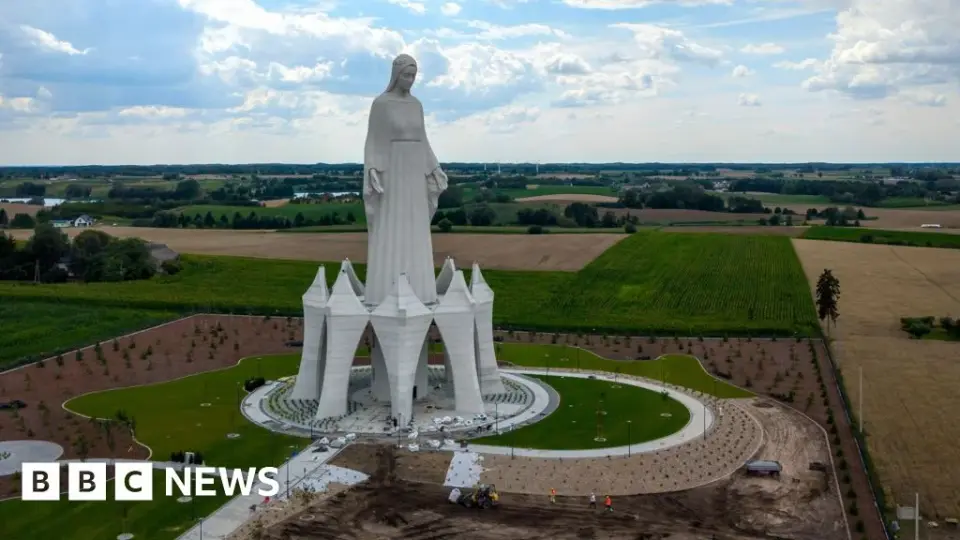
A 55.6-meter concrete statue of the Virgin Mary was consecrated in the Polish village of Konotopie on August 15, 2026, becoming Europe’s tallest Marian monument. Funded by local billionaire Roman Karkosik and his wife Grażyna, the project cost approximately 100 million zloty. The inauguration featured former President Lech Wałęsa and highlighted a shift in Poland’s religious landscape, where Catholic influence is declining despite the construction of such a prominent symbol.
Key points
- The 55.6-meter statue in Konotopie is taller than Rio’s Christ the Redeemer and surpasses the previous European record holder in France.
- Construction took 18 months and required specialized concrete molds manufactured in Italy, as no Polish suppliers could meet the technical requirements.
- The monument includes a 15-meter crown-shaped pedestal with a public viewing platform, aiming to attract pilgrims and tourists to the village of fewer than 150 residents.
- Former President Lech Wałęsa attended the ceremony, stating that the event marked the end of his personal path, linking his anti-communist struggle to his Catholic faith.
- The project was funded by Roman and Grażyna Karkosik, who live in a nearby palace and described the statue as an expression of gratitude to God.
Background
This development follows earlier reports from August 2026 regarding the statue’s construction and the broader trend of declining Catholic attendance in Poland. While 71% of Poles identify as Catholic, Sunday mass attendance has stabilized at 30% after dropping from a peak of 57%. The new statue contrasts with the 2010 unveiling of the 33-meter Jesus Christ the King statue in Świebodzin, which was later surpassed by a larger Jesus statue in Indonesia in 2024.
How outlets are covering it
BBC and The Guardian emphasized the ceremonial aspects, noting the presence of Lech Wałęsa and the use of helicopters to drop rose petals. Notes from Poland provided detailed financial and logistical context, highlighting the 100 million zloty cost and the reliance on Italian manufacturing for the concrete molds. All sources agreed on the statue’s height and its status as Europe’s tallest, but differed in emphasis: BBC focused on the bishop’s theological remarks, while The Guardian highlighted Wałęsa’s personal reflection on his life’s work. Notes from Poland noted local skepticism regarding the allocation of funds, contrasting the private donation with potential public needs like hospitals.
Why it matters
The unveiling of this massive religious monument in a remote village underscores the enduring, yet shifting, role of Catholicism in Polish public life. It serves as a physical marker of traditional values at a time when church attendance and influence are declining, particularly among younger generations. The involvement of high-profile figures like Wałęsa and the significant private investment suggest that religious symbolism remains a powerful tool for cultural and political expression in Poland, even as secularization trends continue.
What to watch
Local authorities are preparing for an influx of visitors, with the mayor of nearby Kikoł noting growing interest in investment plots for restaurants and tourism infrastructure. The site is expected to become a major pilgrimage destination, though the long-term economic impact on the small village remains to be assessed. Further developments may include the completion of surrounding facilities and potential debates over the use of private funds for public religious monuments.
- Europe's tallest Virgin Mary statue unveiled in rural Poland BBC
- Europe’s tallest statue of the Virgin Mary is inaugurated in a small Polish village AP News
- Europe's biggest Virgin Mary statue - taller than Rio's Christ the Redeemer - unveiled in Polish village Notes From Poland
- Europe’s tallest Virgin Mary statue unveiled in small Polish village The Guardian
- Europe’s tallest statue of Mary blessed in Poland. “She directs us toward God” Vatican News
Want the full story? Read the original reporting
Read on BBC