
Pope Leo XIV’s Liturgy Address Sparks Debate Over Vatican II Reform
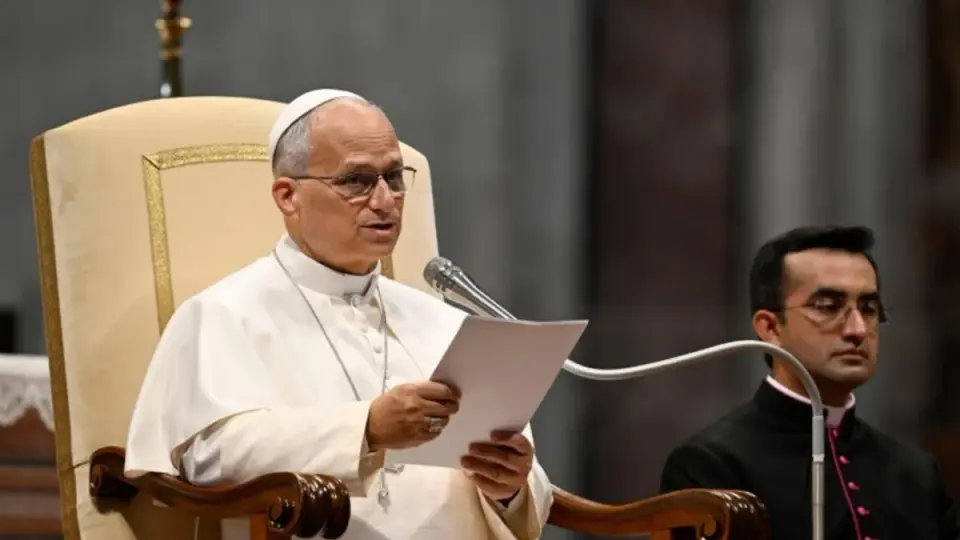
Pope Leo XIV’s August 26 general audience affirmed that the Second Vatican Council’s liturgical reforms are rooted in Church tradition, aiming to foster active lay participation. While Vatican News and the National Catholic Reporter highlight the Pope’s focus on accessibility and rejecting abuses, liturgical scholar Dom Alcuin Reid criticizes the address for mischaracterizing the Council’s intent, arguing it ignores the distinction between organic development and radical change.
Key points
- Pope Leo XIV delivered his final catechesis on Sacrosanctum Concilium, stating the liturgical reform is 'firmly rooted in the living tradition of the Church.'
- The Pope emphasized that the reform was necessary to prevent the faithful from being 'silent spectators' and to make biblical texts more accessible.
- Dom Alcuin Reid, a liturgical scholar, argues the Pope’s address contains a 'non-sequitur' by conflating the Council’s call for renewal with a 'streamlining' that disregards organic development.
- Vatican News notes the Pope cited historical precedents, including Pope Pius XI and John XXIII, to show the reform was a continuation of prior efforts.
- The National Catholic Reporter contextualizes the address within ongoing tensions, noting the Pope’s refusal to repeal 2021 restrictions on the pre-Vatican II Mass.
Background
The debate over the Second Vatican Council’s liturgical reforms has intensified since 2021, when Pope Francis tightened restrictions on the traditional Latin Mass. In 2026, the issue resurfaced following the excommunication of the Society of St. Pius X clergy, prompting calls from some prelates for greater access to the pre-Vatican II rite. Pope Leo XIV began his papacy by focusing on Vatican II documents, with this August 26 address marking the conclusion of his series on Sacrosanctum Concilium.
How outlets are covering it
Vatican News and the National Catholic Reporter present the Pope’s address as a balanced defense of the reform, highlighting his rejection of 'abuses' while affirming the necessity of change for active participation. In contrast, Diane Montagna’s Substack, citing Dom Alcuin Reid, argues the address is a 'political minefield' that misrepresents the Council’s theology. Reid contends the Pope’s drafters incorrectly described the reform as 'streamlining' rather than 'renewal' and failed to distinguish between immutable divine elements and changeable human elements, a nuance previously emphasized by Pope Benedict XVI.
Why it matters
The address signals the current Vatican’s stance on one of the most contentious issues in modern Catholicism. By affirming the reform’s legitimacy while acknowledging past abuses, Pope Leo XIV seeks to unify the Church, but critics argue the theological imprecision in the address may deepen divisions between traditionalists and reformists.
What to watch
Pope Leo XIV will begin a new catechesis series on Gaudium et Spes, the Second Vatican Council’s pastoral constitution, next week. The ongoing debate over liturgical practices is expected to continue, particularly regarding the implementation of the 2021 restrictions on the traditional Mass.
- Liturgy Wars—The Latest Volley: A Papal “Thus” Diane Montagna's Substack
- Pope at Audience: Active participation in liturgy leads us to relationship with God Vatican News
- Pope Leo says Vatican II's liturgical reform was 'necessary' for lay involvement National Catholic Reporter
- Pope Leo: Vatican II Reformed the Liturgy to Promote Active Participation National Catholic Register
- Pope Leo: Vatican II’s liturgical reform ���necessary’ for greater participation The Catholic Herald
Want the full story? Read the original reporting
Read on Diane Montagna's Substack