
Brain Scans Reveal Dogs Can Decode Human Emotions, Including Fear and Sadness
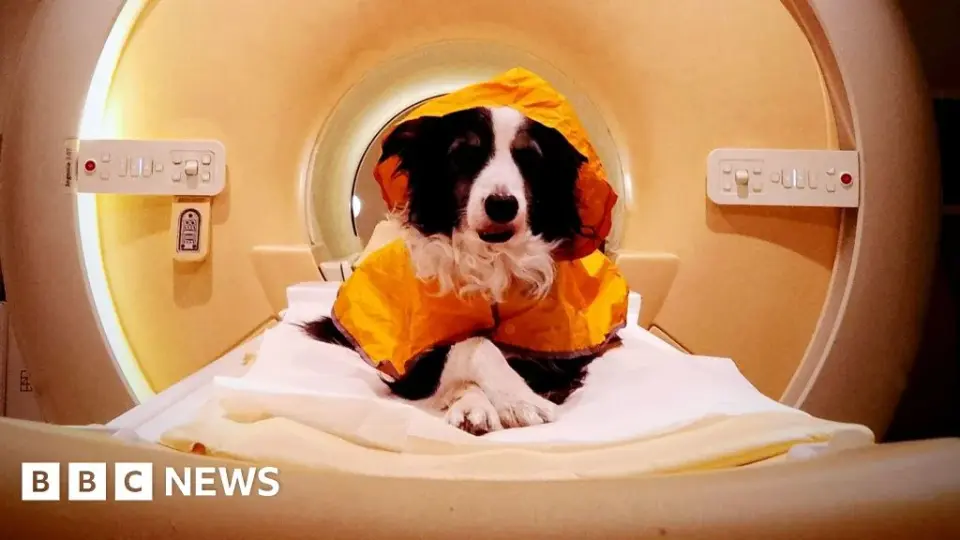
A new study published in iScience confirms that dogs can distinguish between happy, angry, sad, and fearful human faces using brain activity patterns. Researchers at the University of Vienna found that while dogs react strongly to smiles via reward circuits, they can also differentiate specific negative emotions, suggesting domestication has shaped their brains to understand human social cues.
Key points
- Researchers Laura Cuaya and Raúl Hernández-Pérez used fMRI scans on 14 dogs to analyze brain responses to human facial expressions.
- Happy faces activated reward circuitry in the caudate nucleus and temporal cortex, similar to responses to food or praise.
- Dogs could distinguish happy faces from negative ones, and also differentiate between fearful and angry/sad faces, though they struggled to tell anger from sadness.
- The study suggests that thousands of years of domestication have evolved dogs' brains to process human emotions, even from strangers.
- Limitations include a small sample size, a heavy reliance on border collies, and the fact that dogs use body language and scent in real-life interactions, not just static photos.
Background
Previous behavioral studies indicated dogs could sense human emotions, but lacked the neural evidence to explain how. Earlier research by the same team showed dogs could interpret human language and behavior, but this is the first to map the specific brain regions involved in processing facial expressions. The findings build on the understanding that dogs and humans evolved along different paths but developed cooperative social abilities through domestication.
How outlets are covering it
The BBC emphasized the practical advice that owners should smile at dogs to provide a 'dopamine hit' and positive reinforcement. The Guardian highlighted the nuance that while dogs can distinguish fear from anger or sadness, they cannot easily tell anger from sadness, suggesting they may need additional cues like body language. Ars Technica focused on the evolutionary aspect, noting that dogs developed these social abilities through domestication rather than shared ancestry with primates. Science News noted the potential for dogs to read faces without relying on scent or vocal cues, though it acknowledged the limitations of using static images in a lab setting.
Why it matters
This research provides concrete neurological evidence for the unique bond between humans and dogs, showing that our pets are not just reacting to us but actively processing our emotional states. It suggests that owners can improve communication and training by using facial expressions, particularly smiles, as a form of positive reinforcement. Understanding these neural mechanisms helps explain why dogs are so attuned to human behavior and reinforces the idea that domestication has significantly shaped canine cognition.
What to watch
Researchers hope these findings will lead to better methods for training and communicating with dogs, emphasizing the use of positive facial expressions. Future studies may explore how dogs process dynamic facial expressions and body language in real-time, rather than static images, to better understand their full emotional comprehension.
- We should smile at our dogs - a new scientific study reveals why BBC
- Dogs can distinguish between fearful and angry or sad human faces, brain scans suggest The Guardian
- Dogs can tell if you’re scared or sad Ars Technica
- Sad or afraid? Dogs may be able to read your face Science News
- Dogs can tell if you’re angry, scared, or sad Popular Science
Want the full story? Read the original reporting
Read on BBC