
Krakatau Eruption Intensifies with Ash Plume Reaching 13,700 Meters
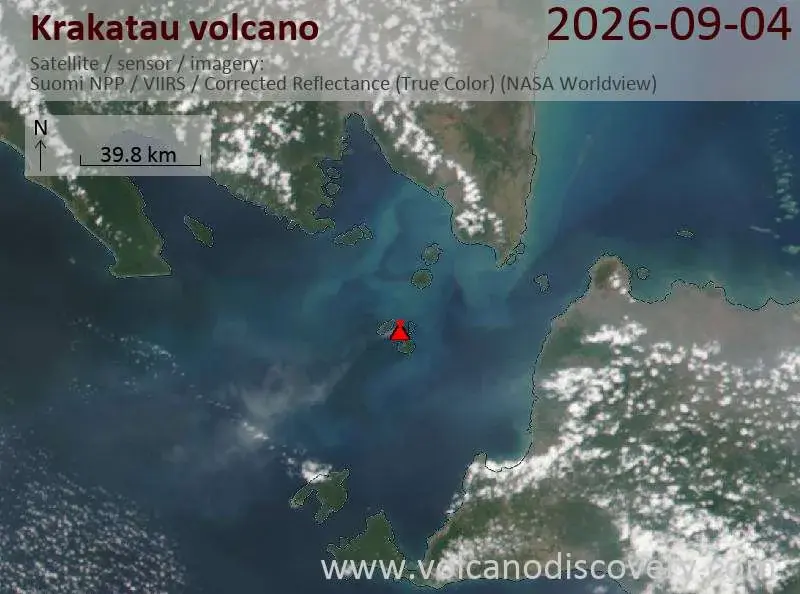
The ongoing eruption of Krakatau volcano in Indonesia has intensified, with the Volcanic Ash Advisory Center (VAAC) Darwin reporting an ash plume reaching 45,000 feet (13,700 meters) on September 4, 2026. This significant increase in plume height follows a period of sustained explosive activity, marking a notable escalation in the volcano's current eruptive phase.
Key points
- VAAC Darwin issued an advisory on September 4, 2026, at 16:30 UTC, warning of an ash plume rising to 45,000 feet (13,700 meters) or flight level 450.
- The plume was observed moving westward at 5 knots, with satellite imagery from Himawari-9 confirming the ash cloud's presence.
- This high-level eruption represents a significant escalation from previous plume heights of 5,000 to 6,000 feet reported in early September.
- The alert level for Krakatau remains at 'Level 3 - Standby' on a four-level scale, as reported by the Center for Volcanology and Geological Hazard (CVGHM) in late August.
- No forecast for the ash cloud's position was available for the next 6, 12, or 18 hours at the time of the advisory.
Background
Krakatau, located in the Sunda Strait, Indonesia, has been in a state of continuous eruption since May 2021. The current activity is part of a long history of eruptions, with the most recent phase beginning in 2021. The volcano's alert level has been maintained at 'Level 3 - Standby' since late August 2026, indicating ongoing explosive activity. Previous ash plume heights in early September 2026 ranged from 3,000 to 6,000 feet, with the September 4 event marking a significant increase in plume height.
Why it matters
The escalation in Krakatau's eruption, particularly the ash plume reaching 13,700 meters, poses significant risks to aviation in the region. Ash plumes at such heights can disrupt flight paths and pose hazards to aircraft engines. The ongoing activity also underscores the need for continued monitoring and preparedness by local authorities and international aviation agencies to mitigate potential impacts on air travel and local communities.
What to watch
VAAC Darwin is expected to issue a more detailed advisory by September 4, 2026, at 17:10 UTC, as indicated in the initial bulletin. Continued monitoring of the ash plume's movement and height will be crucial for assessing potential impacts on aviation and local safety. The CVGHM will likely update the alert level if the eruption's intensity changes, and further satellite observations will help track the ash cloud's trajectory.
Want the full story? Read the original reporting
Read on Volcano Discovery