
Augustinian Nuns and Laypeople Share a Home in Bengaluru to Combat Elderly Loneliness
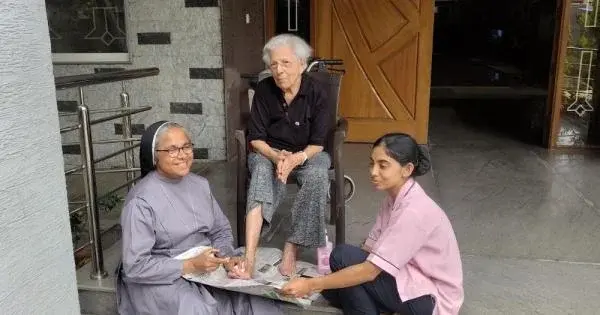
In Thaverekere, a suburb of Bengaluru, the Augustinian Sisters operate Elizabeth Care Home, a unique facility where 11 retired nuns live alongside 52 elderly laypeople. This integrated model, distinct from the congregation’s other two centers, aims to provide companionship and mutual support rather than just medical care. Residents like 88-year-old Jessie Pai describe the environment as a family, engaging in shared activities such as quizzes and exercise. The home addresses the growing need for eldercare in India, where nuclear families and working spouses often leave older adults without full-time caregivers. While the arrangement fosters deep connections and reduces loneliness for both nuns and laypeople, it presents challenges, including noise from medical units and limited space for prayer. Administrators note that high costs and staffing shortages hinder the expansion of this model, despite high demand.
Key points
- Elizabeth Care Home in Bengaluru houses 52 elderly laypeople and 11 retired Augustinian nuns in a shared four-story building, with laypeople occupying the lower floors and nuns the top floor.
- The Augustinian Sisters, founded in Germany in 1838, operate three eldercare centers in Bengaluru, but Elizabeth is the only one integrating retired sisters with lay residents to foster mutual enrichment.
- Sr. Prema Packumala, the home’s administrator, states that the model addresses the lack of emotional connection in traditional care facilities, where residents often have medical support but no one to listen to them.
- Residents report that the shared living arrangement reduces loneliness and provides a sense of purpose; for example, 81-year-old Sr. Daisy Punnackapadavil finds her pain alleviated through interaction with downstairs residents.
- Challenges include noise from the medical unit disturbing the nuns’ prayer and rest, as well as high costs and land limitations that prevent the congregation from opening more such facilities.
- The demand for eldercare is rising in India due to smaller family sizes, dual-income households, and children living abroad, leaving many older adults without full-time caregivers.
Background
The Augustinian Sisters, formally known as the Cellitinnen Augustinian Sisters, began their Indian mission in Kerala in 1967. They currently serve 10 states through various institutions, including hospitals and schools. Their guiding principle is to respond to the signs of the time, which in India includes the rapidly growing elderly population. The congregation previously opened Cletas Home in 1992, which houses 127 elderly people, but built Elizabeth Home in 2020 to accommodate medically dependent residents and integrate them with retired sisters.
Why it matters
This model offers an alternative to traditional eldercare by emphasizing community and emotional support over purely medical or custodial services. It highlights the potential for religious orders to address social isolation among the elderly, a growing issue in India due to changing family structures. The success of this integrated approach could influence how other institutions design eldercare facilities to meet both physical and psychological needs.
What to watch
The Augustinian Sisters face significant obstacles in expanding this model, including high establishment costs, limited land, and a shortage of sisters to staff new centers. Sr. Arpana Patani noted that the increasing demand for eldercare, driven by families unable to care for parents at home, will likely continue to strain existing facilities. Administrators are monitoring the balance between the benefits of shared living and the drawbacks of medical noise, but currently believe the positive impact on residents outweighs the inconveniences.
Want the full story? Read the original reporting
Read on globalsistersreport.org