
AI Bias and Data Sovereignty: Indigenous Leaders Demand Control Over Digital Narratives
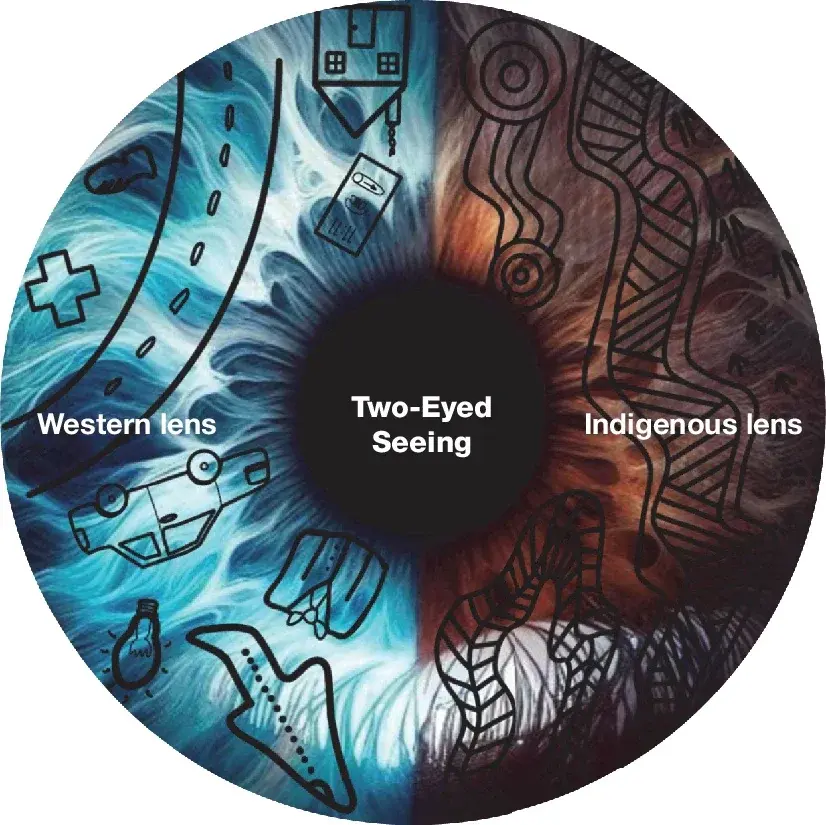
Indigenous leaders in Canada are urging the government to implement strict data sovereignty measures to protect their communities from AI-driven disinformation and algorithmic bias. While some advocate for integrating traditional knowledge into AI frameworks, critics argue that current models lack the methodological rigor to validate non-Western epistemologies, risking the distortion of cultural heritage.
Key points
- The 2021 Census identified 1.8 million Indigenous people in Canada, with youth aged 15-24 forming the largest demographic, increasing their exposure to online information.
- Elders and leaders fear that AI systems, trained on biased datasets, may misrepresent traditional teachings and perpetuate negative stereotypes, particularly against Indigenous women.
- Canada’s Minister for AI, Evan Solomon, confirmed that the national AI strategy includes data sovereignty provisions to allow Indigenous communities to manage their own data.
- Critics, including evolutionary biologist Jerry Coyne, argue that 'indigenous science' is not equivalent to modern scientific method, which relies on hypothesis testing and blind controlled trials.
- Some Indigenous entrepreneurs, like Brian Ritchie of kama.ai, are developing tools that curate traditional stories without merging them with external data to preserve cultural integrity.
Background
This debate follows earlier discussions on the historical impact of Indigenous populations on climate and biodiversity, such as the 2026 study on White Sands pollen revealing rapid climate shifts 23,000 years ago. It also contrasts with recent forensic reconstructions of Indigenous ancestors in Ecuador, highlighting the ongoing effort to understand and preserve Indigenous history through both scientific and cultural lenses.
How outlets are covering it
CPAC reports that Indigenous leaders in Canada are prioritizing data sovereignty to combat AI-driven disinformation and protect cultural integrity, with the government agreeing to include these protections in its AI strategy. In contrast, Jerry Coyne, writing for 'Why Evolution Is True,' argues that 'indigenous science' is not a valid counterpart to modern science, as it lacks the rigorous testing methods that define scientific knowledge. Coyne emphasizes that while folk observations can inspire scientific advances, they do not constitute science without empirical validation. He also challenges the notion that Indigenous peoples are inherently 'wise stewards' of the land, citing historical evidence of species extinctions caused by Indigenous populations. This highlights a fundamental disagreement: one side views AI as a tool for cultural preservation and protection, while the other sees it as a potential vehicle for the sacralization of non-scientific knowledge.
Why it matters
The debate over AI and Indigenous knowledge has significant implications for how technology is developed and used. If AI systems are not trained on diverse and accurate data, they may perpetuate biases and distort cultural narratives, leading to increased disinformation and harm to Indigenous communities. Conversely, if AI is used to integrate traditional knowledge without proper validation, it may undermine the credibility of scientific methods and lead to the spread of misinformation. The outcome of this debate will influence how governments and tech companies approach data sovereignty, cultural preservation, and the integration of diverse knowledge systems into AI frameworks.
What to watch
Canada is expected to implement its AI strategy, which includes data sovereignty provisions for Indigenous communities, in the coming months. CPAC will air an eight-part series on 'Our Information Ecosystem,' with the third episode focusing on Indigenous communities and AI, airing on November 14 and 15. Meanwhile, Indigenous leaders and entrepreneurs will continue to develop tools and policies to protect their cultural heritage and data from AI-driven distortions. The debate over the validity of 'indigenous science' is likely to continue, with critics and proponents engaging in ongoing discussions about the role of traditional knowledge in modern scientific and technological contexts.
Want the full story? Read the original reporting
Read on Why Evolution Is True