
Isar Aerospace Achieves First Commercial Orbital Launch from Continental Europe
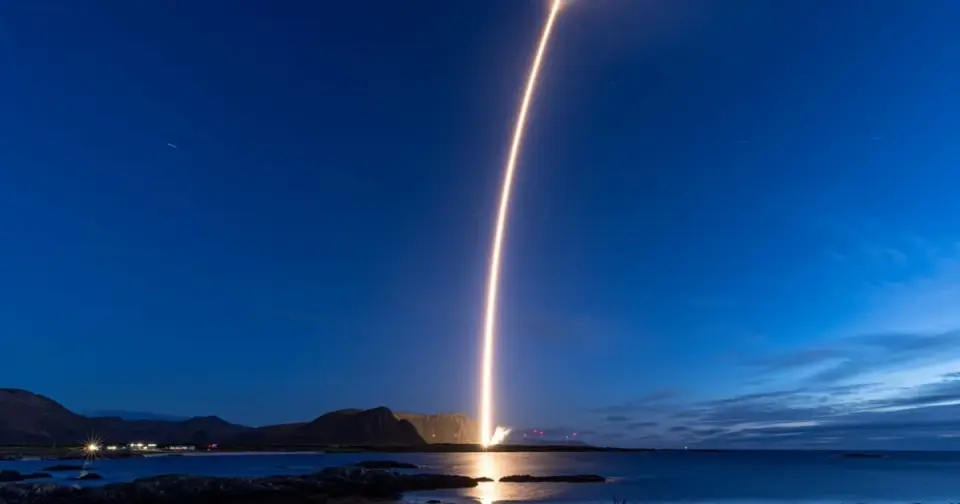
German startup Isar Aerospace successfully launched its Spectrum rocket into orbit from Norway, marking the first commercial orbital launch from continental Europe. The mission, which carried five small satellites, represents a significant step for European efforts to reduce reliance on non-European launch providers like SpaceX. The company aims to scale production to 40 launches per year and is developing a second launch site in Canada.
Key points
- Isar Aerospace's Spectrum rocket successfully reached orbit and deployed five small satellites on September 5, 2026, from its launch complex in Andøya, Norway.
- This was the company's second flight; the first attempt in March 2025 ended with the rocket crashing into the sea shortly after liftoff.
- The launch is described as the first successful commercial orbital launch from continental European soil, a milestone for Europe's push for space autonomy.
- Isar Aerospace plans to scale production to up to 40 launch vehicles per year and is constructing a second launch site in Nova Scotia, Canada.
- The launch coincides with the International Space Summit in Paris, where European Commission President Ursula von der Leyen is set to discuss space policy and unveil the European Space Shield.
Background
Europe has been actively seeking to reduce its dependence on non-European launch providers, particularly SpaceX, as part of broader efforts to secure supply chain autonomy. This follows earlier milestones in European spaceflight, such as the first Frenchwoman spacewalk in August 2026 and various national space conferences, highlighting a growing emphasis on indigenous space capabilities across the continent.
How outlets are covering it
While all sources agree on the historic nature of the launch, they emphasize different aspects. POLITICO highlights the geopolitical context, linking the launch to Chancellor Friedrich Merz's warnings about European dependence on foreign supply chains and the upcoming International Space Summit in Paris. The Guardian focuses on the technical achievement and the competitive landscape, noting Isar's goal of 40 launches per year and the presence of global competitors like SpaceX and ArianeGroup. Isar Aerospace's own press release stresses the commercial implications, describing launch capability as the 'biggest bottleneck' in the industry and highlighting the company's vertically integrated manufacturing model and expansion into Canada. Space.com's coverage is largely obscured by website interface code, offering limited substantive commentary beyond the basic fact of the orbital insertion.
Why it matters
This launch signifies a potential shift in the global space industry, offering Europe a sovereign alternative to dominant providers like SpaceX. It could reduce costs and increase access to space for European institutions and startups, while also enhancing Europe's strategic autonomy in a period of shifting global alliances. The success may accelerate investment in European space infrastructure and influence policy decisions at the upcoming International Space Summit.
What to watch
Isar Aerospace is focused on scaling production, with Spectrum launch vehicles 3-7 already in production. The company is nearing completion of its 40,000 m² production facility in Europe and is developing a launch complex in Nova Scotia, Canada, to serve mid- to high-inclination orbits. The European Commission is expected to unveil its European Space Shield action plan at the International Space Summit in Paris, aiming to protect the bloc's satellites.
- German startup makes European space history with first successful orbital launch politico.eu
- Private German rocket makes history, reaches orbit from European soil Space
- History for European spaceflight: Isar Aerospace reaches orbit and deploys payloads on second flight Isar Aerospace
- German space rocket reaches orbit in Europe's first commercial launch Reuters
- German startup sends first commercial rocket into space from Europe The Guardian
Want the full story? Read the original reporting
Read on politico.eu