
UK PM Burnham Proposes Global AI Accord via G20 Presidency
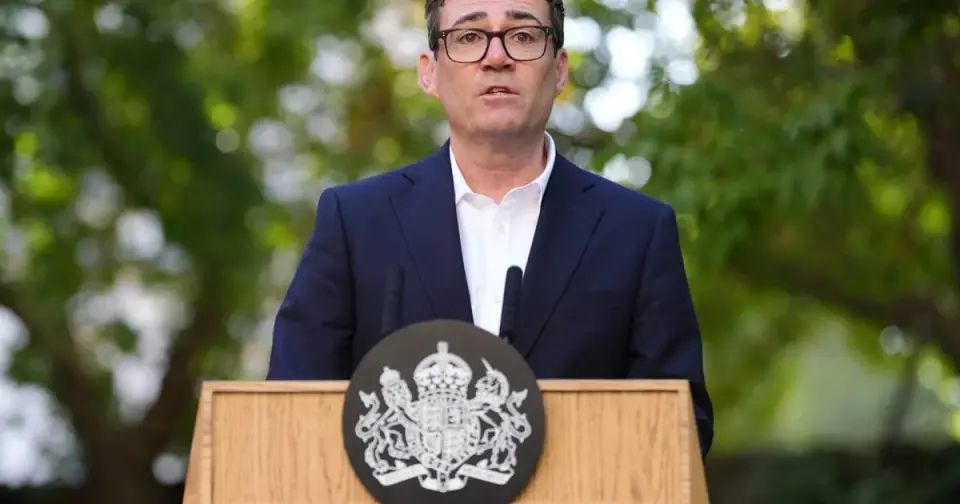
UK Prime Minister Andy Burnham intends to leverage the UK’s upcoming G20 presidency to broker a global agreement on artificial intelligence. Speaking ahead of a visit to the UN General Assembly, Burnham claimed the UK is uniquely positioned to act as an 'honest broker' due to its relationships with the EU, US, and China, as well as its expertise at the AI Security Institute. He aims to balance the technology's benefits against its risks, avoiding what he termed 'doom-mongering' while addressing concerns raised by industry insiders. This diplomatic push marks a significant shift in UK AI policy rhetoric compared to his predecessor, Keir Starmer, and coincides with heightened global discussions on AI governance following recent warnings about potential existential threats from the technology.
Key points
- Prime Minister Andy Burnham plans to use the UK's G20 presidency to forge a global agreement on AI governance.
- Burnham cited the UK's relationships with the EU, US, and China, along with its AI Security Institute, as reasons for its 'unique' leadership role.
- The UK AI minister, Kanishka Narayan, accompanied Burnham to New York for the UN General Assembly, where AI was expected to dominate diplomatic engagements.
- Burnham stated he would assure US President Donald Trump that the UK would take a balanced approach, acknowledging both the benefits and risks of AI.
- This initiative represents a major shift in rhetoric from the previous administration, which was criticized for excessive globe-trotting by voters.
- Burnham noted that warnings from AI company insiders have 'made him pause' but emphasized finding a 'sweet spot' between innovation and caution.
Background
Recent G20 meetings have highlighted divergent approaches to AI and global economic policy. In September 2026, US Treasury Secretary Scott Bessent advocated for a growth-first agenda centered on AI leadership and deregulation, noting broad support among G20 members except for China. Simultaneously, US Commerce Secretary Howard Lutnick hosted an innovation summit featuring tech leaders like Jensen Huang and Sam Altman, emphasizing US technological dominance. While US allies pushed back against certain US economic policies, the focus on AI as a driver of productivity and global growth remained central. Burnham’s proposal for a multilateral agreement contrasts with the US emphasis on competitive deregulation and private-sector-led expansion, reflecting a broader international debate on how to manage AI risks and benefits.
Why it matters
The UK’s initiative to broker a global AI agreement signals a potential new axis of international cooperation on technology governance, distinct from the US focus on deregulation and competitive leadership. By positioning itself as a neutral broker, the UK may influence the direction of global AI standards and risk management frameworks. This move could impact how nations balance innovation with safety, potentially affecting regulatory environments for AI development worldwide. Additionally, Burnham’s emphasis on a balanced approach may help mitigate polarized debates between those viewing AI as an existential threat and those dismissing such warnings, offering a diplomatic path forward in a fragmented global landscape.
What to watch
Burnham is expected to deliver a speech at the UN General Assembly calling for international cooperation on AI and promising UK leadership on the issue. He will also meet with US President Donald Trump to discuss the UK’s balanced approach to AI, aiming to reassure the US of the UK’s commitment to recognizing both benefits and risks. The outcome of these engagements will likely shape the UK’s role in the upcoming G20 presidency and its ability to influence global AI governance discussions.
Want the full story? Read the original reporting
Read on politico.eu