
Beyond the Vampire Myth: Hikers and Historians Reveal Transylvania's Living History
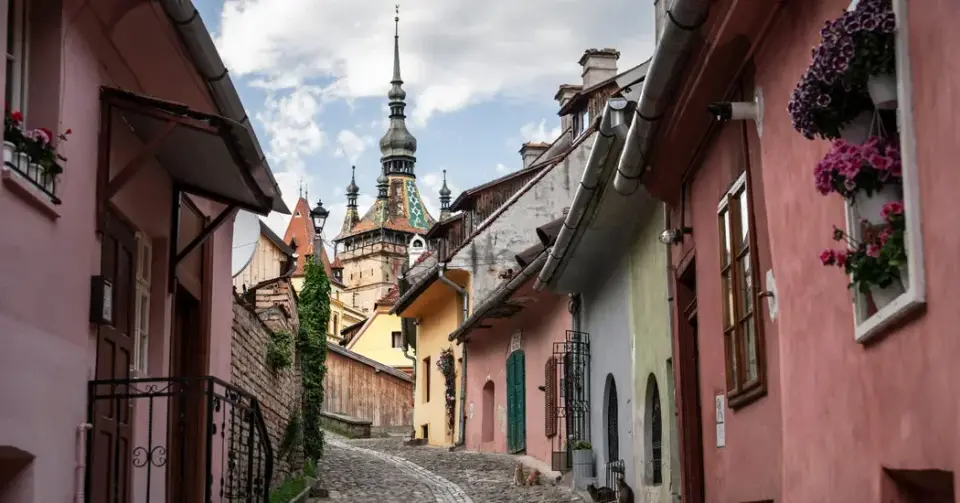
A New York Times feature highlights the Via Transilvanica, a 1,000-mile hiking trail in Romania that showcases medieval villages and ancient forests rather than Dracula-themed attractions. While the trail offers a grounded view of the region’s living history, other outlets explore the complex legacy of Vlad III, the historical figure behind the vampire legend. Recent cultural adaptations, including the 2024 film 'Nosferatu,' continue to shape global perceptions, yet local experts emphasize the area’s rich multicultural past and modern developments.
Key points
- The Via Transilvanica is a 1,000-mile long-distance trail stretching from Bukovina to the Serbian border, primarily through the Carpathian Mountains and Transylvania.
- Travel journalist Erin Vivid Riley hiked a 48-kilometer section from Sighișoara to Biertan, visiting medieval sites like the Bethlen family castle and a Saxon 'marriage prison' exhibit.
- Alice Sullivan, a Tufts University professor, argues that Vlad III was a defensive ruler who used impalement against Ottoman forces and German Saxon merchants, a narrative distorted by early printing press propaganda.
- Romania hosts between 10,000 and 13,000 brown bears, the largest population in Europe excluding Russia, which hikers may encounter on the trail.
- Cluj-Napoca is described as a modern, tech-focused city, while Sighișoara is characterized as a 'time capsule' preserving medieval architecture and traditions.
Background
Transylvania has long been associated with Bram Stoker’s 1897 novel 'Dracula,' but recent tourism trends are shifting toward authentic cultural experiences. The region’s history involves multiple influences, including Huns, Saxons, Ottomans, and Habsburgs. While some visitors seek vampire-themed attractions like Bran Castle, others are drawn to the area’s architectural heritage and natural landscapes. The 2024 film 'Nosferatu' and the Netflix series 'Wednesday' have recently renewed international interest in the region’s gothic imagery.
How outlets are covering it
The New York Times and Spotmedia.ro emphasize the physical and cultural reality of Transylvania, focusing on the Via Transilvanica trail, medieval villages, and modern urban centers like Cluj-Napoca. They highlight that the region offers more than just vampire lore, with Riley noting that the landscape and history surpass fictional expectations. In contrast, Newswise and The Observer focus on the historical and cultural interpretations of Vlad III. Newswise presents a scholarly view that Vlad III was a local hero whose reputation was tarnished by German propaganda, while The Observer offers a personal narrative from a descendant of Vlad III, blending family history with the region’s modern tourism industry. The Observer also notes the contrast between the region’s modern safety and cleanliness and its historical reputation for darkness and decay.
Why it matters
Understanding the distinction between historical reality and cultural myth is crucial for tourism and cultural preservation in Romania. The shift toward hiking and heritage tourism helps diversify the region’s economy beyond vampire-themed attractions. Additionally, accurate historical narratives about Vlad III and the multicultural influences in Transylvania contribute to a more nuanced understanding of Eastern European history and identity.
What to watch
Tourism in Transylvania is expected to continue diversifying, with increased interest in the Via Transilvanica and other cultural heritage sites. The region may see further development in tech and modern infrastructure, as seen in Cluj-Napoca, while maintaining its medieval and historical attractions. Cultural events, such as Halloween festivals in Bran, will likely continue to blend historical lore with modern entertainment, attracting both domestic and international visitors.
- Transylvania, Where Meadows Ripple and Dracula Legends Fade The New York Times
- The True Tale of Count Dracula | Newswise Newswise
- Wild Transylvania: Dracula's Hidden Kingdom on National Geographic WILD: full details and when it's on TVGuide.co.uk
- New York Times writes about Transylvania without Dracula: Where everything surpasses anything imagination could conjure Spotmedia.ro
- Tracing Family Roots Back to Romania, With a Little Dracula on the Side Observer
Want the full story? Read the original reporting
Read on The New York Times