
US and Japan Finalize AMRAAM Assembly Deal to Boost F-35 Supply
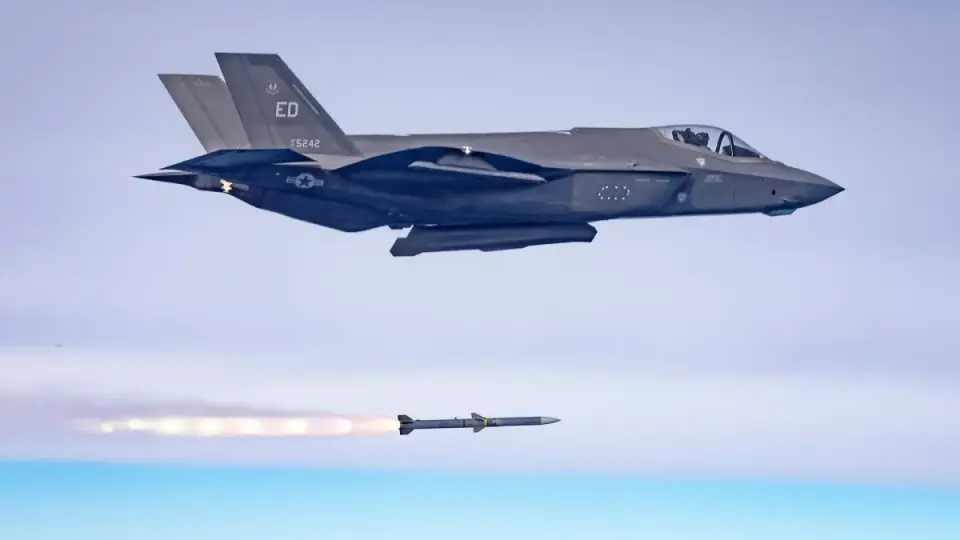
Japanese Defense Minister Shinjiro Koizumi and US Secretary of War Pete Hegseth announced an agreement to establish a final assembly and inspection facility for AIM-120 Advanced Medium-Range Air-to-Air Missiles (AMRAAM) in Japan. The deal, part of the 'Operation Supercharge' initiative, aims to expand production capacity for the F-35 fighter jet and other platforms amid rising global demand. While the US has already awarded a $20.7 billion contract to Raytheon to increase annual output to at least 1,900 units, the Japanese facility’s location, timeline, and specific industrial partner remain undisclosed. The agreement also includes a separate accord to share technical data to boost production of the SM-3 Block IIA ballistic missile interceptor, reflecting a broader push to strengthen allied defense industrial bases against regional security threats.
Key points
- Koizumi and Hegseth signed the agreement on October 28, 2026, during the ASEAN Defense Ministers’ Meeting in Cebu, Philippines.
- The new Japanese facility will handle final assembly and inspection of AMRAAMs, utilizing components produced through an industrial arrangement to bypass Japan’s strict arms export restrictions.
- The move follows a September 2026 contract award to Raytheon for up to $20.7 billion, aiming to reach an annual production target of 1,900 missiles by 2027.
- The agreement also covers a separate deal to share technical information to increase production of the SM-3 Block IIA missile interceptor, which is used in Aegis missile-defense systems.
- Details regarding the facility’s location, construction timeline, and annual output capacity have not yet been released by either government.
Background
This development follows a February 2026 framework agreement between the US and Japan to expand defense cooperation. It also aligns with a broader trend of allied nations, including European countries, seeking to diversify munitions supply chains. For instance, Lockheed Martin recently announced plans to establish a Patriot missile maintenance facility in Poland to address similar production bottlenecks. The current push for AMRAAM expansion is driven by significant inventory depletion from conflicts in Ukraine and the Middle East, as well as the need to replenish stockpiles for US and allied forces in the Indo-Pacific region.
How outlets are covering it
While all sources confirm the agreement, they emphasize different aspects. The War Zone and Air & Space Forces Magazine focus on the technical and industrial details, highlighting the $20.7 billion Raytheon contract and the specific AIM-120D-3 variants. Breaking Defense notes that the Pentagon’s official readout of the meeting did not explicitly mention the AMRAAM facility, despite welcoming Japan’s industrial efforts. NPR and Breaking Defense emphasize the geopolitical context, noting that Koizumi and Hegseth expressed a 'sense of crisis' regarding the regional situation, though neither explicitly named China in their joint statements. Koizumi did, however, separately raise concerns about Chinese naval activity in the Osumi Strait during the same meeting.
Why it matters
The establishment of a Japanese AMRAAM assembly facility diversifies the US defense industrial base and ensures a steady supply of critical air-to-air missiles for F-35 fighters in the Indo-Pacific. By moving from single-year to multiyear contracts and adding a new production node, the US and Japan aim to mitigate supply chain bottlenecks and reduce reliance on a single manufacturing location, thereby enhancing regional deterrence and response capabilities against potential aggression.
What to watch
The next steps involve finalizing the location of the Japanese facility, identifying the industrial partner, and setting a construction timeline. Raytheon is also expected to bring new solid-rocket-motor production lines online in 2027 to support the increased production target. Both governments will continue to coordinate on the SM-3 Block IIA production boost, though specific output targets for that interceptor have not yet been disclosed.
- Japan To Assemble AMRAAM Missiles As U.S. Moves To Dramatically Boost AIM-120 Production TWZ
- As Missile Stockpiles Dwindle and China Looms, U.S. Turns to Japan for Production WSJ
- US and Japan agree to establish a Japanese facility for joint missile production NPR
- US, Japan reach agreements for AMRAAM assembly, SM-3 production boost: Japanese MoD Breaking Defense
- US and Japan Finalize Agreement for AMRAAM Facility Air & Space Forces Magazine
Want the full story? Read the original reporting
Read on TWZ