
Rome’s Tiber Drought Reveals 2,000-Year-Old Bridge Ruins
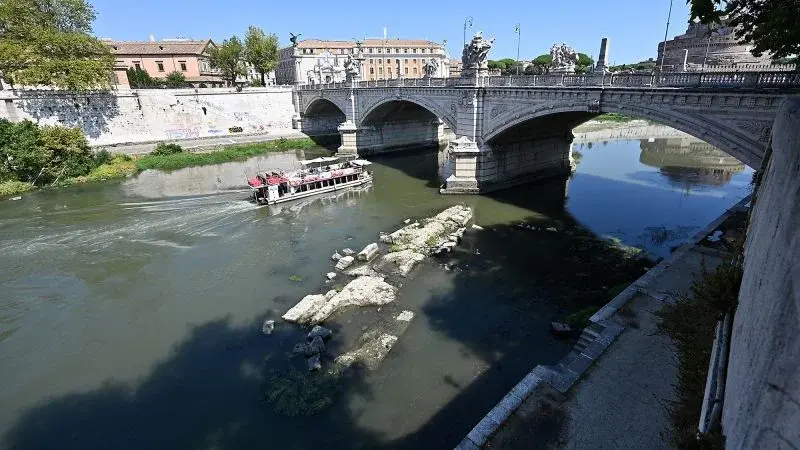
Severe drought and heatwaves have dropped the Tiber River’s water levels in Rome to historic lows, exposing the submerged ruins of Nero’s Bridge. This rare visibility allows archaeologists to study the 2,000-year-old structure, which was last seen during a similar drought in 2022. The low water has also revealed other debris, including a car and refrigerators, highlighting the impact of extreme weather on the city’s infrastructure and history.
Key points
- The Tiber River’s flow has dropped below 80 cubic meters per second, half the national average for this time of year, according to Rome’s civil protection coordinator Giovanni Giganti.
- The low water levels have exposed the remains of Nero’s Bridge (Pons Neronianus), a structure built around 39 AD by Emperor Caligula but renamed by his nephew Nero.
- The bridge, which connected the Campus Martius area to the Circus of Nero, is usually submerged but is now visible from the Bridge of Angels near Vatican City.
- Archaeologists are using this rare opportunity to study the ancient structure, which was last visible during a similar drought in 2022.
- The low water has also revealed other debris, including e-bikes, scooters, refrigerators, and a car, further upstream in the river.
Background
This event is part of a broader pattern of extreme drought affecting Europe’s rivers in 2026. Earlier reports noted that record heatwaves caused historic low water levels in the Danube and Rhine, disrupting cruises and exposing ancient sites like Bulgaria’s Constantine Bridge. Similarly, Lake Mead in the US reached historic lows, underscoring global water crises driven by climate change. The Tiber’s situation mirrors these trends, with reduced snowpack and prolonged dry periods exacerbating water scarcity in major river systems.
Why it matters
The exposure of Nero’s Bridge highlights the tangible impacts of climate change on historical and cultural heritage. While the low water levels offer a unique opportunity for archaeological study, they also signal a severe water crisis that threatens Rome’s infrastructure and daily life. This event underscores the need for sustainable water management and climate adaptation strategies to protect both modern and ancient assets in the face of increasing environmental stress.
What to watch
Archaeologists will continue to study the exposed ruins of Nero’s Bridge, potentially uncovering new details about its construction and history. Rome’s civil protection authorities will monitor the Tiber’s water levels, which may rise with seasonal rains but are expected to remain below average due to prolonged dry periods. The city may also implement measures to address the broader water crisis, including infrastructure improvements and public awareness campaigns on water conservation.
Want the full story? Read the original reporting
Read on CNN