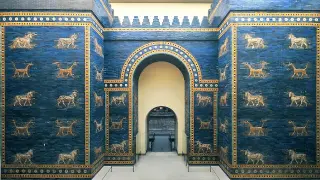
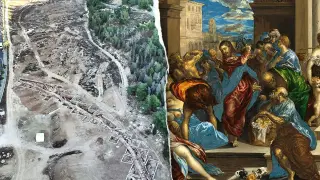
A new study resolves a decades-long debate over the timeline of ancient Mesopotamia by linking Anatolian tree rings with ice-core data. Researchers determine that Babylon fell around 1587 BCE, supported by evidence of a volcanic eruption in Alaska that obscured Venus observations recorded by Babylonian astronomers.
A new toxicological study of eight Inca child mummies confirms that victims of the capacocha ritual were administered cocaine, alcohol, and potentially ayahuasca before being sacrificed on high-altitude peaks. Published in the journal Antiquity, the research led by Dagmara Socha analyzed hair and nail samples, revealing that these substances were likely used to ease the children’s journey and calm them before death. The findings, combined with recent CT scans and isotopic analysis, suggest the rituals were complex, multi-month processes involving significant political and religious motivations, rather than single, isolated events.
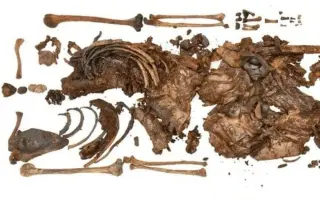
A coroner in Belfast has determined that an Iron Age woman found in a bog in Co Londonderry, Northern Ireland, was deliberately decapitated approximately 2,000 years ago. The remains, discovered in October 2023 by workers from Bulrush Horticulture, were exceptionally well-preserved, with skin, nails, and a kidney intact. The investigation, described as the first coroner's inquest into an ancient death at a museum, concluded that the woman, aged between 15 and 22, died as part of a ritual sacrifice. Fabric found with the body dates to between 363 BC and 160 BC, a period when pre-Christian Northern Ireland was divided among numerous tribes. Although no skull was recovered, cut marks on the neck support the conclusion of intentional decapitation. Experts note this is the first such find of a woman in Northern Ireland, offering rare insight into Iron Age practices in the region.
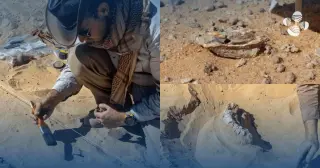
Researchers at the 'Uruq Aljelibah site in Saudi Arabia discovered 125,000-year-old stone points with chemical traces of the arrow poison tree, Acokanthera schimperi. Found beside an ancient freshwater lake in the Empty Quarter, these artifacts suggest early humans used complex, composite hunting weapons to hunt large animals like hippos and buffalo. The discovery, published in Science, indicates that Arabia supported settled human populations during humid periods, challenging the view of the region as merely a migration corridor.
A 1957 hypothesis suggests that Roman soldiers captured after the 53 BC Battle of Carrhae were relocated to Han Dynasty China, eventually settling in Liqian, Gansu. While Chinese records describe 'fish-scale' shield formations and modern DNA shows European ancestry in local populations, scholars argue this evidence is circumstantial. No Roman military artifacts have been found, and alternative explanations, such as Greek or steppe migrations, better account for the genetic and cultural data.
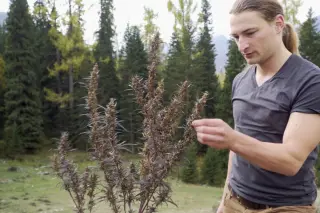
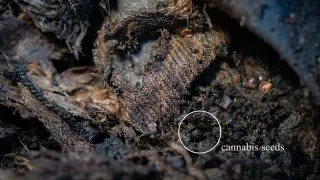
A new study published in Science claims that Scythian nomads in southern Siberia used cannabis for psychoactive purposes 2,800 years ago, predating previous records by 300 years. Researchers analyzed preserved hair and seeds from the Tunnug 1 burial mound, finding traces of THC. While some experts support the findings as direct molecular evidence, others criticize the hair analysis as scientifically weak, arguing it cannot distinguish consumption from external exposure.
A new study published in Science identifies the earliest direct evidence of psychoactive cannabis use, dating back 2,800 years to a Scythian burial mound in southern Siberia. Researchers analyzed preserved human hair and seeds from the Tunnug 1 site, confirming the presence of THC and cannabinol. This finding pushes the timeline of recreational cannabis use back by 300 years and suggests the plant played a significant role in ancient funerary rituals across the Eurasian steppe.
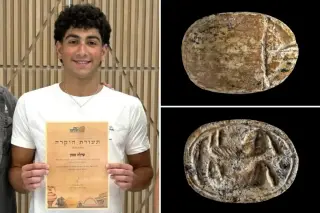
A 17-year-old American student visiting Israel discovered a 3,300-year-old Egyptian-style scarab amulet at Tel Gezer. The artifact, dated to the Late Bronze Age, was reported to authorities and added to the national collection.
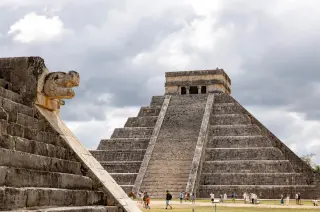
Recent studies challenge the long-held theory that drought alone caused the collapse of the Maya civilization. While climate stress was a factor, researchers now emphasize political instability, migration, and complex social dynamics as key drivers of the decline. This nuanced view offers parallels for understanding modern societal responses to environmental change.
Israeli archaeologists have uncovered a 300-meter section of the ancient Lower Aqueduct, a 2,000-year-old water system that supplied the Temple Mount. Built during the Hasmonean period, the gravity-fed channel transported water from Bethlehem to Jerusalem for ritual purification and daily use, remaining in service until the early 20th century.
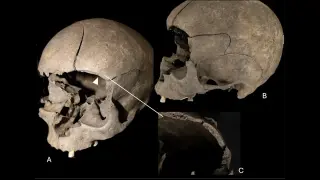
Archaeologists have discovered a child's skull built into the floor of a 2,500-year-old house in Scandinavia. The finding, reported by Yahoo News, suggests the remains were intentionally incorporated into the structure's foundation, offering new insights into ancient burial practices or ritualistic behaviors in the region.
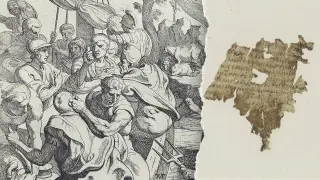
A damaged parchment fragment of Homer's 'Odyssey' was identified in the special collections of Utrecht University in the Netherlands after remaining unnoticed for decades. Discovered by Mark de Kreij, an assistant professor at Radboud University, the fragment dates to the third or fourth century A.D. and contains verses from Book 12, specifically the scene where the sun god Helios demands vengeance after Odysseus' crew killed his sacred cattle. While Utrecht University describes the find as part of a rare 'pocket edition' of the complete epic, experts debate whether it belonged to a full copy or a smaller anthology. The discovery highlights the widespread popularity of Homer in the ancient Mediterranean and underscores the challenges of dating ancient manuscripts through handwriting analysis.
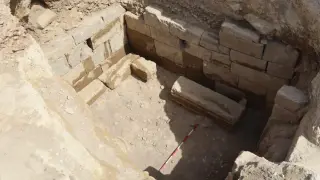
Archaeologists have uncovered a monumental 2,700-year-old Etruscan tomb at Vulci, Italy, containing rare grave goods including a woman's shoe, gold, and imported Greek pottery. The discovery, part of the Ritorno a Vulci project, offers new insights into elite burial practices and Mediterranean trade networks.