
Istanbul’s Yedikule Fortress Reopens After Restoration, Revealing 1,600 Years of History
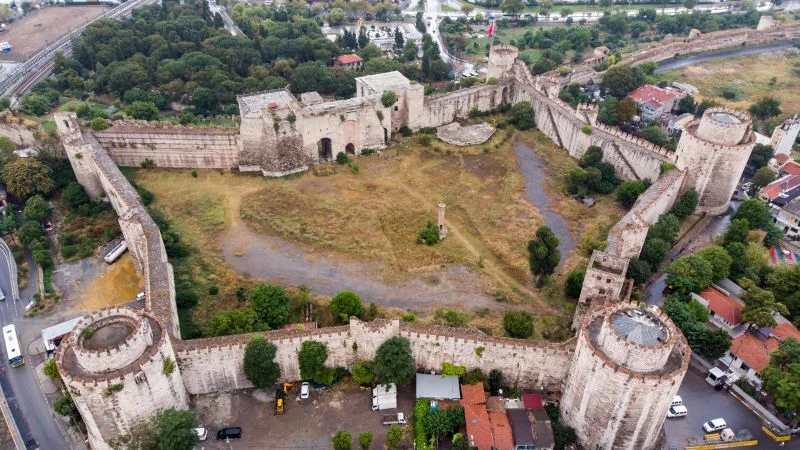
A major restoration project has begun to revive Yedikule Fortress in Istanbul, a 15th-century site that served as an imperial treasury, prison, and military barracks. The site, which incorporates ancient Byzantine walls, is now accessible to visitors for a fee of 400 lira, offering a glimpse into the shared heritage of the Byzantine and Ottoman empires.
Key points
- A multi-stage restoration project started in 2020 to revive Yedikule Fortress, a landmark in Istanbul's Fetih neighborhood.
- The fortress, built by Sultan Mehmed II in 1458, originally served as the Ottoman Imperial Treasury and a secure vault for state archives.
- After the treasury moved to Topkapi Palace in the 16th century, Yedikule became a prison for foreign diplomats and nobles, including Hungarians, Poles, and Russians.
- The site incorporates the 4th-century Walls of Constantinople, including the Porta Aurora (Golden Gate), a 39-foot-high triumphal arch.
- Visitors can currently enter the fortress for 400 lira (approx. $8) while restoration work continues, with the central courtyard often used for concerts and cinema.
- The fortress holds historical significance for both Byzantine and Ottoman civilizations, with remnants of 600-year-old Ottoman and 1,600-year-old Roman roads.
Background
Yedikule Fortress, also known as the 'Fortress of the Seven Towers,' has a complex history spanning 1,600 years. It began as part of the Byzantine defense system under Constantine the Great and was later repurposed by the Ottomans. The site has faced periods of neglect, including being used as a dumping ground in the 1970s, but recent efforts aim to restore its status as a key historical landmark in Istanbul.
Why it matters
The restoration of Yedikule Fortress highlights the importance of preserving historical sites that bridge different civilizations. It offers a tangible connection to the Byzantine and Ottoman eras, providing insights into the political, military, and cultural dynamics of the region. The site's transformation from a neglected ruin to a tourist attraction underscores the value of heritage conservation in urban centers.
What to watch
The multi-stage restoration project is ongoing, with plans to further uncover and preserve the fortress's historical features. As the site becomes more accessible, it is expected to attract more visitors, contributing to Istanbul's tourism industry and enhancing public understanding of its layered history.
Want the full story? Read the original reporting
Read on CNN