
Nepal Flood Toll Rises to 781 as NASA Launches Roman Telescope and US Strikes Iran
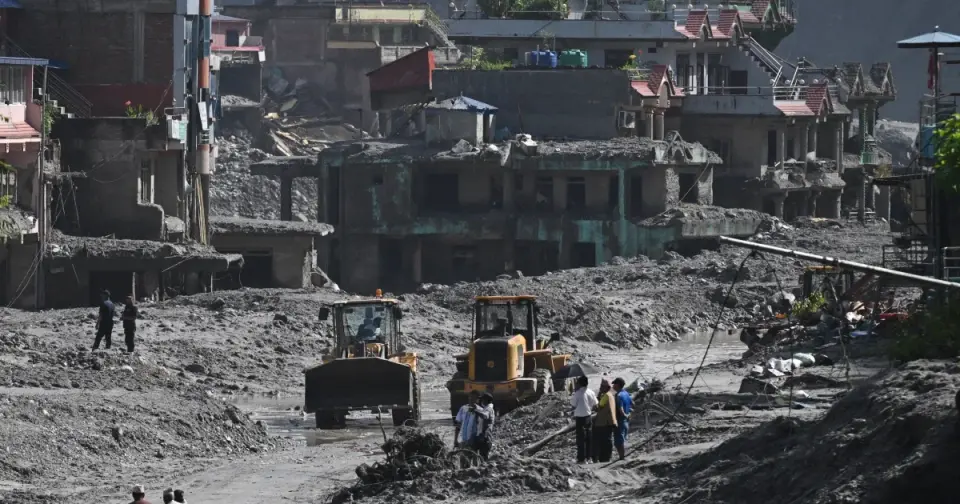
Nepal authorities warn of further flooding after a glacier collapse killed 781 people and left over 2,500 missing, including 592 foreigners. Simultaneously, NASA launched the Nancy Grace Roman Space Telescope from Florida to study dark matter and exoplanets. In geopolitical news, US forces struck Iranian rocket launchers in the Strait of Hormuz, marking the first military action in weeks, while Iran vowed retaliation. Other notable events include flash floods in the Grand Canyon leaving a dozen missing, the Minnesota Supreme Court rejecting Mike Lindell’s recount bid, and Taylor Swift donating $50,000 to a mother injured while saving teens from a crash.
Key points
- Nepal’s disaster agency reports 781 deaths and over 2,500 missing, including 592 foreign nationals, following a glacier collapse; 289 foreigners have been rescued.
- China reports 16 deaths and 546 missing in its Tibet region, including 261 foreigners, though overlap with Nepali counts is unclear.
- NASA launched the Nancy Grace Roman Space Telescope at 7:26 a.m. ET from Kennedy Space Center on a SpaceX Falcon Heavy rocket.
- The telescope will orbit at the second sun-Earth Lagrange point, approximately 1 million miles from Earth, to survey stars and galaxies.
- US forces struck Iranian rocket launchers in the Strait of Hormuz, their first military action in a month, after clearing sea mines from shipping routes.
- Iran vowed retaliation for the US strike, which occurred days after the Trump administration shifted focus to economic pressure.
Background
The Nancy Grace Roman Space Telescope launch follows earlier reports from August 2026 detailing its $4 billion cost and mission to map dark matter and hunt for exoplanets using a 300-megapixel Wide Field Instrument. The US-Iran tensions in the Strait of Hormuz build on previous developments where Iran demanded conditions to reopen the strait, with no immediate US response noted in August. The Nepal disaster is a new development, with no prior archive entries on this specific event.
Why it matters
The Nepal flooding highlights the severe human and economic impact of climate-related disasters, with international rescue efforts underway. The Roman Telescope launch marks a significant step in advancing astrophysical research, potentially reshaping our understanding of the universe. The US-Iran military action signals a shift in geopolitical strategy, moving from economic pressure to direct military engagement, which could escalate regional tensions. The Grand Canyon flash floods underscore the increasing frequency of extreme weather events in the US, while the Minnesota court ruling and Taylor Swift’s donation reflect ongoing public interest in electoral integrity and humanitarian aid.
What to watch
Rescue operations in Nepal and Tibet will continue as authorities assess the full extent of the disaster. NASA will monitor the Roman Telescope’s journey to the L2 point and begin data collection. The US and Iran may see further escalations or diplomatic efforts following the recent strike. In the US, the Grand Canyon search will continue, and Mike Lindell may pursue his appeal to the US Supreme Court. Iceland’s government will likely address the public’s rejection of EU talks, focusing on economic and fishing issues.
- Fears of more flooding in Nepal, and NASA launches next-generation telescope: Weekend Rundown NBC News
- World in Brief: Rescue efforts halted in Nepal and Tibet; court rules Anthropic blacklisting illegal The Economist
- World in Brief: Fears of more flooding in Nepal and Tibet; court rules Anthropic blacklisting illegal The Economist
Want the full story? Read the original reporting
Read on NBC News