
Record Rainfall in Chiba Kills at Least Five, Strands Thousands at Narita
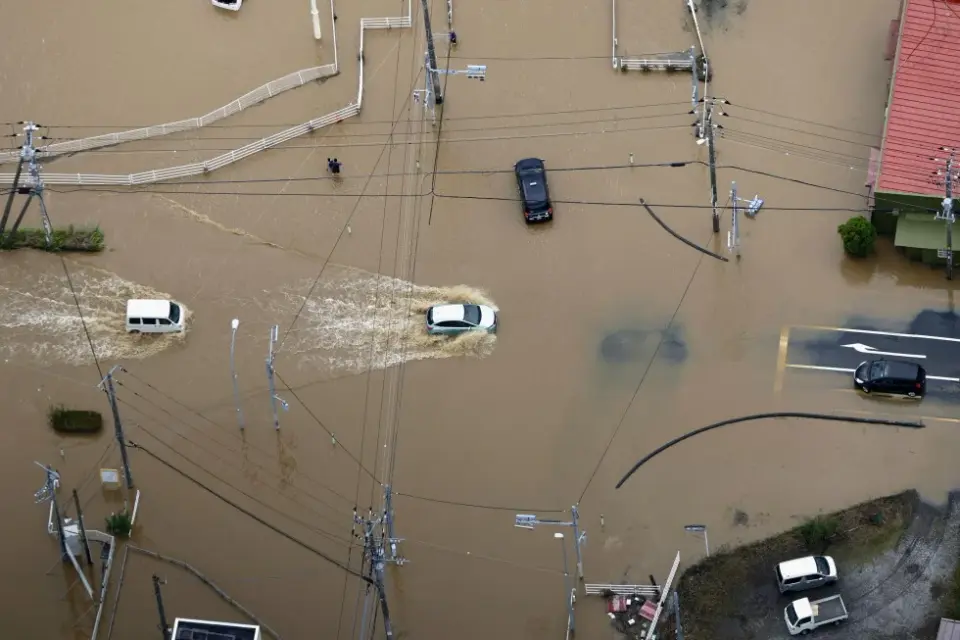
Record-breaking rainfall in Chiba prefecture, east of Tokyo, has killed at least five people and stranded thousands at Narita Airport. The unprecedented downpour, which exceeded 100mm per hour, triggered level five emergency warnings, power outages, and massive evacuations. While AP reports five deaths, BBC and other outlets cite eight fatalities, highlighting the severity of the disaster.
Key points
- At least five people died in Chiba prefecture due to record-breaking rainfall, with some reports citing up to eight fatalities.
- Rainfall exceeded 100mm per hour, roughly three times the August average, prompting the highest level five emergency warning.
- Thousands were stranded at Narita Airport, and over 100,000 people were ordered to evacuate due to landslide and flood risks.
- Power was cut to more than 20,000 households, and major rail and highway services were suspended.
- Chiba Governor Toshihito Kumagai described the event as an 'unprecedented' and extremely unusual situation.
Background
This event follows a series of severe storms affecting Japan and neighboring regions earlier in the week, including typhoons Dolphin, Chan-Hom, and Peilou. While previous archive entries covered unrelated disasters in Russia, Gaza, and Peru, this incident marks a significant domestic weather crisis in Japan, distinct from those international events.
How outlets are covering it
AP News reports at least five deaths, while BBC and other outlets cite eight fatalities, indicating a discrepancy in confirmed casualty counts. The Guardian emphasizes the scale of evacuations, noting over 400,000 people were ordered to leave, whereas AP focuses on the immediate travel disruptions and power outages. All sources agree on the 'unprecedented' nature of the rainfall and the stranding of thousands at Narita Airport.
Why it matters
The event highlights the increasing intensity of extreme weather events in Japan, with meteorologists linking such occurrences to climate breakdown. The disruption to major infrastructure, including airports and power grids, underscores the vulnerability of densely populated urban areas to record-breaking precipitation.
What to watch
Authorities are continuing rescue efforts and warning of ongoing landslide and flood risks. Rail services are expected to resume gradually, and flights at Narita are scheduled to operate normally, though delays are possible. Evacuation orders remain in effect for high-risk areas.
- Heavy rain causes flooding near Tokyo that kills at least 5 and strands travelers AP News
- 'Unprecedented' rain in Japan kills eight people bbc.com
- Shocking rainfall in Japan leaves eight dead - as flooding submerges cars Yahoo
- Japan's record rains strand thousands at Narita airport; kill eight Reuters
- ‘Unprecedented’ rain kills four in Japan as thousands stranded at airport The Guardian
Want the full story? Read the original reporting
Read on AP News