
Super El Niño drives record Indonesian wildfires, choking region in toxic haze
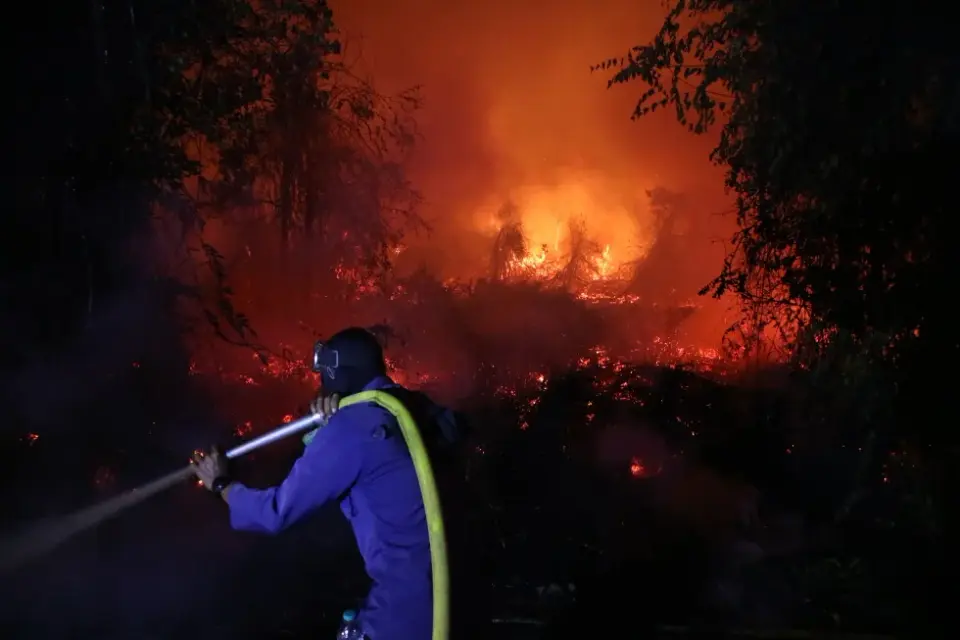
Indonesia is escalating aerial firefighting efforts as a 'super' El Niño intensifies wildfires across Borneo and Sumatra. The resulting trans-boundary haze has severely degraded air quality in Malaysia and Singapore, prompting school closures and health emergencies. President Prabowo Subianto has ordered the revocation of permits for corporations suspected of illegal land clearing, while experts warn that peatland fires may worsen through October.
Key points
- Indonesia has intensified aerial operations to combat wildfires fueled by a record-breaking El Niño event, with sea surface temperatures potentially exceeding 3°C above normal.
- Nearly 94,000 hectares of land burned in July alone, with fires concentrated in Kalimantan and Sumatra, driven by slash-and-burn practices for palm oil plantations.
- Trans-boundary haze has made Kuala Lumpur the most polluted city on Earth, forcing the closure of nearly 600 schools in Malaysia’s Sarawak state and triggering health alerts in Singapore.
- President Prabowo Subianto ordered the revocation of business permits for corporations suspected of directing land clearing and authorized the arrest of 72 individuals for arson.
- Health impacts are severe, with West Kalimantan seeing a tenfold increase in respiratory emergency room visits compared to the first half of the year.
Background
This crisis follows a series of infrastructure and governance challenges in Indonesia earlier in 2026, including a major ferry fire off Madura in August that left five dead and 41 missing, and the resignation of central bank governor Perry Warjiyo in July amid currency pressures. The current wildfire emergency represents a significant escalation in environmental and public health risks, distinct from these earlier incidents but occurring within a broader context of national instability.
How outlets are covering it
AP News focuses on the government’s operational response, highlighting the intensification of aerial firefighting and the presidential order to revoke corporate permits. The Guardian emphasizes the human toll, detailing the surge in respiratory illnesses and the social frustration with corporate negligence, while noting the trans-boundary impact on Malaysia and Singapore. The New York Times provides a ground-level perspective, illustrating the economic dilemma faced by residents who must continue working despite hazardous air conditions. New Scientist offers a scientific analysis, linking the current fires to a 'super' El Niño that could produce carbon emissions comparable to the 1997 and 2015 events, warning that the situation may worsen if the weather pattern continues to intensify.
Why it matters
The 2026 Indonesian wildfires represent a critical intersection of climate change, economic policy, and public health. The 'super' El Niño is not only causing immediate regional health crises and economic disruption but also potentially releasing gigatonnes of carbon dioxide, exacerbating global warming. The response highlights the tension between Indonesia’s role as the world’s largest palm oil producer and its environmental obligations, with the potential for long-term ecological damage to peatlands and rainforests. The trans-boundary nature of the haze also underscores the need for regional cooperation in Southeast Asia to address shared environmental threats.
What to watch
Authorities are expected to continue aerial firefighting operations through October, as rains are unlikely before November. The government will likely enforce the revocation of permits for corporations involved in illegal land clearing, potentially leading to further legal actions and economic impacts on the palm oil industry. Regional cooperation may intensify as Malaysia and Brunei raise the issue at ASEAN, and global attention may focus on the potential for record-breaking carbon emissions if the El Niño continues to strengthen.
- Indonesia intensifies aerial firefighting as wildfire haze spreads to Malaysia AP News
- Indonesians brave choking smoke to pray for rain as country battles wildfires AP News
- ‘Like smoking a cigarette’: Indonesia chokes on haze as blazes intensify amid super ‘El Niño’ The Guardian
- As El Niño Dries Indonesia, Wildfires Intensify The New York Times
- Super El Niño could lead to mega CO2 emissions from fires in Indonesia New Scientist
Want the full story? Read the original reporting
Read on AP News