
Italian Youth Protests Escalate Across Europe Amid Cost-of-Living Crisis
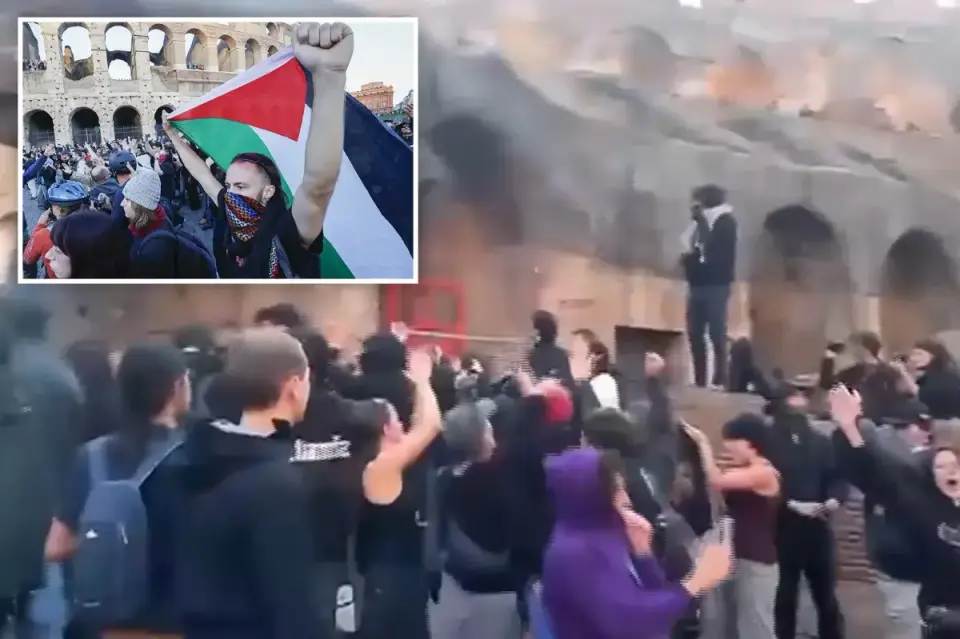
Thousands of young people marched across Italy on October 24, 2026, protesting high living costs and the government. While most demonstrations remained peaceful, clashes occurred in Rome and Turin, with protesters briefly entering the Colosseum. Prime Minister Giorgia Meloni deployed 500 soldiers to Milan and introduced stricter laws targeting minors and violent protesters.
Key points
- Protests spread across Rome, Milan, Turin, and other cities, driven by economic grievances and anti-war sentiment.
- In Rome, hundreds of protesters stormed the Colosseum, leading to clashes with police who used tear gas and water cannons.
- Milan saw significant security measures, including 500 soldiers and 5,000 police, to prevent repeat looting from the previous week.
- The government enacted new laws holding parents financially accountable for their children's vandalism and toughening penalties for rioters.
- A 30-year-old journalist, Youssef Siher, was detained as the alleged mastermind of the 'Oct. 17 Movement' driving the unrest.
Background
These protests follow a wave of unrest in France in October 2026, where hundreds of thousands marched over similar economic and educational issues. The current Italian unrest mirrors the French situation, with demonstrations spreading to Spain, Portugal, and Albania. Previous incidents, such as the September 2026 Palestinian flag disruption at Yankee Stadium, highlight ongoing tensions related to the Gaza war, which is a key driver of these protests.
How outlets are covering it
The New York Post emphasizes the violent clashes at the Colosseum and the deployment of soldiers without pepper spray or tasers. NPR highlights the peaceful nature of the Milan march and the government's focus on preventing repeat violence, noting the involvement of right-wing student groups in counter-protests. Euronews reports on isolated clashes in multiple cities and the specific detention of Youssef Siher. The Guardian focuses on the socioeconomic divide, describing the 'lost generation' and the racial profiling of young, marginalized Italians, contrasting the government's repressive measures with the need for dialogue.
Why it matters
The unrest highlights deep socioeconomic tensions in Italy, particularly among young people and marginalized communities. The government's response, including new laws and military deployment, could set a precedent for handling future protests. The spread of similar protests across Europe indicates a broader discontent with economic conditions and government policies.
What to watch
Protests are expected to continue, with organizers pledging to gather each weekend. The government is likely to maintain a heavy security presence and enforce the new laws. The outcome of the snap election in Spain and the general elections in Italy next year may be influenced by these ongoing tensions.
- Protesters waving Palestinian flags storm Roman Colosseum gates as unrest grows New York Post
- Soldiers guard center of Milan as thousands of protesters march in cities across Europe NPR
- Protests sweep Italian cities amid heavy security presence, some violence reported Reuters
- Thousands march in Italy as protests see isolated clashes with police Euronews.com
- Milan braces for more unrest as debate intensifies over Italy’s ‘lost generation’ The Guardian
Want the full story? Read the original reporting
Read on New York Post