
Peru’s Fujimori Swears In, Pledges Catholic Recognition and 'Womb to Tomb' Welfare
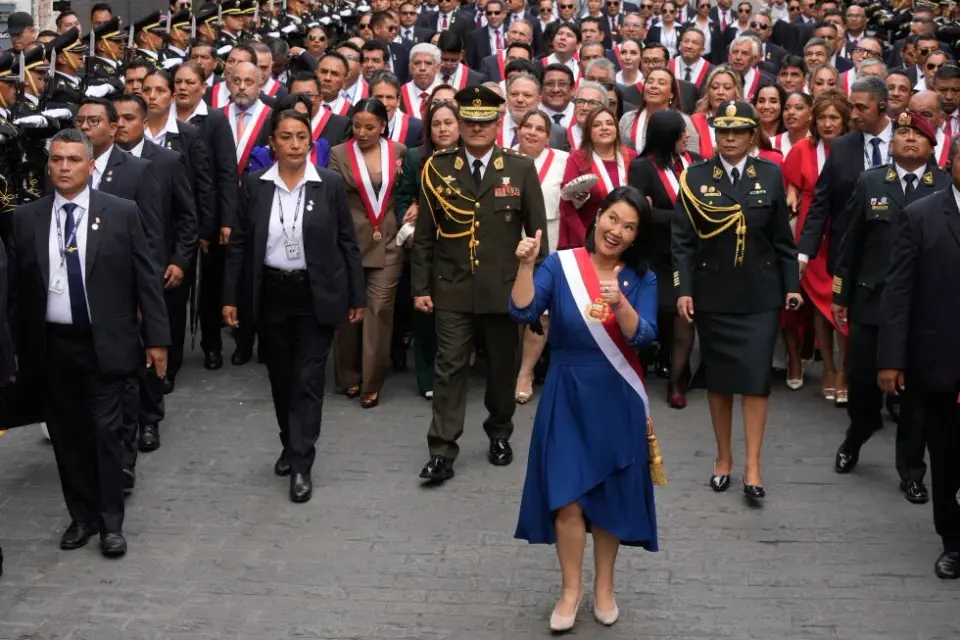
Keiko Fujimori was sworn in as Peru’s president on July 28, 2026, becoming the first woman elected by popular vote to lead the nation. In her inaugural address, she pledged to improve quality of life 'from womb to tomb,' strengthen security, and explicitly recognize the role of the Catholic Church in Peru’s moral formation. The ceremony marked the start of her 2026–2031 term amid a polarized political landscape and significant social challenges.
Key points
- Keiko Fujimori took office on July 28, 2026, after winning a runoff election by a margin of fewer than 50,000 votes against Roberto Sánchez.
- She is the first woman elected by popular vote to serve as Peru’s president.
- Fujimori pledged to implement comprehensive social protection policies covering early childhood through old age, aiming to reduce fragmentation in public services.
- She promised to raise the minimum living wage to 1,300 soles (approximately $382) and strengthen police forces to combat organized crime.
- The inauguration was attended by leaders from Argentina, Bolivia, Chile, Ecuador, Paraguay, Uruguay, Panama, Honduras, and King Felipe VI of Spain.
Background
Fujimori’s victory followed a contentious June 7 runoff where she narrowly defeated leftist candidate Roberto Sánchez, with the electoral court certifying her win on July 4. Prior coverage noted her pro-business agenda, including the appointment of former central banker Elmer Cuba as finance minister, and her focus on curbing crime linked to illegal gold mining and cocaine trafficking. Her administration faces a fragmented Congress and ongoing protests, set against a broader regional shift toward the right in Latin America.
How outlets are covering it
EWTN News emphasized Fujimori’s religious commitments, highlighting her oath to recognize the importance of the Catholic Church in Peru’s cultural and moral formation, a point not detailed in the AP News photo gallery. EWTN also reported on Cardinal Carlos Castillo’s call for justice and reconciliation, warning of a 'catastrophic' situation regarding human dignity. AP News focused on the visual aspects of the inauguration and broader regional events, while EWTN provided detailed quotes from Fujimori’s address regarding poverty, security, and freedom of expression. Both sources agree on the date and the significance of her being the first popularly elected female president, but EWTN offers more depth on her policy pledges and the religious context of the ceremony.
Why it matters
Fujimori’s inauguration signals a shift in Peru’s political landscape, with her conservative agenda focusing on security, economic reform, and social welfare. Her explicit recognition of the Catholic Church’s role may influence domestic policy and international relations, particularly with the Vatican. The narrow margin of her victory and the polarized political environment suggest potential instability, while her promises to address poverty and crime could impact Peru’s social fabric and economic outlook.
What to watch
Fujimori is expected to implement her 'womb to tomb' social protection policies and raise the minimum wage. She will likely face scrutiny over her security measures, including the deployment of armed forces during emergencies. The political opposition may challenge her policies, given the narrow margin of her victory and the fragmented Congress. International observers will monitor her administration’s response to social unrest and its impact on Peru’s economy and social cohesion.
- Peru swears in new president and other top photos from Latin America and the Caribbean AP News
- Peru’s new president pledges to acknowledge Church’s importance EWTN News
- Peru's Fujimori takes power, extending Latin America's rightward tilt Reuters
- AQ Podcast | Keiko Fujimori Takes Power. Can She Keep It? AS/COA
- Opinion | Keiko Fujimori and Peru’s China Challenge WSJ
Want the full story? Read the original reporting
Read on AP News