
Iran’s ‘Phantom’ Supreme Leader Enables Hardliners to Sabotage US Peace Deal
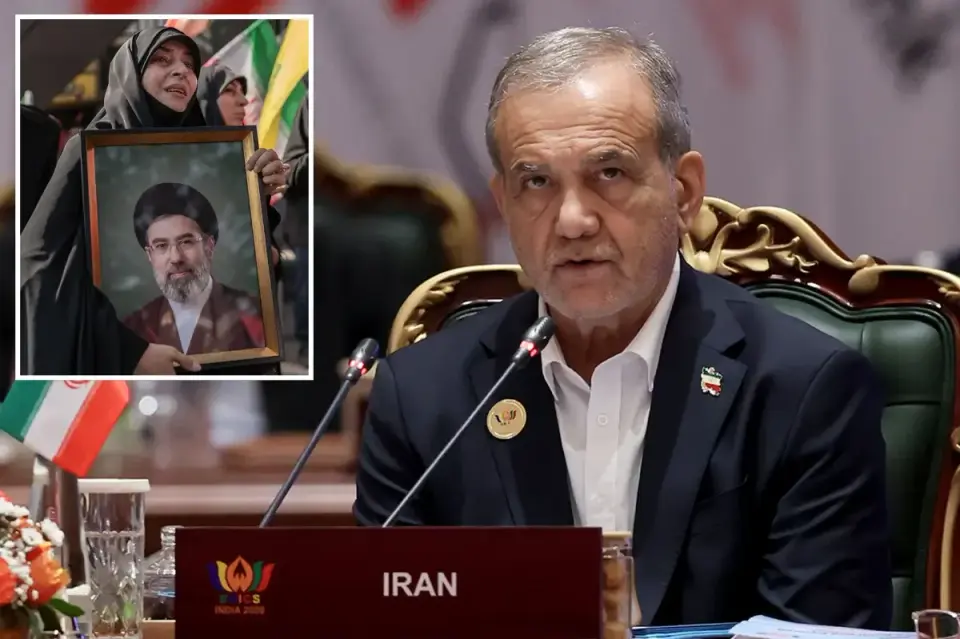
A hardline faction within Iran, led by former spymaster Hossein Taeb, sabotaged a June peace agreement with the US by ordering attacks on ships in the Strait of Hormuz in July. This move was possible because Supreme Leader Mojtaba Khamenei has remained unseen since March, creating a power vacuum that allowed hardliners to override President Masoud Pezeshkian and the IRGC. The resulting escalation has derailed negotiations and expanded the conflict to the Red Sea.
Key points
- Hossein Taeb, newly appointed head of the Basij militia, ordered July strikes on three commercial vessels in the Strait of Hormuz to destroy the US-Iran Memorandum of Understanding.
- The attacks were executed without authorization from President Masoud Pezeshkian, IRGC chief Ahmad Vahidi, or the Supreme National Security Council, highlighting a deep internal split in Tehran.
- Supreme Leader Mojtaba Khamenei has not appeared publicly since his appointment in March, following the death of his father; his physical and mental condition remains unknown, and his orders are often disputed.
- Hardliners, including IRGC Aerospace Force commander Majid Mousavi, have pushed for expanded war plans involving Houthi allies in Yemen and Shia groups in Iraq to target regional oil infrastructure.
- The conflict has expanded to the Red Sea, with Houthis capturing the port of Mocha and Perim island, threatening 12% of global seaborne oil trade.
Background
Since August 2026, reports have indicated a growing power struggle in Iran due to Mojtaba Khamenei’s absence. Previous coverage noted that factions were weaponizing the Supreme Leader’s name to justify actions, while President Pezeshkian attempted to maintain diplomatic channels. The June Memorandum of Understanding was seen as a potential pathway to end the war, but internal divisions over concessions regarding the Strait of Hormuz had already stalled progress before the July attacks.
How outlets are covering it
The New York Post and The Jerusalem Post emphasize the role of Mojtaba Khamenei’s absence as the primary enabler of the hardline sabotage, noting that Pezeshkian himself doubted the authenticity of his virtual meetings with the Supreme Leader. Firstpost highlights the specific rogue nature of the command structure, detailing how IRGC chief Ahmad Vahidi denied authorizing the strikes, and focuses on the subsequent expansion of the conflict to the Red Sea via Houthi actions. All sources agree that the hardline faction has currently gained the upper hand in Tehran’s decision-making process, overriding moderate diplomatic efforts.
Why it matters
The breakdown of the US-Iran peace deal signals a return to active, high-intensity conflict in the Middle East. The internal fragmentation of Iran’s leadership, combined with the expansion of hostilities to the Red Sea, threatens global energy supplies and supply chains. The inability of moderate factions to control military actions suggests that future diplomatic efforts may be undermined by rogue elements within the Iranian state, prolonging the war and increasing regional instability.
What to watch
Iran has decided to escalate the war, with hardliners pushing for intensified attacks on energy facilities in West Asia. The US and its allies are likely to face continued tit-for-tat strikes in the Strait of Hormuz and the Red Sea. Diplomatic channels remain stalled as Tehran’s internal factions continue to clash over whether to pursue peace or total victory, with no clear resolution in sight for the leadership vacuum.
- Hardline Iran faction launched attack to derail peace deal — while'phantom' Supreme Leader is nowhere to be found: report New York Post
- How Iran’s Hard-liners Blew Up the Peace Deal with Trump The New York Times
- Iran hardliners launched Hormuz attacks in defiance of leaders, undermining US deal — report The Times of Israel
- Iranian leadership divided as hard-liners sabotage negotiations, Khameni still unseen - report The Jerusalem Post
- Defying Pezeshkian & IRGC, rogue commanders & ex-spymaster derailed US-Iran peace deal: Report Firstpost
Want the full story? Read the original reporting
Read on New York Post