
Portugal Enacts Public Face-Covering Ban, Joining European Trend
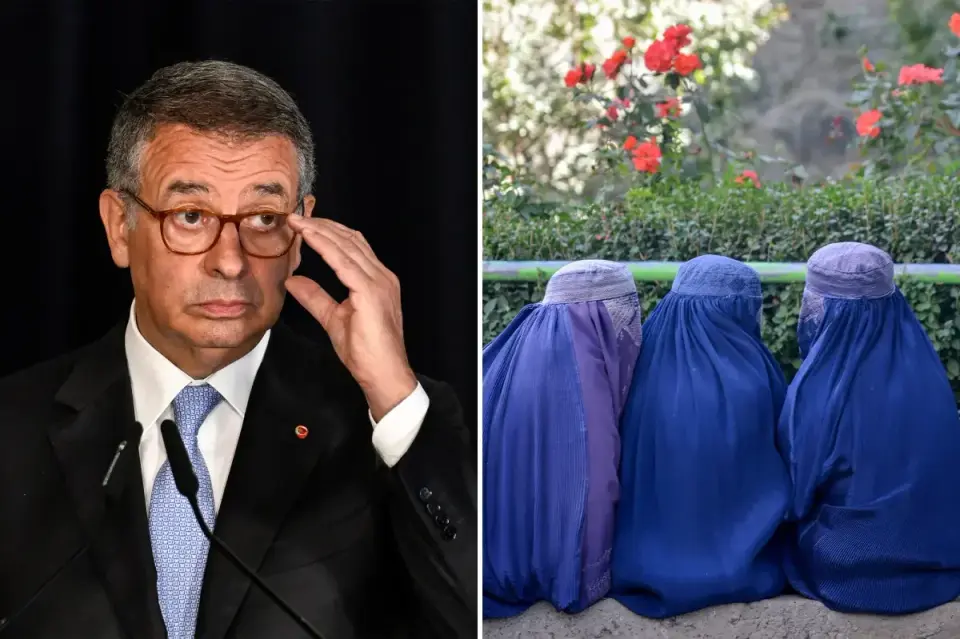
Portugal has enacted a law prohibiting face coverings in public spaces, widely referred to as the 'burqa law.' The measure, signed by President António José Seguro, bans coverings that hide identity in public areas but includes exceptions for health, professional, artistic, or weather-related needs, as well as for places of worship and diplomatic missions. Violations carry fines ranging from €150 to €3,000. The law was adopted by parliament in July 2026 and is part of a broader European trend of restricting full-face veils.
Key points
- Portugal's new law bans face coverings in public spaces, with fines up to €3,000 for non-compliance.
- Exceptions exist for health, work, artistic, weather-related reasons, and specific locations like places of worship.
- The law was adopted by the Portuguese parliament in July 2026 and enacted by President António José Seguro.
- The measure is widely viewed as targeting Muslim women's religious attire, particularly the burqa.
- Portugal joins a growing list of European countries with similar restrictions, including France, Belgium, and Denmark.
Background
Portugal's new face-covering ban follows a pattern of similar legislation across Europe. France was the first to ban full-face coverings in 2011, followed by Belgium, Bulgaria, Austria, Denmark, and others. These laws often cite security, social integration, and gender equality as justifications. Portugal's law is part of this broader European trend, though it includes more specific exceptions than some of its neighbors.
How outlets are covering it
Fox News and the New York Post report the law as a direct action by President António José Seguro, emphasizing the fines and the 'burqa law' label. Euronews provides a comparative analysis, noting that Portugal's approach is more nuanced than France's or Denmark's blanket bans, with specific carve-outs for various situations. The Telegraph's content was inaccessible due to a security block, so no perspective could be extracted. All sources agree on the basic facts of the law but differ in emphasis: Fox News and the Post focus on the political and social implications, while Euronews contextualizes it within the broader European landscape.
Why it matters
The enactment of this law marks a significant shift in Portugal's approach to religious expression in public spaces. It reflects a growing trend in Europe to regulate religious attire, often framed as a matter of security and social integration. The law's exceptions and fines will likely impact Muslim women in Portugal and may influence similar debates in other countries. It also highlights the ongoing tension between religious freedom and state regulation in European democracies.
What to watch
The implementation of the law will likely face legal challenges and public debate, particularly regarding its impact on Muslim women and the interpretation of its exceptions. Portugal may see increased scrutiny from international human rights organizations. Other European countries may also reconsider their own face-covering policies in light of Portugal's new law.
- Portugal prohibits face coverings in public after enacting ‘burqa law’ New York Post
- Portugal enacts 'burqa law' largely prohibiting face coverings in public Fox News
- Full-face veils: How rules vary across Europe Euronews.com
- Portugal bans burka in public The Telegraph
- Portugal bans full-face veils euractiv.com
Want the full story? Read the original reporting
Read on New York Post